Bridget Cook: Bravery Lost to Time

Sadly, historically, women have been overlooked and sometimes intentionally dismissed and ignored, especially working-class women. In the field of genealogy, I suppose there is less of a chance of this discrimination, at least to an extent, as there is always a desire to trace back as much as physically possible, but when maiden names are unable to be found, and women are simply recorded as ‘Mrs. John Smith’, it can become near impossible to trace their stories. So they become ignored or misrepresented, and I find this to be such a shame.

With this point in mind, it would be easy to dismiss Bridget Cook, my Great Great Great Grandmother, as being John’s wife, George’s daughter, or Charles’ widow. However, this overlooks her story that, despite being lost to time temporarily due to some of the reasons mentioned above, truly exemplifies a woman driven by determination, grit and a quest for survival in a cruel and uncaring world.
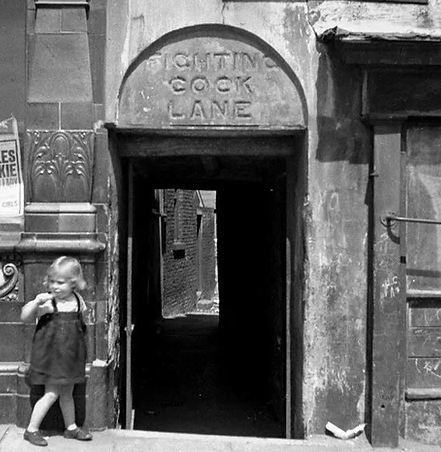
The street Bridget would spend most of her life

Bridget was likely born in 1849, most likely in Monkwearmouth, Sunderland. She was the daughter of George Cook and his wife Judith McMahon, both Irish immigrants who originated from County Louth. They married almost certainly in the 1840s, before the birth of their first daughter in 1842, and had a few children in Ireland before moving across to Monkwearmouth by Bridget’s birth in 1849. Bridget’s place and approximate year of birth remain consistent throughout her life, which is quite surprising, but I have not been able to find any GRO registration relating to her birth. There is a multitude of reasons that could lay behind this and are irrelevant to her life story, but I thought it was worth mentioning still.
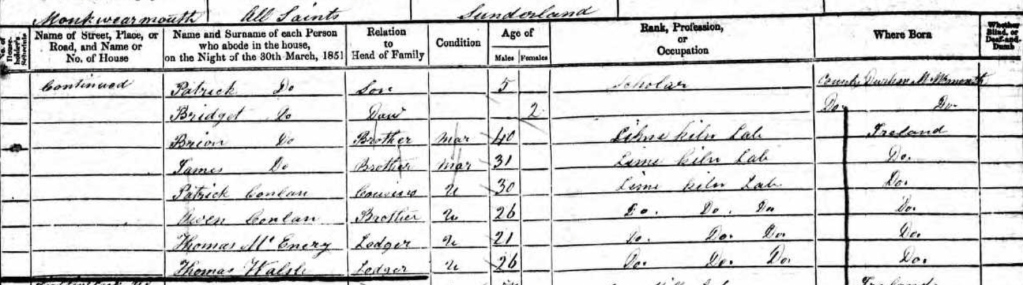
One half of the Cook Household on the 1851 Census

Growing up, Bridget had it tough, and nothing can illustrate this in a better way than the way her family was living in 1851, as there were eleven people residing in the Cook Household – including Bridget herself – on that year’s census. The family included Bridget’s parents and siblings, but she also lived with some lodgers – specifically George’s brother, some of her father’s cousins and two other unrelated men. Furthermore, there were another five people from another family residing in the same building, making 16 individuals.

Another indication of just how tough Bridget’s childhood was where the family lived throughout the entirety of it – Fighting Cock Yard, near John Street. The same doesn’t sound inspiring, nor do the much later reports that crime was rife, including prostitution, clearly showing just how destitute and desperate its inhabitants were. Despite this, siblings followed – Mary Jane in 1856, George in 1858 and Julia in 1863. Julia was lucky to survive past her infancy, but sadly, both George and Mary Jane were not, dying when they were just over a year or a few months old.

St. Benet’s R.C. Church, Sunderland

By 1861, George’s earlier mentioned brother had finally moved out and got married. He lived with his children, mother, and wife on that year’s census but also an eighteen-year-old lodger, Charles McIlroy. He is key to Bridget’s story as they both got married in less than a decade. Specifically at St. Benet’s Roman Catholic Church in the second quarter of 1869. Her marriage to McIlroy ostensibly started reasonably well – she gave birth to a boy named Charles (perhaps after his father) exactly a year later. However, this was not to last.

Charles McIlroy was dead by the time of the 1871 Census, and I am clueless as to exactly when or how he died. Was it tragically before the birth of his son, leading to him becoming his son’s namesake, or did he get to see his little boy be born? I am unsure, as I said before, but I will always pray to myself that he did get to see him. Another significant loss struck in this period as Bridget’s mother, Judith, passed away in late Jan or early Feb 1870, aged only about 50, and was buried at the local Mere Knolls Cemetery on 3 February 1870. Aged only 21 or so, Bridget had seen the loss of two siblings, her mother and also her husband – this would rightly break so many people but not Bridget.
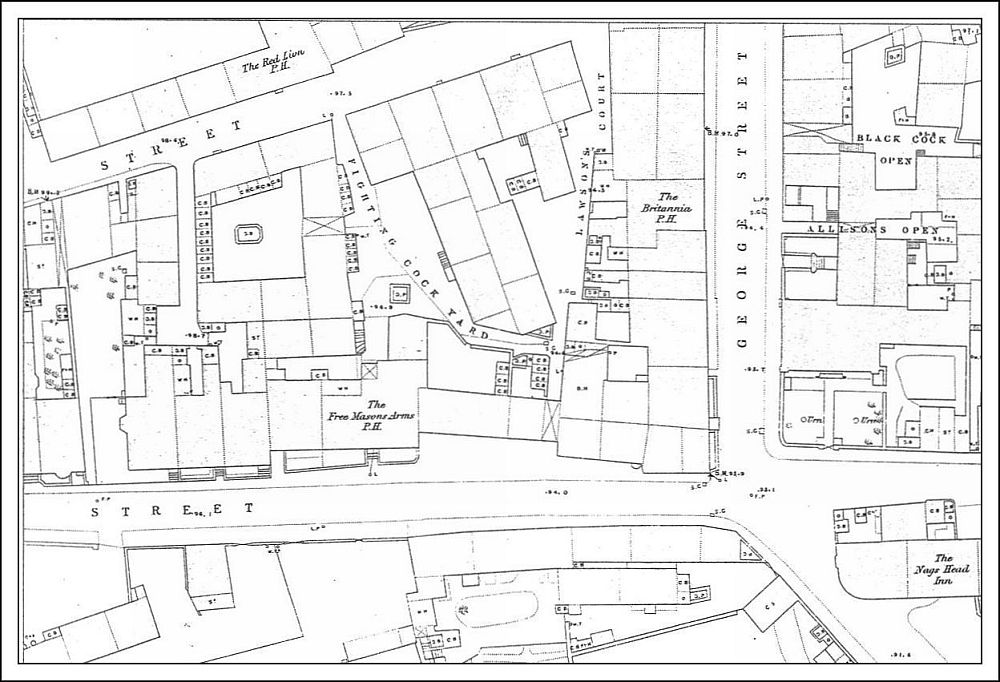
Fighting Cock Yard circa 1860

I think that Bridget was a woman of incredible courage and determination and was certainly not stupid, and her actions after the death of her husband and mother display this. She took on a leadership role, being recorded as the Head of the Household of 13 Fighting Cock Yard on the 1871 Census – residing with her son, some siblings, father and new stepmother. She was willing to work both domestically but also to make a living, gladly recording the fact she was working as a labourer in pottery. She didn’t let the many losses she was facing destroy her, she had every right to, but she and her family would also end up dead with her late husband and mother. Society and life were cruel, and if Bridget didn’t work, she would fall into the hardest of times, and she clearly wasn’t willing to accept that.

Her courage and ability to take charge of her own destiny at the pivotal moment allowed her to remarry and eventually pick herself up from her losses. She did this in late 1872 to a man named James Conley, who lived nearby on John Street. From this marriage, my Great Great Grandmother, Catherine Conley, was born in 1873, followed by George in 1875. There was an interruption to Catherine’s period of relative peace as she lost a son, namely James, who died aged about 19 months in 1878. Things looked up again as she gave birth to a healthy boy, Peter, in 1879, and then a girl, Mary Ann, in 1882.

By 1881, Bridget had finally left Fighting Cock Yard, residing at 38 Brook Street, with some other families alongside her husband, sister Julia and children. Sadly, her father had died some years earlier, in 1877, and Bridget had lost another key figure in her life. It is perhaps less tragic in nature as George Cook was advanced in his age, dying aged 60 or so, but still, despite leaving Fighting Cock Yard, she couldn’t avoid another bout of deaths.

Bridget’s eldest son’s death certificate

Before she encountered another loss, she had two more children – John in 1885 and Julia in 1887. This subsequent loss was in spite of all her labouring and bravery, her eldest son Charles McIlroy, who had effectively been adopted into the Conley family, passed away on 26 April 1890 at the Conley family home of 18 Stobart Street due to complications from tuberculosis. Poignantly, James Conley registers his stepson’s death, showing that he was still willing to claim him even in death.

It all ended suddenly for Bridget, not so long after the birth of another daughter, Martha, in early January 1891. Years of toil, bravery and a burning desire to survive for the sake of her family all faded away due to the cruelty of tuberculosis. Like her son a year earlier, the disease killed Bridget on 13 January 1891 at home at 18 Stobart Street. Luckily, her husband, James, was present at her death.
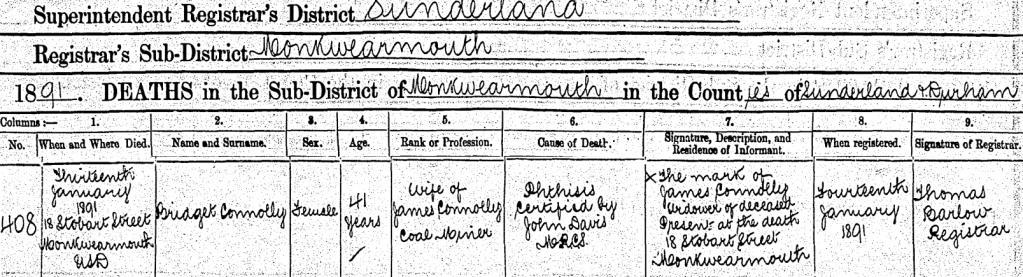
Bridget’s death certificate

Due to the fact her grandson, my Great Grandfather, was orphaned and difficulties surrounding finding her maiden name, Bridget’s story was at least temporarily lost to time. It was only recently uncovered in its true form, one of immense determination and bravery. This was in the face of a brutal society, appalling living and working conditions and countless unimaginable losses – Bridget Cook defied all odds and managed to keep her family and children alive for generations to come. Her story is genuinely inspiring to me, and I look to employ her spirit and memory as I progress through life.

For, if she had given up without much of a fight, would I be sat down writing her story 131 years after she passed away?

Mere Knolls Cemetery – Bridget’s final resting place

Harriet Keighley: The Widow

Born into a turbulent childhood shrouded in mystery, Harriet Keighley found herself lucky when she married Jeremiah Hall in 1830. But, struck by Jeremiah’s loss only fifteen years later, she started a widowhood that would last over twice the length of her marriage and have profound consequences for the generations of Halls ahead.

Harriet’s parents were Samuel Keighley and Grace Fearnley, who married at Birstall Parish Church in 1797, both residents of Heckmondwike. In terms of occupation, Samuel took after his father Jonas and worked as a clothier, a pretty broad term for individuals working in the cloth trade or even individuals who made or sold clothing.

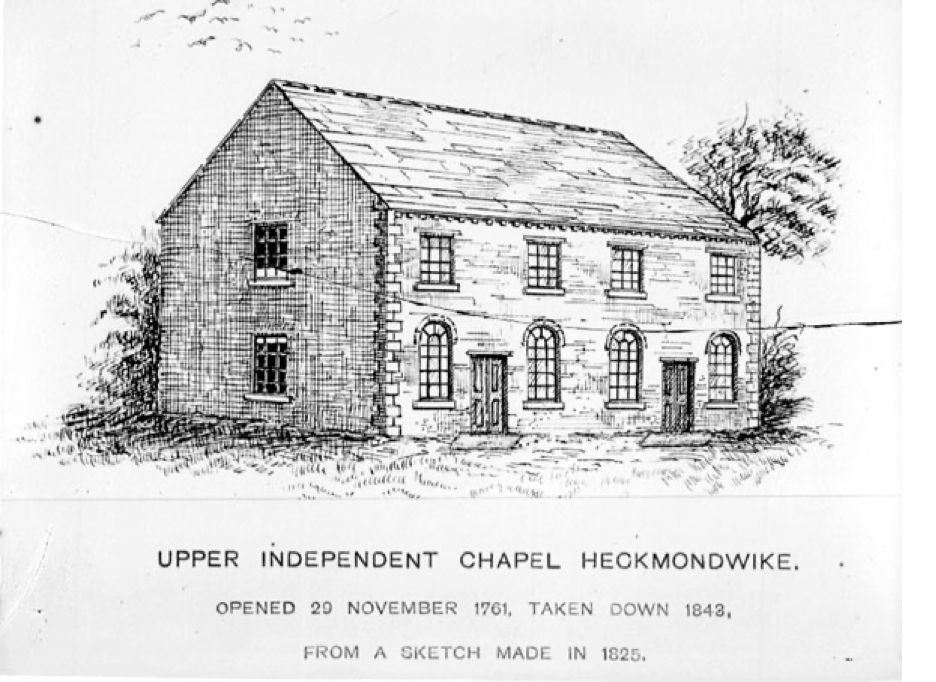
Upper Independent Chapel in Heckmondwike via the Kirklees Image Archive (https://kirkleesimages.org.uk/)

The couple’s first recorded child, Nancy, was born in 1801 and was baptised at the Heckmondwike Old Independent Chapel shortly after her birth. The same applied to Mary, who followed in 1804. Both baptism records indicate the family now was living on Dewsbury Moor. Elizabeth was born in 1806 but was baptised at Dewsbury Parish Church, as was her sister Ellen in 1808.

Harriet did not buck the trend, and after her birth which was likely not too long before her baptism, she was baptised at Dewsbury Parish Church on 21 November 1810. Her only brothers followed – Antony in 1813 and Samuel in 1816, both baptised at Dewsbury Parish Church. Interestingly, by the time of Samuel’s baptism, the family had moved to Batley.

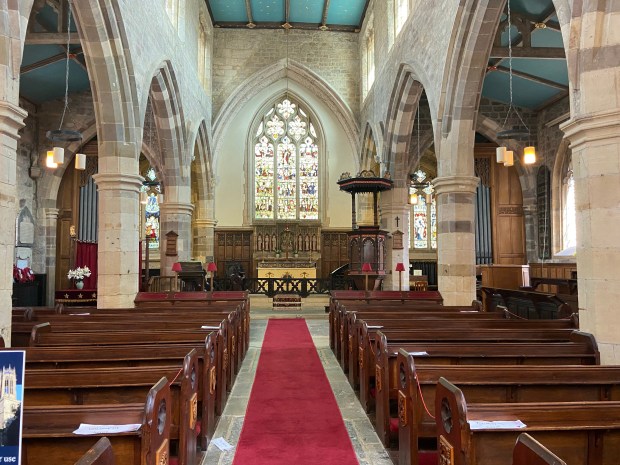
Dewsbury Minister

I do not mean to bore, regurgitating facts, places and dates, but it is clear that Samuel and Grace were flexible people, regularly switching Religious Denominations and moving around. This seems to be more apparent at the beginning of the couple’s marriage, so it perhaps affected Harriet’s childhood in a more mitigated way. Still, it is pretty clear that she lacked some stability in her childhood.

Now, after Samuel’s baptism in 1816, for whatever reason, we hit a deep and barren void as I have no recorded evidence of what happened to Harriet’s siblings or her parents past that point. It has been a while since I have touched them, so perhaps this is an excellent reason to have another search, but anything could have happened to them as far as we are concerned.

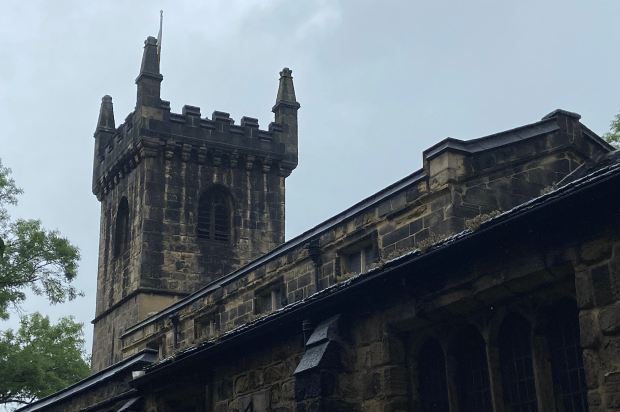
Batley Parish Church

Aged about 19 or so, on 8 September 1830, at Batley Parish Church, Harriet married Jeremiah Hall, a local Clothier. They married into a changing world where things were changing at a greater pace now than ever as the Industrial Revolution was in full swing, and Batley began to develop into a prosperous and industrial town.

The couple’s first child was a boy named Joseph, who was baptised at Batley in 1831, followed by a sister named Grace in 1832. Quite tragically, Grace passed away, aged only one year, in April 1833 and was buried in her local Parish Churchyard on the 22nd of that month.

Family life continued, and despite the fact the loss of their only daughter must have stung very profoundly, both Harriet and Jeremiah had their son Joesph’s mouth to feed. He was joined by a brother named Jeremiah, after his father, in 1836, and also a sister, Grace Ann, in 1838, named likely after her late sister Grace and paternal grandmother Ann. Another girl, Margaret, was born and baptised in 1839.

William Henry Hall’s baptism at Batley Parish Church

Like most other people, Harriet first appeared on a census in 1841, where she was living with her husband and children in “New Batley”, which appears to be close to what is now Upper Commercial Street, Batley. The year after the census return, on 13 February 1842, William Henry Hall, my Great Great Great Grandfather, Jeremiah and Harriet’s final child together, was born in Batley, most likely at home. William’s baptism took place the following year at Batley Parish Church, just like the rest of his siblings, on 15 January 1843.

Just two years after William’s baptism, when he was aged just 3, and Harriet herself was aged only about 34 years, Jeremiah succumbed to phthisis, an archaic term for tuberculosis, aged only 41, at home, on 14 May 1845. He was buried at Batley Parish Church, where both his father and daughter Grace were also buried, on 18 May 1845.

I do not, and most likely will never, know the family dynamics of the household of Jeremiah and Harriet, nor do I know if they were a happy family, but I would at least like to think so. Jeremiah’s death had severe consequences for the family, many of them profoundly negative, but he seems never to be forgotten despite those factors. For example, I know that many of their children honoured Jeremiah by naming many of his grandchildren after him. Another point of this loyalty to his memory is perhaps the fact that Harriet never remarried. Was this down to loyalty to her late husband or just circumstances? We will likely never know either way.

As said before, the death of Jeremiah did have profound consequences for his family, who now faced a more tough and brutal reality. I am in no way saying that the Hall family had it easy when Jeremiah was alive – they were a working-class family in 1840s Batley. However, now they had lost the support of the breadwinner, and Harriet was, despite the help of the Hall and Keighley families, alone. Nevertheless, she didn’t let this new, more brutal reality deter her and took little to no time adjusting to it.

Harriet and family on the 1851 Census

On the 1851 census, her occupation is recorded as a rag sorter, and two of her eldest children worked in the mill. Now, a rag-sorter has a vague definition – she could have been sorting rags in a mill or even just collecting and sorting old bits of clothing. Regardless, Harriet now had double the work – running a house and earning a living – and it is possible that each day seemed to be more brutal and more protracted as time went on. Nevertheless, the strength she likely showed during this period is unquestionably remarkable, and I personally am deeply proud of her.

In 1861 things may have begun to calm down for Harriet, at least to an extent, because all her children, barring her son Jeremiah, remained at home and all worked in a variety of woollen based occupations. She is still recorded as working herself, but perhaps some of the pressure began to lift, which was quite apt as she began to grow older. Of course, she wouldn’t ever get the retirement of the modern era, but even just having a simpler existence, with less pressure, would have likely been quite welcome.

A map circa 1910 of the area where Harriet and her family lived

By 1871, Harriet did get this break, at least to some extent, as most of her children had either got employed or married and moved out. Interestingly, my Great Great Great Grandfather, William Henry Hall, was the exception and remained living with his mother on New Street, alongside his wife and children. His wife Eliza is recorded as taking up the role of housekeeper, while William is a plucker, and Harriet takes up the more sophisticated role of a shopkeeper. Her son Jeremiah lived next door, and her brother-in-law Joseph Hall lived only a few doors away. Harriet now worked in a different role, and likely faced less pressure at home – a blessing of her arduous labour pursuing her family’s survival.

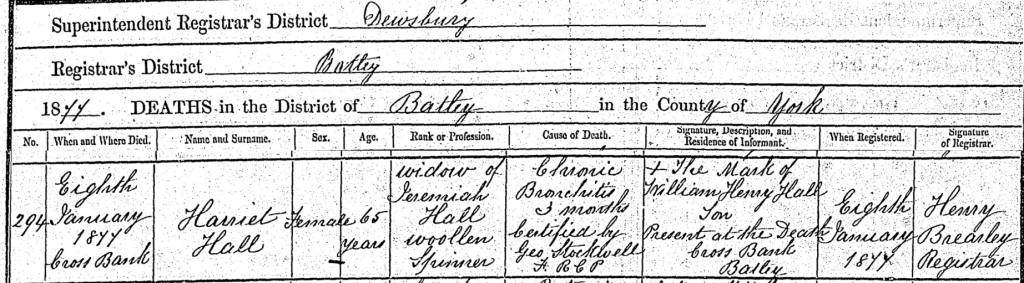
By 1877, Harriet had moved to Cross Bank in Batley, and it is likely that William and his family also remained living with her or at least nearby. I am unsure of the exact reason he may have stayed with her – perhaps financial reasons contributed or even a desire to look after her as she aged? Maybe he felt indebted to her for his survival in his youth? But, again, it could have just been circumstance and could have had next to no real deep meaning behind it – we just do not know.

Harriet’s death certificate

In 1870, Harriet had turned 60, and as the average life expectancy was around 70, if you managed to get past 40, she entered her final years. Unfortunately, she became ill with what was later recorded as chronic bronchitis around the early Autumn of 1876, and after about three months of illness, she began to deteriorate. She saw Christmas and the New Year but eventually, on 8 January 1877, her years of labour caught up with her, and she passed away in the presence of her youngest son, William Henry Hall.

She was buried not far from where she lived at Batley Cemetery on 10 January 1877. Her grave is unsurprisingly unmarked and is located in Section A of the cemetery, specifically plot 235. She is also interred with her daughter Grace Ann, who died around a year after her, and a grandson named Walter, who died years previously.

Section A, Plot 235

After her death, William Henry Hall’s alcoholism becomes more apparent, with a variety of arrests, fines and prison sentences. We do not know where it originated from, but I have always felt that his mother’s death contributed towards worsening it. Was she the influence that kept him in check? Perhaps the loss created the alcoholism? We can never be sure either way, but her survival led to William’s life and problems, which in turn led to my Great Great Grandfather Ernest James Hall’s issues, although the First World War was the main contributor to his. This again affected the next generation and so forth. I think this shows how significant Harriet’s death was, not just to her children but how it could still be perceived to be relevant today, about 145 years later.

Did Harriet’s courage aid her grandson, Ernest James Hall, when he served during the First World War?

As a human, Harriet was a survivor who survived so much strife, brutal labour, and loss but still managed to raise the next generation of her family alone. She singlehandedly had the gumption, drive and ability to survive and persevere. Her husband was ripped from her by a horrific illness, let’s not forget that, and she may have received some help along the way, but she was able to keep his memory alive by raising his children and allowing them to carry his name forward. To be honest, Jeremiah is still being talked about 177 years after his death, so she definitely succeeded in that regard.

Harriet will always be special to me, for her story is just so unique and special, and I take great pride in being able to call her my Great Great Great Great Grandmother.

The legacy of Harriet – From left to right, Ernest James Hall (1885-1949), Percy Hall (1908-1976), Richard Hall (1944-1982), Christopher Hall, George Mason Hall.

John Richardson: A Life of Scandal

When my Great Great Great Great Grandfather, John Richardson, was born in 1832, it would be unbeknownst to all what a scandalous life he was about to lead. One that is even still quite uncomfortable to discuss just under 150 years after it ended. Failed marriages, bigamy, illness and abandonment define what was still an incredibly interesting and unique journey to an untimely end, aged just 47.

John Richardson’s story, however, began around just under 70 miles from where it ended, in County Durham, specifically the village of Neasham, which is located nearby to Darlington. He was the eldest son of Robert Richardson, a shoemaker, and Ann Wennington, who had married a few years prior to his birth in 1829. He was baptised at the Parish Church nearby to Neasham, located in Hurworth, on 26 February 1832, the same place as where his parents married. Furthermore, the parish register notes his date of birth as 29 January 1832, which is the only record we have of his birth date, but it is important to note that this date can sometimes be unreliable.

Map showing Neasham in the 1890s

Clearly, as the couple’s eldest child, barring an early death, he would have some siblings to grow up with but also be a role model towards. These children came at wildly inconsistent rates down to what could be a multitude of reasons, but regardless, by 1855, when he was aged about twenty-three, his parent’s final child, a lad named Joseph, was born. In total, including John, they had eight children who survived infancy – 5 boys and 4 girls.

Despite the fact his family was growing, John didn’t remain in Neasham for long after he came of age. In fact, the last recorded time he was living with his family and in his place of birth was the 1851 census, where he is recorded as working as a joiner. Furthermore, it is noted that John is a journeyman, indicating that he may have also spent time away learning his trade as an apprentice, or at the very least illustrating his skills. Perhaps with his new skills and his trade, he set off into an ever-changing world with ambitions to build his own life and future.

Extract of their marriage certificate showing the hand of both John Richardson and Emma Exley

With this in mind, the fact within just over a year or so, he had moved to the up-and-coming West Yorkshire town of Dewsbury doesn’t seem too surprising. However, what is undoubtedly interesting is that in June 1852, within a year or so of his move, he married the 17-year-old Emma Exley. The couple settled into married life and welcomed their first child, John William, in 1854, followed by James in 1856.

In 1861, the family of four was residing on King Street, Batley Carr and John unsurprisingly worked as a joiner. Also, in what I feel to be somewhat of a poignant gesture towards John’s younger brother and father, their third lad born in 1864 was named Christopher Robert Richardson.

John’s brother, Christopher Robert Richardson, many years after the events of John’s life, aged about 90

However, despite all seeming well, the scandalous nature of John’s life was about to begin, for John left his wife and three boys in about 1864.

We will never know the exact motivation as to why John leaves his wife. From my perspective, the marriage seemed to be rushed and strange; Emma seemed too young and considering that John was also still a young lad that had just moved nearly 70 miles, how did the couple even meet? Was their period of courtship long enough? Was the marriage “rushed” with John regretting his decision? Emma’s family was more middle class, with her father being an employer, so perhaps John saw his marriage as a means to advance himself and was ignorant of any long-term consequences? Ignoring all of these more philosophical questions, which we realistically cannot answer easily, I believe that there is a trigger that caused him to leave his family – another woman.

Put in simple terms, my Great Great Great Grandfather, Samuel Walker Richardson, was born in December 1865, John’s first son to Lydia Walker, the above “other” woman. We do not know when they met exactly but using logic, they both must have known each other since the beginning of the year, and as it was around that year that John is later reported as leaving Emma, I think it is fair to come to the conclusion that this was the trigger. It is also worth noting by 1871 after the births of a few new kids to her – namely Tom, Harry and Jane – John is recorded as living with Lydia on Mill Lane, Hanging Heaton as her lodger.

The Baptisms of two of Lydia and John’s children – Jane and Tom – at St Thomas’ Church, Batley

John was in court around the same time period in 1871, specifically May, when he was summoned by the Dewsbury Poor Law Union at Dewsbury Borough Court for leaving his wife and children dependent upon the common fund of the Poor Law Union. The court notes that John typically paid weekly maintenance fees to Emma, but since he was recently taken ill, he could not do so. He was allowed to settle with the Receiving Officer outside of court, and the case was closed.

Arguably the most scandalous action of John’s life was when both he and Lydia moved to Wellington Street, Leeds, for a short period in late 1874, where they were married bigamously. They must have determined Leeds to be large enough to keep some anonymity as they were committing a crime but wasn’t too far removed from Batley and Dewsbury, where they would eventually live again. Banns were read between 25 October and 8 November, before their marriage on 21 November.

The marriage that shouldn’t have legally happened

Both John and Lydia had another son, in about 1872, named Fred, and then Mary Ann in 1875 and had moved back to Batley by the point of her birth. Despite now getting their relationship confirmed in front of god and effectively already existing as a married couple, John was once again summoned for neglecting to pay Emma’s maintenance and once again leaving her at the mercy of the Dewsbury Poor Law Union. He admitted in May 1876 before the Dewsbury Borough Court as being “away’, perhaps linking back to the time spent in Leeds. He was sentenced to three month’s hard labour unless he managed to settle with the Board of Guardians out of court, which he appeared to do. Interestingly, the newspaper report notes that he is “living with another woman” and that he has a sizeable number of kids with her. From this, it was likely well known that they were together, both John and Lydia, so the fact that they were able to get away with marrying bigamously is quite impressive.

It was touched upon in the May 1871 case that John had been taken ill, and ignoring if that was an excuse made for the court or a genuine fact, it foreshadowed what was to happen to John. Specifically, by August 1879, he becomes ill again – fatally ill. Tuberculosis is what kills him, aged 47, on 13 August 1879 at his home with Lydia on Ambler Street, Batley Carr.

Part of John Richardson’s death certificate – not the greatest copy in the world.

Funnily enough, Emma registers his death and is noted as being “in attendance”. This doesn’t illustrate anything significant, as she may have just felt it was right to fulfil her final duties as his wife and mother of his children, or they have reconciled even just a little towards the end. John was buried at Dewsbury Cemetery on 16 August 1879 in a grave that Emma bought and was later buried in herself. Again, the more romantic point might be a reconciliation between the two on his death bed. Yet, I honestly feel that Emma bought the plot over Lydia as, despite the bigamous marriage, Emma was John’s legal wife. Perhaps Emma didn’t even choose to be buried with John. She may have been buried there because it was the easiest for her family members.

There isn’t an easy way to conclude John’s tale as it is one that was cut short, and many pieces are missing from it, unlikely to have ever been recorded by any official records. His thoughts and feelings were especially crucial to his story, and as we don’t know them 150 years on, we should be mindful of that when discussing his actions and intentions. It is essential to discuss regardless as it beautifully exemplifies the fact that not everything is as simple as it appears. Despite what we may think of the past, people have always been people, easily all been able to make similar mistakes and decisions as we are in the modern world. John Richardson’s story isn’t one I gladly shout from the rooftops, but without him and the fact he left his wife, I wouldn’t be here today, so I feel it would be wrong of me to ignore it. After all, he led an incredibly interesting and unique journey through life irrespective of his flaws and scandalous nature.

William Dale: From Nothing to Something

William Dale was born into death, poverty, and a society that intentionally or unintentionally limited his dreams, but regardless, he managed to create a legacy spanning generations. His birth which took place on 8 February 1787 in York, England, likely pained those around him with worry and anger but blessed them also with love and joy.

St Michael le Belfrey in May 2021

To understand this, we must begin with William’s parents, John Dale, a Chaise Driver, and Ann Hinchcliffe, who married on 24 February 1783 at St Michael le Belfrey, a church in the City of York where Guy Fawkes was baptised in 1570. They lived in the Petergate area of York, at one point being recorded as living at Little Blake Street.

Now, the worry surrounding William’s birth likely originated, quite ironically, with John and Ann’s first daughter’s birth in 1783. They called her Sarah, and she would sadly pass away due to catching smallpox, aged about two. Around the time of her death, likely on the same day, their second daughter, also named Sarah as quite a poignant tribute to her late sister, was born. She would die aged less than six months in February 1786 due to the whooping cough.

In a period of just under three years, John and Ann Dale had lost all their children to two cruel and merciless ailments.

A later transcript of William’s baptism

William’s birth then was a period of worry but joy, and after a while, I would like to think the worry settled as William survived and would soon be joined by a sister, namely Ann, who was born in October 1789. Ann survived too, and ostensibly it appeared that both John and Ann, although not without worry, could begin to raise a family now, but alas, fate had other ideas.

As I said, William was born into death, and although he hadn’t personally experienced loss as of yet, being born after the passing of his sisters, their deaths likely marked his childhood in some way. Consequently, the death of his father, aged only 34, in November 1796, only added to this idea. He died of consumption, or tuberculosis, and was buried in the churchyard at St. Mary’s Church in York.

For Ann especially, this death was a disaster – not only had she lost her husband, but she had also lost the breadwinner. How was she to survive? She had two mouths to feed, never mind her own.

Unfortunately, consumption would strike again as it killed William’s mother, Ann, around six months after his father in May 1797. Aged just ten – he was now orphaned.

St Mary’s Church via Wikimedia

From this point, up until 1811, I have absolutely no idea what happens to William or his sister Ann. In fact, in Ann’s case, I do not know what happens to her after this stage at all. I would think they were sent to an Aunt or Uncle and stuck together, but I have no evidence for any possibility.

What I do know is that on 12 February 1811, William Dale became a Freeman of the City of York. This was by birthright owing to his late father John’s membership. Furthermore, on 30 March 1812, at St. John’s Church in York, William married Mary Perry, daughter of John. William is recorded as living in the parish of St Martins-Cooney Street and has by this point taken up the trade of a hairdresser.

William’s Freeman Claim

Now, the fact he managed to get a trade is fascinating too. Not just considering the fact he was orphaned, but the fact I haven’t come across an apprenticeship record for him. He literally just appears, at least from my perspective, to pick up the scissors and get on with the job, which is very admirable if true. Even if he did get some help in getting his trade, he must have been talented and a hard worker to even get the help in the first place.

In total, both William and Mary had two boys and four girls over the course of their marriage. The two boys – John and William, my 4 x Great Grandfather – are the ones I have spent the most focus upon, but I don’t wish to discredit nor overlook his daughters either. In a surprising twist of fate, it appears that not a single living child of theirs passed away, which was undoubtedly a change of fortunes from his childhood.

Like father, like sons and daughters – death would also tragically mark William’s children’s childhoods. William’s wife, Mary, passed away, aged only about 41, in November 1831, of unknown causes. She was buried in the churchyard of All Saints’ Church, Pavement, York – a point to keep in mind.

All Saint’s Pavement in May 2021

Keeping to the spirit of his youth, William didn’t let this death sink him.

As newspaper reporting became more widespread over this period, we can begin to understand the truly remarkable man William was to a more significant extent.

Firstly, a point I probably should have raised earlier, but by 1819, William Dale had moved to Jubbergate, York, where he likely ran his own hairdresser’s shop. I do not know definitively that he ran his own business until the 1830s, but it probably appears so. In 1838, he was listed in a list of voters objecting to a specific proposal, showing that he was willing to get political. Furthermore, he was also listed as a freeholder – owning his own property – something remarkable for a ten-year-old orphan in the late 1790s.

By 1841, my 4 x Great Grandfather William had moved out to undertake his apprenticeship as a printer. His brother John entered the business with his father around this period as a hairdresser, and it became known as “William Dale and Sons” from this point. His daughters remained at home, also working as weavers and dressmakers to help supplement the family income. Another interesting point to note is that William also donated not an insignificant amount of money to York prison in this period, so he clearly wasn’t without money which was again quite impressive.

A postcard depicting Jubbergate in the late 1800s to early 1900s

However, this wasn’t to last forever, and after what was described as a short but severe illness, William Dale passed away, aged fifty-five, in 1842, at Jubbergate, likely in his home. His cause of death was recorded as inflammation of the bowels, and it was also noted that a John Dale, likely his son, was with him as he passed away. His death notice states that he bore his illness with great patience and resignation, a fitting way, I think, for how he lived.

He lived a life of tragedy, but he didn’t allow it to define him, instead building a legacy that propelled his son John, named likely in part after his grandfather, William’s own father, to become the Swordbearer of the City of York and live a truly successful and remarkable life.

Without William’s labour, grit and determination, none of this would have happened, and in fact, I wouldn’t have written any of these words if he had given up on life. Clearly, he was fortunate and may have even had advantages unavailable to others, but he had a dream and allowed it to take place and indeed left his mark on the world.

Inside the Church

He was buried at All Saints Pavement’s churchyard, most likely with his wife, and I was lucky enough to visit this church just over a year ago, in late May 2021. It was a sunny, warm day, and I walked into the church itself alone with my thoughts when suddenly the organ started playing a beautiful melody. I sat down on a pew alone and mused to myself that about 180 years ago, the funeral service of William Dale took place here and now, all these years and eight generations later, I had come back to remember him.

As I walked out, I was left with a single thought – what a legacy, eh?

My Lessons from Auschwitz

In March, I was privileged to participate in the Holocaust Educational Trust’s ‘Lessons from Auschwitz’ online programme. I wish to share some of the key lessons and stories I have learnt and also explore why it is so important as someone who has absolutely no apparent connection to the Holocaust that it is important we all remember and learn from it.

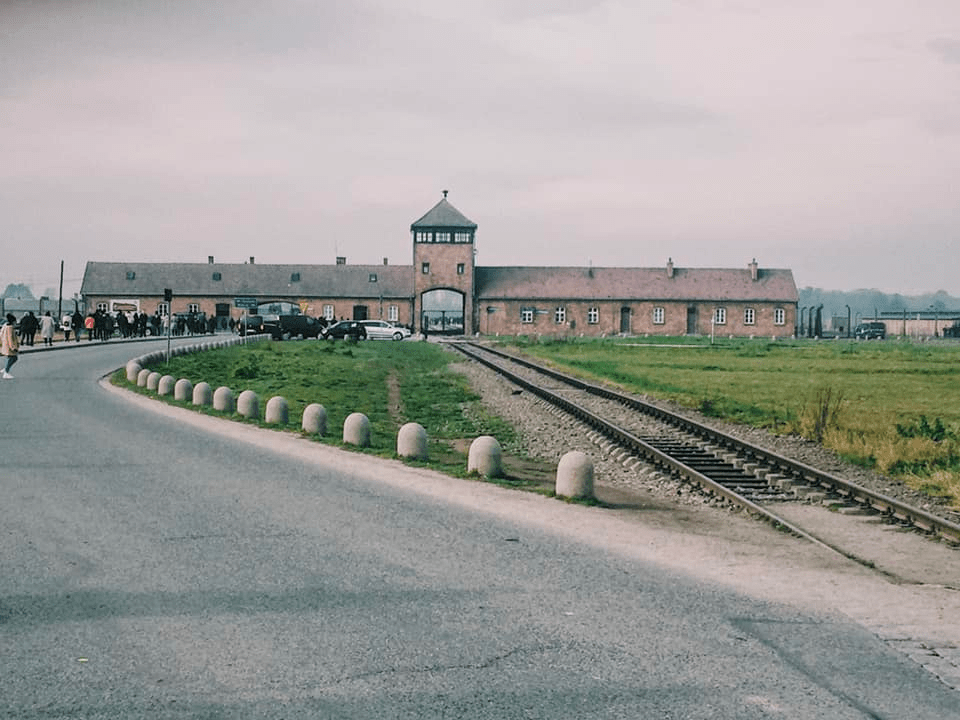
Photo from my visit to Auschwitz-BirkenauAuschwitz-BirkenauAuschwitz-Birkenau in late 2019

As we discuss the Holocaust, it is vital to be clear with definitions.

The Holocaust: Defined by the Holocaust Educational Trust as the murder of approximately six million Jewish men, women and children by Nazi Germany and its collaborators during the Second World War.

Antisemitism: The International Holocaust Remembrance Alliance (IHRA) defines antisemitism as a certain perception of Jews, which may be expressed as hatred towards both Jewish and non-Jewish individuals, their property and both religious and community institutions. It can take place in both rhetorical and physical forms.

Genocide: According to the United Nations, genocide can be a variety of actions which are intended to destroy, in whole or part, a national, ethnic, racial or religious group.

Clearly, with those clear definitions from trustworthy sources, we can start to interpret the Holocaust. I would like to zero in on the definition of the Holocaust itself by the Holocaust Educational Trust. I believe it exemplifies many points that challenged or at least expanded my own personal knowledge of the Holocaust.

‘Murder’ in the Holocaust was not limited to just the gas chambers as perhaps the wider public’s perception may be but covers a wide array of different deaths equally as important. For example, many victims died of disease, exhaustion or starvation in the camps as they were used for labour in the cruellest and most inhuman conditions throughout the war. Furthermore, many individuals died away from Concentration Camps in different places throughout the period of Nazi rule.

The phrase ‘approximately six million Jewish men, women and children’ contains a vital statistic of the scale of the Holocaust but is quite impersonal and ultimately incomprehensible. However, one way we can try to interpret this number is through the Book of Names located at Auschwitz-Birkenau, which lists 4.2 million names and any known details of the Holocaust’s victims. Unfortunately, there are just under two million names missing – as no records remain of their stories – but there is hope as blank space is left to hopefully record each missing person’s story.

The Book of Names – courtesy of Wikimedia Commons

We should also refrain from simply considering statistics and consider that all people involved (victims but also perpetrators and collaborators) were individuals. I was lucky enough to hear the testimony of Manfred Goldberg BEM, a holocaust survivor and educator, who truly brought home this point. Each person had their own story and motivations, and to truly understand the Holocaust, and we must consider this.

Finally, I wish to explain why this is relevant to everybody today, especially people like me who may not have an obvious connection to the Holocaust. Antisemitism hasn’t stopped – the Community Security Trust recorded 1668 antisemitic incidents across the United Kingdom in 2020 – and is increasing; therefore, we must learn to fight hate by educating ourselves and others. We must not limit this education to just antisemitism, as all forms of hate, whether it be islamophobia, racism, homophobia etc.. must be challenged. The remaining survivors of the Holocaust are now beginning to pass away sadly, so educating ourselves also becomes even more critical as we must ensure that we can all collectively continue their work.

Betty Totton: The Lost Grandmother

One hundred forty-eight years ago, on 12 April 1874, probably at home, the tenth child of Benjamin and Hannah Smith was born. It was a girl, the couple’s fourth and final daughter, and she was named Betty, probably after her father’s sister. Unfortunately, out of four girls, two had passed away in their infancy, and I suspect that both Benjamin and Hannah had slight worries for Betty’s health in light of this.

Betty’s ancestry was quite complex, with young death, dissenting religion and illegitimacy greatly defining it. Her ancestry also represented profound change in local and national history, following the gradual industrial revolution and political and religious changes throughout the 17th to early to mid 19th centuries.

Croppers in the early 19th Century

Following her ancestor’s footsteps, she grew up in the Kew Hill area, a region bordering Blackley and Longwood in the old West Riding of Yorkshire. Her father seemed to work in a variety of cloth related jobs, following most men in his wider area. In 1861 he worked in the quite skilled job of a cloth dresser (or cropper) as did many of his ancestors, but as new technologies developed, croppers found work harder and harder to find. This perhaps explains Benjamin working as a cloth miller a few years before Betty’s birth and then as a cloth fuller for most of her childhood.

The instability surrounding Benjamin’s work perhaps only furthered both his and Hannah’s worries. By 1881 they had a family of ten to provide for, and if Benjamin lost his regular income, the entire family would be threatened. They had to make Benjamin’s wage stretch far, especially before Betty’s older brothers went to work – likely after leaving school aged thirteen – and it is hard not to understate the worry that must have haunted the family.

Another aspect of Betty’s childhood, apart from the worry and threat of starvation, is the sheer size of the household. Fair enough, the number of children couples had was typically much greater than the modern-day but also sadly was infant mortality. I find the fact that Betty grew up with her parents and also nine other siblings, making a household of twelve people, as absolutely striking, especially because the 1891 census describes the Smith household as living in just two rooms. There were no specific instructions relayed to enumerators regarding what counted as a room. Still, even if we were to consider the fact that the number may have been understated – the family must have been absolutely cramped.

The size of the Smith family

Although things had been difficult for the Smith family, it wasn’t all doom and gloom. They laughed, cried, smiled and got up to mischief just as much as anybody nowadays. We actually have an interesting insight into this as Betty’s older brother Brearley and some other local young lads were fined for “gaming at toss for money” in an open shed on Kew Hill. It is noted that a fair few of those present managed to run off, and I suspect there could have been one or two more Smiths in and amongst them. Nevertheless, the laughter, shouting and lecturing that followed all indicate that although times and conditions were hard and, in many ways, horrific, people still lived their lives like we do this day.

Richard Totton

Betty’s choice of husband, Richard Totton, was quite interesting due to his history – his family was typical, and his occupation was fine too – but in the mid-1890s, he had had a little bit of trouble with the law. He was caught doing some probably illegal poaching with his brother and some friends and only just narrowly avoided being sent to jail. Regardless, his name and the fact he basically laughed in a police officer’s face when been accused of the crime was plastered all over the news in West Yorkshire.

Ultimately this didn’t deter Betty, who married him in November 1897 at the local Baptist chapel in Blackley. After their marriage, they didn’t move too far from their respective families, living on Lindley Moor in 1901, and Richard took up work as a coal miner. It wasn’t too long until on a Friday evening, at around half past five in May 1898, that the couple’s first child, a boy called George, was born. After 1901 and at the latest by 1904, the family had moved from the areas Richard and Betty grew up in to the Hightown Heights area of Liversedge.

The couple’s next child was Wilfred, born in 1907, but why was there a nine-year gap between him and George? We cannot be sure of the exact reason, but perhaps both Richard and Betty wanted to settle properly before having more kids. On the other hand, the cramped nature of Betty’s childhood with nine siblings made her hesitant about having a big family? Or was it simply down to fate? Either way, it is impossible to know the exact reasoning, but it is important to acknowledge it.

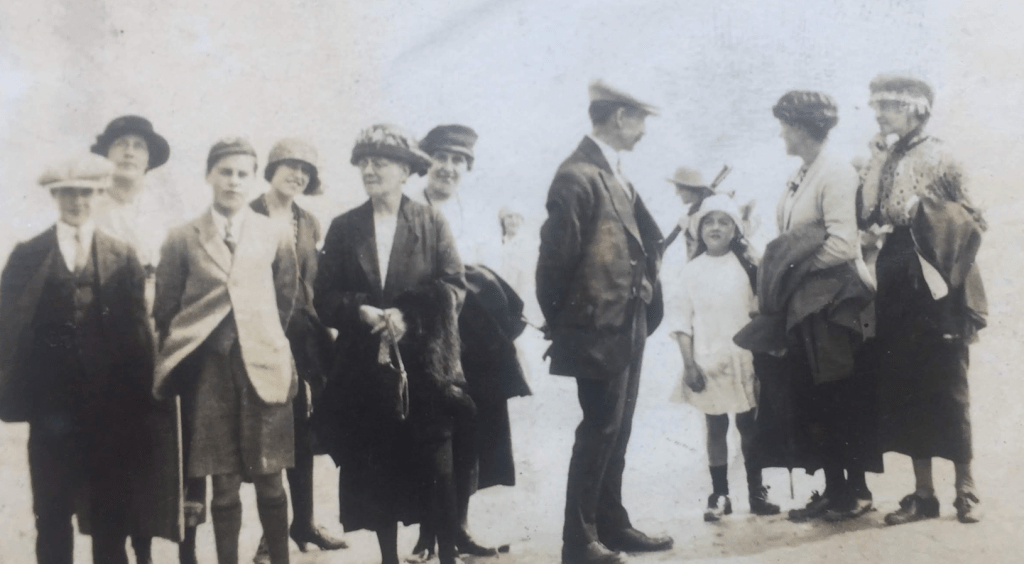
The Totton and Smith families, circa 1918?

There were a few baptisms in between, but apart from that, nothing major happened until the birth of the couple’s first daughter Lucille in the early hours of 13 February 1911. The family not long after appeared on the 1911 census, where Richard worked as a Deputy in a Coal Mine, and George Totton worked in a mill part-time alongside his education. Betty stayed at home looking after the infant Wilf and Lucille.

Sadly, taking after her two aunts who died in infancy, Lucille died aged only fifteen months in May 1912. Her tragic passing was due to a form of tuberculosis, which she bravely fought against for an impressive two months. She was buried in a plot at Liversedge Cemetery in the following few days. Lucille’s death was tragic and cruel and likely inflicted unimaginable pain and grief upon the Totton household.

My Great Grandmother Doris

In June 1914, my Great Grandmother, Doris, was born. Her birth likely came as a blessing to all the family, allowing them time to grieve Lucille but also then to move on in her name.

By 1920, the family moved into the quite impressive Highfield House in Hartshead and in the Tax Records of the same year, it is clear this was quite the jump for the family. Firstly, the record indicates not only did they have such a lovely house but also the fact that it came with some land and stables but also the fact it had a rent of £18, not a small amount of money at the time.

Even more intriguingly is the fact that both Richard and George Totton were “out of work” in 1921. They both worked in the Hartshead/Clifton pit of the Low Moor Coal and Steel Company as a getter/hewer and trammer, respectively. I suspect that this was down to ongoing industrial disputes, but it is still important to note. Betty remains at home, performing “home duties” whilst Wilf works part-time, and Doris is going to school on a full-time basis.

Area surrounding Highfield House and Park View

George Totton married in 1923, and not too long after, in about 1927, the Totton family moved into one of the less impressive but still comfortable Park View terrace houses. Three years later, Wilf married his wife Minnie, and they moved not too far away to Hartshead and later Roberttown. The same applied to George Totton, who moved out not long after his marriage to Walker’s Terrace nearby. Betty became a grandmother in the aforementioned period also, first came Edith and then Jack in the mid-20s, followed by Barbara in 1931.

Perhaps down to age or even the Great Depression that was now engulfing the world, Richard took up work as a Highway Labourer for the West Riding County Council. Betty had gone from a family of twelve in her early years to now living with just her daughter and husband in the lovely village of Hartshead.

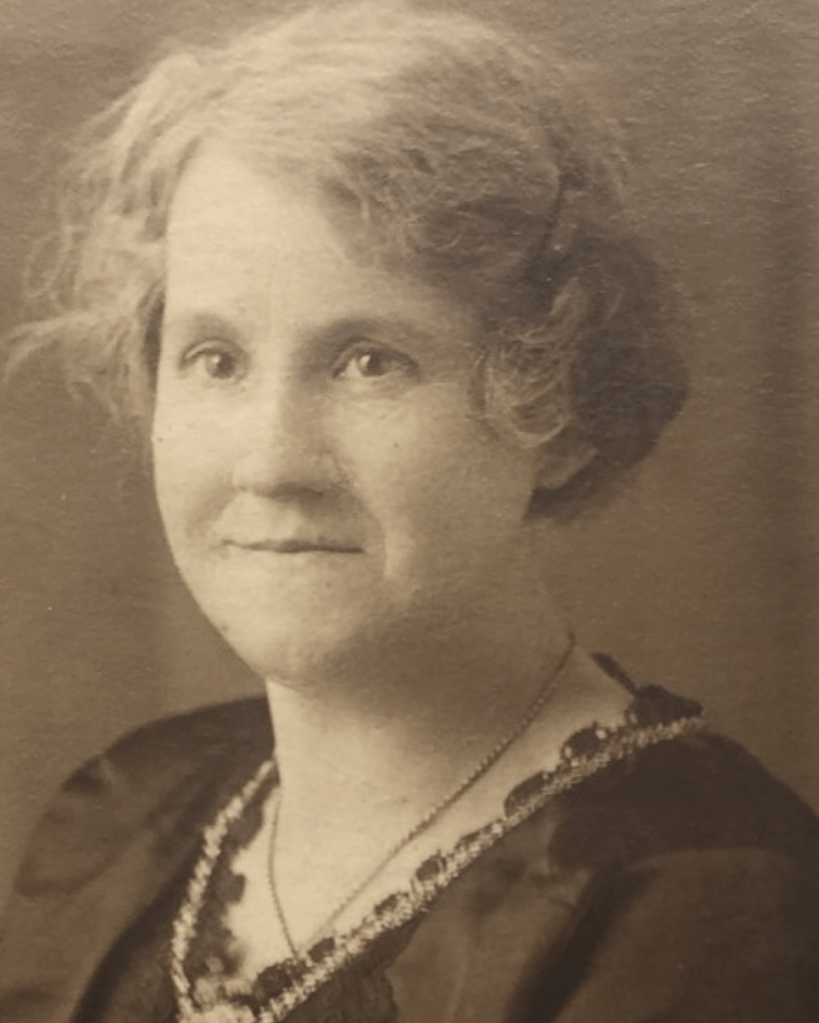
Betty and Doris

Not so long after turning sixty, on 10 May 1934, Betty passed away due to pernicious anaemia, which during the 1930s was almost always fatal. Treatment was tough, and Betty bravely put up with the worst until the end.

She was buried with Lucille two days later, on 12 May 1934. The plot remained unmarked until 24 February 2022, around eighty-eight years later, when the whole family played their part in making sure that both her and Lucille were remembered properly.

Marked finally

Betty will always remain special to me for a variety of reasons. The main one is simply the fact that I see her as such a warm, grandmotherly soul, especially through her pictures. The existence of so many pictures alongside so many other unique family heirlooms and facts also drew me into the Totton family and Betty’s story. Her story is unique but also of its time, and I am so privileged to tell it – alongside Ernest Hall, she is easily one of my “favourite” ancestors.

Why we need to save Spen.

I am writing this perhaps a tad late, but as the deadline to object looms tomorrow at midnight, I felt that the best way I could raise some awareness of what I think is quite an important issue is by posting something on my blog. 

The Spen Coat of Arms located on the recently refurbished Cleckheaton Library gates.

Firstly, I do not wish to be political; I simply believe that this issue is one that must be tackled. 

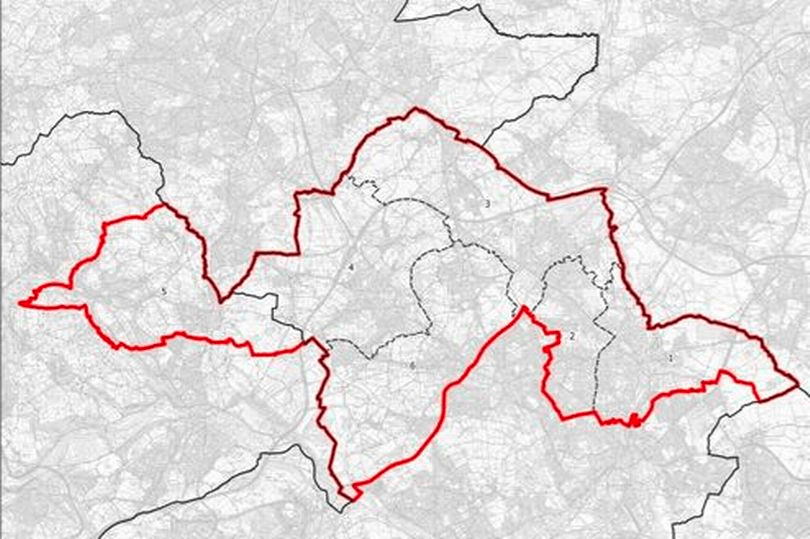
The Boundary Commission unveiled new proposals nationwide last summer, which on a local level butchers the current Batley and Spen constituency into an irregular oblong of leftover areas. The proposed zombified constituency will span through two councils and cut through the heart of local communities and make no sense on a practical and historical level.

The original ”Spen Valley constituency was created after the Redistribution of Seats Act 1885 and existed with a fair few boundary changes in between, up until 1950. For that period of 65 years, not only was the constituency held by John Simon, who held all great offices of state apart from the Premiership, but it also was host to an upset Labour victory in a contested fiercely 1919 by-election, indicative of the momentum behind the rising Labour Party.

John Simon, 1st Viscount Simon – He served as Home Secretary, Foreign Secretary and Chancellor of the Exchequer throughout his long career.

The naming of the seatback in 1885 was also quite interesting as it resulted in quite a significant spat between the House of Commons and the House of Lords. The constituency was originally going to be named “Birstall” after the ancient parish that covered the area. However, this was contested by Liberal Bradford MP Alfred Illingworth, who argued the area should be called “Spen Valley”. In many ways, at the time, the term “Spen Valley” was an artificial construct, as Illingworth would later admit, but he thought that the term would prevent jealousy between the local towns and also would be a more central name.

The Earl of Feversham strongly opposed Illingworth’s amendment arguing that the local population didn’t support or identify with the term “Spen Valley” and wanted the ancient parish’s name to be used. The Earl even further commented that the new term was “only remarkable for being the receptacle of all the sewage from Birstall”. President of the Local Government Board, Sir Charles Dilke, countered with the fact that although the term was artificial, it had the support of the local boards of Cleckheaton, Heckmondwike and Liversedge, which made up the majority of the proposed constituency. Finally, after the debate, the Commons voted 65 to 46 in favour of the seat using the Spen Valley. Afterwards, the Lords gave way much to Earl Feversham’sFeversham’s disgust.

Does this look like a good idea?

On a more practical level, is it right to have a constituency that spans two local authorities? Is it practical to have a Member of Parliament, an individual meant to represent all of us, split between a narrow strip of communities that have next to nothing in common?

And finally, and the point I wish to stress the most, is it right to lose a name that has stood for 137 years? I believe not.

What can we do then? Well, there is a multitude of things we can do, but the most important is submitting comments and objections to the Boundary Commission on their website.

The next part I have stolen from our MP Kim Leadbeater’s newsletter, but I couldn’t put them better myself.

“The key objections clearly are

  • Heckmondwike has strong ties to Batley
  • Removing the bulk of Heckmondwike would cut links between the west and east of the constituency, along the A638 (Halifax Road / High Street) in particular
  • Hipperholme and Lightcliffe have no ties to the constituency
  • Batley and Spen should remain wholly in Kirklees and not take in part of Calderdale”

It is also a good idea to highlight that the name Spen Valley, Spen or Spenborough has remained part of a parliamentary constituency since 1885 or 137 years. That represents five generations of my Batley Hall family. How many generations of your family have lived under this name?

I understand there is a pandemic and countless devastating conflicts and wars across the globe, but many people will think this isn’t actually the most pressing issue. But losing our local identity would be genuinely devastating, and I worry the sense of community we underestimate could begin to slip away.

This is why I really believe we should all try our best to reinforce the common identity we share in our local area. The Spen Valley is a historic place, once home to the Industrial Revolution, which permanently changed the area and our world. We once housed mills, factories and mines that were world-renowned. There are plenty of opportunities and hope for the future if we work together, and the first step starts by preserving our area’s name.

‘Spen Valley’ on the sign at the new ‘Spen Baths’ – indicative of a bright future?

According to the late Thomas William Thompson, the Spen Valley was inhabited by “brave, fearless people” – let us not lose that identity now.

Eliza Jackson: Survival, Luck and Loss

I must preface this by saying that many aspects of Eliza’s life (especially her childhood) are unclear, and I cannot guarantee that as time goes on, things won’t change. There is lots of conflicting evidence that has been hard to wade through. Nevertheless, all research undertaken was to the best standard I can aspire to and backed up with DNA evidence.

As I said, Eliza’s early life is a little murky; however, she was probably born on 1 April 1852 to James and Sarah Jackson. The family resided on Grey Street (now Hunslet Road), and Eliza was raised in likely grim conditions. Her father worked as a dyer in a textile mill as their local Leeds, and also more generally Northern England, began to industrialise at an unprecedented rate. However, this progress didn’t necessarily flow down to the average worker who faced a hard and harsh existence labouring for their survival.

Growing up, it was a house of boys but also loss – at birth, she had a living brother and a sister. Sadly her eldest brother passed away a year before she was born. In the next decade or so, up until 1864, the Jackson family grew quickly, and Eliza had four new brothers and a sister. Tragically death struck repeatedly and mercilessly for the next decade of Eliza’s life.

First came the death of her brother George who died aged only eight months. He ironically shared the first name of Eliza’s eldest brother, who passed away in 1851 and was buried at Beckett Street Cemetery. This place would become too familiar to young Eliza in the coming years.

Beckett Street Cemetery – Taken from Flickr

December 1866 – two deaths within just a week or so shook the Jackson household. First came Eliza’s younger sister Caroline who passed away aged nine, Eliza’s younger brother James then passed away soon after, aged twelve. I don’t have death certificates to confirm their causes of death, but I think it is likely that perhaps disease plagued the household that month. They were both buried at the familiar Beckett Street Cemetery – Caroline on 7 December, James on 18 December.

Despite the fact that infant mortality rates were much higher, and the loss of children was much more common, the impact of these deaths upon the Jackson household and both James and Sarah cannot and must not be underestimated. We will never know how they coped or precisely what they felt, but I can only imagine that their feelings of loss and grief were profound and only more was to follow.

By 1870, aged about fifty, James Jackson, a husband and father of five living children, was dead. Again, I don’t have a death certificate with the exact cause, but we know he passed away on 2 July 1870 and was buried a few days later at Beckett Street Cemetery. I should stress that the family were not buried together in a plot – the family couldn’t afford that – instead, they were all buried in separate public plots across the cemetery.

Leeds Times – 7 July 1870 – James Jackson’s death notice

Now Eliza had lost her father and a vast chunk of her siblings, and she was only aged about nineteen. Losing a father is devastating, of course, but an overlooked aspect, perhaps from our modern eyes, is the loss of the family’s breadwinner. How was Sarah going to provide for her kids now? The threat of the dreaded workhouse loomed.
I suppose there was a blessing in the form that all members of the household, barring William, the youngest lad, were recorded as working in the 1871 census, including both Eliza and Sarah. This wasn’t great at all as conditions, as I said, were horrible, but they were surviving and banding together in the face of loss and grief – what an unbreakable bond must have been formed.

Grim conditions in Victorian Leeds – Taken from https://chrisnickson.co.uk/

In 1871 Eliza worked as a Tobacco Spinner, a rather interesting sounding occupation – what did that entail? Well, the Dictionary of Old Occupations defines the job as being an individual who made and sold tobacco products, e.g. cigars, snuff, etc., on the premises. It is unclear whether Eliza was making or selling the products or perhaps even doing both, but it was likely a tough job. Unfortunately, I did not find many sources on the working conditions of the job. Still, I came across a few limited and perhaps even outdated photos that imply the work was quite physical and clearly would have been grim for Eliza to undertake.

Eliza’s big sister, Mary, married Henry Redshaw in 1871, and although she seemed to have everything to look forward to, she would be dead mere months after her first wedding anniversary. Loss had struck the family again – Eliza was the only sister left.

Two years later, in October 1874, at Mirfield Parish Church, Eliza finally stuck some good luck and got married to Frank Butcher, a cloth dresser who faced a similarly traumatic childhood. His mother passed away when he was only about five or so, and his family split and migrated all the way from Frome to Leeds. His father worked away, and eventually, both Frank and his father ended up living in Ravensthorpe by 1874, so did Eliza, according to her marriage certificate.

Frank and Eliza’s marriage record

How both Frank and Eliza exactly met is very unclear, but I suspect the Leeds connection played a prominent role in it.

After their autumnal wedding at such a beautiful and near ancient church, they moved to Mirfield and its surrounding areas and lived on Crossley Lane by 1881. Eliza’s childhood of loss seemed a distant memory as, by that period, she had given birth to two healthy boys and two healthy girls.

More children would follow – three girls and one boy.

Emily in later life

The second to last child was called Emily, and was born on 3 May 1887 and was baptised not long after on 6 July 1887 at St. Saviour’s Church in Ravensthorpe. The family had moved to Dearnley Street in Ravensthorpe by this point, and little Emily was also probably born there. She is so important because she was my Great Great Grandmother, and her picture proudly stands staring back at me as I write.

Finally, in 1891, the Butcher family seemed complete. Miraculously, all children born alive had survived, and it looked like both Frank and Eliza had finally broken the cycle of viscous loss that had plagued their childhood. After all, within less than a decade, it was going to be a new century and surely watching their children and soon to be born grandchildren in it was something to look forward to.

Eliza didn’t reach the new century.

Her death was perhaps unnecessarily tragic and is even upsetting to me – her Great Great Great Grandson – born just over a century after it. Her exact cause of death was Placenta Presia Post-Partum, which is related to pregnancy in simple terms. It is unclear if this meant she died in childbirth itself, but no living child is recorded as being born.

Hanging Heaton Church – where she would be buried in 1893

She died on 13 October 1893, which was ironically a Friday. She was buried a few days later in an unmarked grave at Hanging Heaton Churchyard, in the same Churchyard as Emily and her husband. Frank, her husband, was probably buried in the same plot as her – in the end, at least they got to rest together.

In the end, Eliza didn’t break that cycle that cursed her childhood, but it was soon broken by her daughter Emily. However, we shouldn’t focus just on her tragic ending, as her story of grit, courage and survival in the face of so much loss and the plain cruelness of life is truly inspiring. It is a story that 170 years after her birth should always be remembered in its entirety. I aspire to take her grit and courage into my own life, and I am convinced that her daughter, my Great Great Grandmother, Emily, also inherited it.

One hundred and seventy years to the day of her birth, Eliza’s short life but important legacy remains strong.

Marking Betty and Lucille’s grave

My Great Great Grandmother Betty Totton passed away nearly eighty-eight years ago, but only a few weeks ago, I was able to directly influence her legacy and help her story be remembered for generations to come. It wasn’t the most impressive thing that I did, but I was able to (with the help of many others) mark her grave and allow her to be remembered properly after all these years.

Betty with my Great Grandmother Doris, probably outside their house in Hartshead

Why Betty? Well, answering that question is not an easy feat as, after all, I have sixteen Great Great Grandparents, all of who had remarkable lives in a plethora of different ways. I suppose Betty’s life was one of the easier ones to learn about from the get-go as although she was brought up on the Huddersfield/Elland border region of Kew Hill; she lived most of her married life in local areas such as Hartshead and Clifton. We have plenty of lovely photos of her and the wider Totton family, and the research into her life was also relatively easy as there were lots of sources available. I also felt a great connection to her as I saw her as a grandmotherly figure, which hit hard as she didn’t meet most of her future grandchildren. It is also worth mentioning that the plot at Liversedge Cemetery where Betty was eventually buried was also the place of rest of her daughter Lucille, who died during infancy. Therefore, finding and ultimately marking the plot became even more poignant.

Another important aspect of the story we haven’t discussed so far is that back in July 2020, none of this applied to me, well apart from liking and connecting to Betty. I didn’t know where she was buried, nor did I have any idea where Lucille was buried. Towards the end of the month, I think around 19 July 2020, was when I first volunteered at the Friends of Liversedge Cemetery after finding the group on Facebook. I didn’t go prepared, not even bringing any gloves, but sooner or later, I became a regular volunteer at the group.

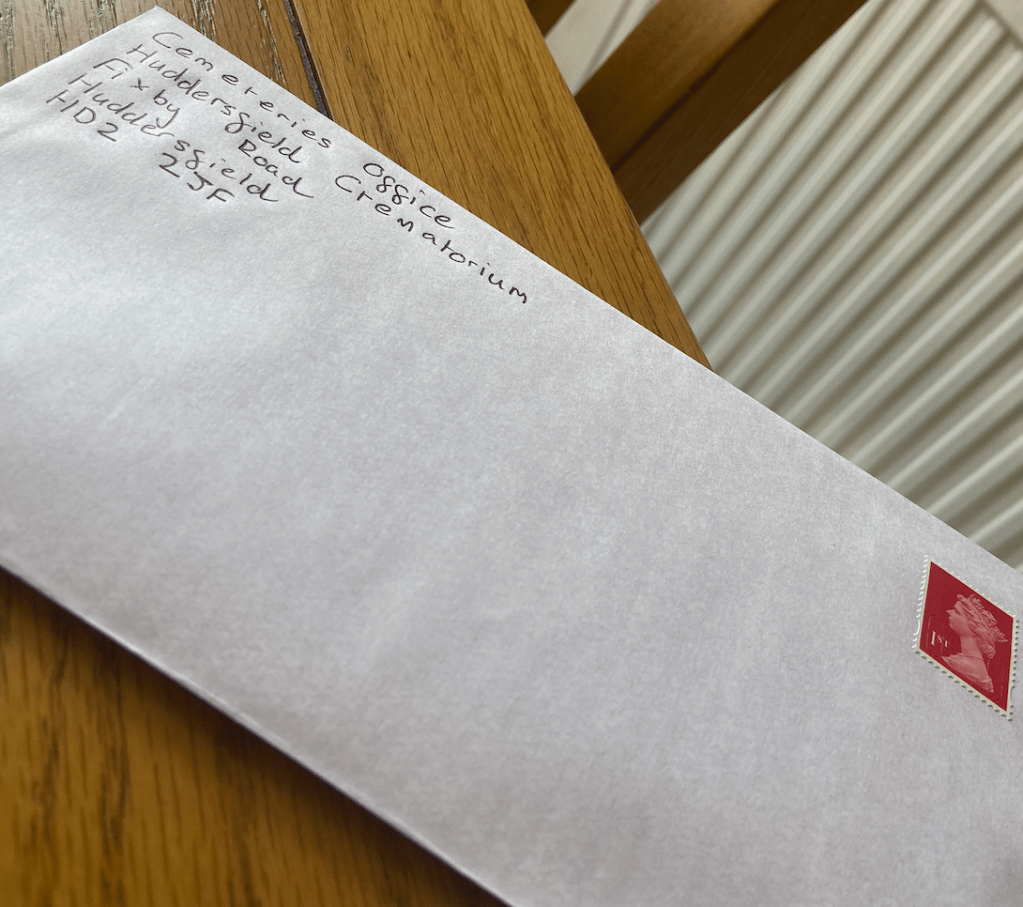
After speaking to Tina, the group’s brilliant founder, she recommended contacting the Cemetery Office to find out more about where Betty and possibly Lucille was buried. So, sooner or later, I rang up the office, and after a relatively quick search, they were able to provide me with plot details alongside some helpful maps. Furthermore, they also very kindly marked the plot as someone was up at the site the next day.

The Totton grave on 20 August 2020

The plot was literally grass, and there was no real indication that anyone was buried underneath it. Nevertheless, over the next month or so, it became apparent that were was a feeling in the family that we should mark the plot in whatever way possible. After consulting with Tina again, she gave me some great advice, and I contacted the council again. After my conversation with the cemetery office, it became apparent that the process of marking and gaining ownership of Betty’s grave was going to be more complicated than first expected.

The first problem came because the grave owner was Betty’s deceased husband, Richard Totton, who died in 1945. Clearly, it was impossible to transfer ownership from Richard himself. Furthermore, as my grandfather was the son of Betty’s youngest daughter, it ostensibly appeared to be even more complicated than first anticipated. However, after studying the rules and regulations of plot ownership in Kirklees Council and having these explained to me by a wonderful worker from the Cemeteries Office, I realised that my grandfather was first in line in being able to claim ownership. This was a stroke of luck and would make the process a lot easier.

The plot owner

The fact that it took so long to get to the solicitors was down to various uncontrollable factors. First, there was the October 2020 lockdown and then much more prominent January 2021 lockdown, then there were my GCSE exams or equivalent exams as the main ones were cancelled due to COVID. It may seem somewhat draconian to claim ownership of a family plot, as you have to go to the solicitors and sign a legal declaration, and a very formal one at that, but it does make sense from a legal point of view.

In early August 2021, the appointment was finally made to see the solicitors at an excellent firm in Mirfield and sooner or later, the declaration was posted off. Within a few days, the Cemeteries Office returned with confirmation that the family plot was now back in the hands of the living family. It was quite a sobering moment, to an extent, as Betty and Lucille were no longer forgotten.

Form ready to be posted

My own procrastination and life generally got in the way now as we began to consider how we would like to mark the grave. There were the cemetery rules and regulations from Kirklees Council, which we had to follow, but we had to decide upon which way we wanted to follow them. There is a true variety of factors to consider when you finally get to the stage of choosing a monument – you have to consider cost, size, scope and trying to be as truthful as possible to the person whose grave you are marking.

In about October, we went through the list of approved masons by Kirklees Council and finally came across the stonemason we wished to use. There was an irony to this as it was located near Edgerton Cemetery in Huddersfield, the resting place of many of Betty’s family and the wider Totton family’s ancestry. We were lucky enough to contact a lovely lady from the stonemasons who helped us through the process, and sooner or later, the order was placed by early November.

Betty’s plot in October 2021

Christmas and New Year passed, and as we approached early February, I was notified that the stone was ready to collect. This was great news, and I looked forward to picking it up. However, down to a few reasons, we had to wait a small while until we could pick it up, and on Tuesday 22 February, we finally made the journey to Huddersfield and collected Betty and Lucille’s stone.

The Journey back to the Cemetery

I mentioned that once Betty’s grave was back in the family’s hands, it was a sobering moment, but seeing the name Totton engraved upon the stone truly trumped that moment. It was genuinely spine-chilling to realise that we now had directly impacted the legacy of Betty and Lucille Totton. Now the grave was to be marked, and they were no longer just another pair of forgotten souls in an unmarked grave.

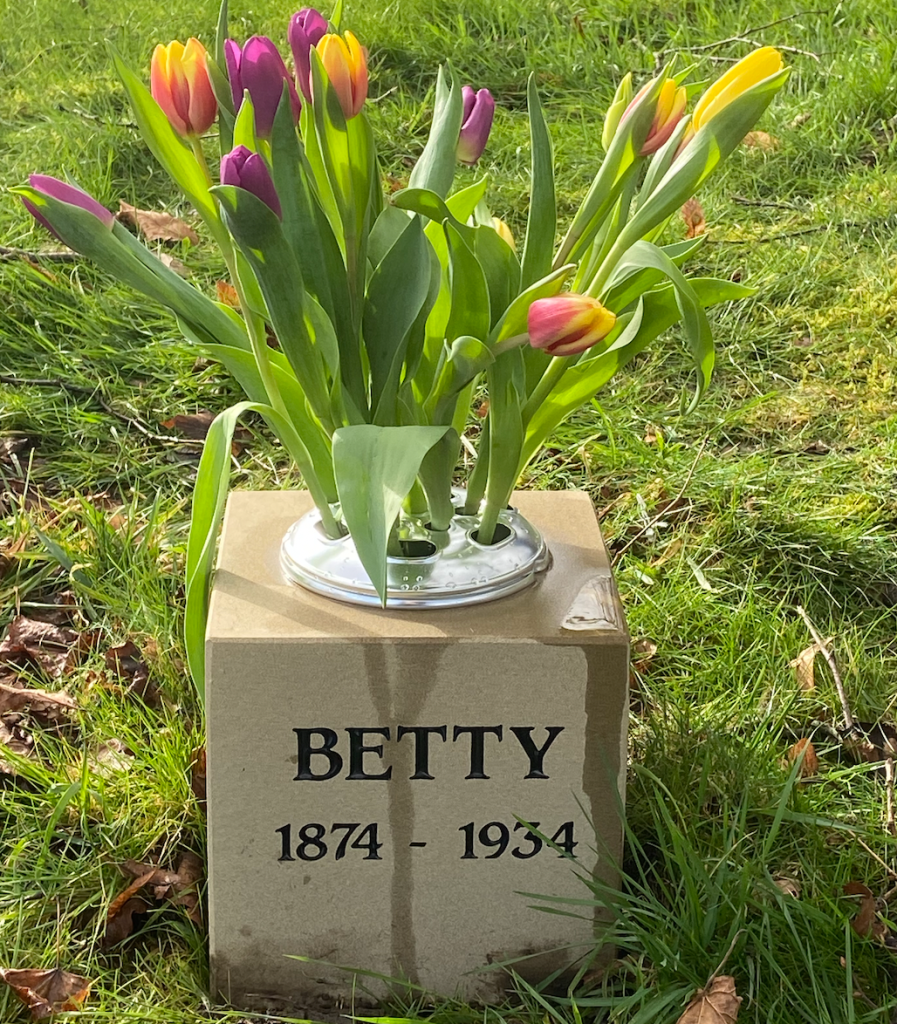
Placing the stone was another interesting moment. We didn’t come adequately prepared and had to make use of a variety of rather interesting tools to ensure it was placed safely and accurately in the plot. Once we were happy with it, some beautifully chosen tulips by my grandparents were placed into the vase. Finally, after nearly 88 years, the lifetime of so many, Betty and Lucille’s grave was now marked as it always should have been.

Finally marked after eighty-eight years

It was a long process, down to a variety of factors. If I were to give any advice to anyone who wished to undertake a similar process, I would beg you to do the research upfront and not just wing it as I effectively did. Find out what your local council needs, and be prepared to be disappointed, especially if it is an older relative who may have more children/descendants. Churchyards may be more flexible, and although this was the above board method in ensuring that the council does not ‘mince’ or remove your monument, you can always just mark the grave, and I suppose there’s a high chance no one will notice.

Regardless it truly was a privilege in being able to mark Betty and Lucille’s plot. They both deserve to be remembered properly and no longer have to rely upon glass jars or old wooden crosses in being able to be seen. There is nothing necessarily wrong with having an unmarked grave; many of my ancestors rest in unmarked ones. Nonetheless, it seemed wrong not doing something for Betty as I genuinely do connect to her and she is quite literally buried up the road. Furthermore, she’s also not even necessarily that much of a distant relative, being my grandfather’s grandmother.

Great Great Grandmother and Great Great Grandson

All in all, I hope that she’s proud of the fact her plot is marked after nearly eighty-eight years.

Emily Butcher: The Survivor

There is an irony to life, chiefly visible to those that look back, and I suspect that Frank Butcher didn’t want the loss he experienced in 1854 to be repeated again. No child should have their mother ripped away from them, especially not by a cruel disease like cancer. To watch the woman you so profoundly rely on slip away. How did it affect your father? Would it make him closer to you being able to step up to the mark, or would it make him distant, unable to process a rather sudden or perhaps more drawn out loss? The family group would be irreversibly affected, regardless of circumstances.

Frank’s mother’s death certificate

I wonder if Frank worried about this when he married Eliza Jackson in 1874? Or each time a new child was born? The couple ended up having three lads and five girls, the second youngest of the lot was born in May 1887 and was named Emily. She would later become my Great Great Grandmother.

But as mentioned before, there is an irony to life, and when Emily was aged six, a similar age to her dad, who was about five when his mother passed, she lost her mother to the effects of childbirth. Eliza’s cause of death was recorded as ‘placenta praevia’, which perhaps would indicate she was pregnant at around the time of death, but no record seems to suggest so, and I am certainly not an expert.

St. Paul’s Church, Hanging Heaton where both Frank and Eliza Butcher are buried

Regardless her childhood was affected irreversibly, and her family changed forever. To what extent and in what ways is debatable. Frank never remarried and passed away in 1906, aged 57. He died out of what was once known as ‘Bright’s Disease, and his passing wouldn’t have been nice to experience, but his son Percy was present at the death, so he wasn’t alone. What caused his death is unclear, but there is a chance he may have turned to alcohol when Eliza passed or perhaps he was simply unlucky and inherited it genetically.

Emily now was without a mother or father, but she still very much had a family. She likely lived with her sister Annie after her father’s death. I cannot be exactly sure, but in 1911 the other remaining Butcher siblings lived with her and her husband, Walter Hall. He is quite important as he was the son of William Henry and Eliza Ann Hall and brother of Ernest James Hall, Emily’s future husband.

Ernest James Hall, circa 1910

It is likely the latest date they could have met would have been Walter and Annie’s marriage in 1901. It doesn’t really matter how they met as they married in 1908 at Batley Parish Church and moved into the local Providence Street to raise their family. First came my Great Grandfather Percy in 1908, then Evelyn in 1910, and then Marion in 1913. What could go wrong for the young couple? Their lives had just begun.

Emily with Evelyn, circa 1910

War is merciless, and at some point after the birth of their daughter Phyllis in July 1915, Ernest went off to fight in the First World War. I dread to think what Emily felt watching her husband leave her; I suspect she was proud but also profoundly worried and petrified. How did she cope watching her children wave goodbye to their father? It is unthinkable.

Ernest survived the war and was ostensibly unscathed, barring a slight injury to his eyesight. Unfortunately, this wasn’t entirely true. The trauma of the war deeply affected Ernest, and he became what was known at the time as ‘Shell Shocked’.

There wasn’t a great dealing of understanding of the condition at the time, and men were just expected to return to life as normal. Imagine trying to settle back into life after fighting a brutal war, and you couldn’t find work as unemployment was rampant, whilst also being shunned as “personally weak” for suffering mentally. The treatment of these veterans by the establishment was disgusting, but my personal feelings on the matter are irrelevant, and for Ernest and Emily’s case, life went albeit different.

Proud? (Portrait taken circa 1915)

I do not know to what extent and exactly how Ernest’s trauma affected him, but it did. Was it nightmares? Near perpetual anxiety and bouts of shaking? Was he okay one moment only to opposite the next? Furthermore, it is absolutely unknown as to how Emily felt about this and how she dealt with it. Nonetheless, as a couple, they continued in life.

They moved to 99 Whitely Street, Daw Green (in the modern Westtown area), Dewsbury by 1920 and in 1921, Ernest was working as a Fettler at Alexandra Mills in Batley. More kids followed, and by 1927 the Hall family was finally complete. Emily arguably had kept the family together and likely provided Ernest with enough support to keep him going.

She raised quite a glamorous daughter in Phyllis and also a daughter who was good at acting/singing in Evelyn. Evelyn acted in some plays and was very enthusiastic about it, even being ‘spotted’ by an individual who wanted her to come to London. However, Emily told her no and that she had to go work in the mill to earn some money.

Evelyn Hall on her wedding day with her parents Emily and Ernest, 1939

By 1939 two daughters and a son had left home, and the family had moved to 32 Commonside, Hanging Heaton, and I suspect both Ernest and Emily felt powerless as they watched another generation sent off to war. Their son Frank served in the Royal Navy, and their son Jack also likely served.

It is hard to imagine Emily waving to her children, just as she had done to her husband a mere twenty-five years or so ago, as they went off to serve their country.

Throughout the war, Emily’s first grandchildren were born, all boys. Phyllis had Brian, my Great Grandad Percy, who likely stayed at home due to his reserved occupation, had John in 1942, followed by my Grandad Richard in 1944. Despite so much conflict, hardship and strife, another generation had been born.

The next generation?
Left to right: John Hall, Edith Annie Hall, Percy Hall, my GG, Richard Hall,my grandad

Another grandson recounts only ever meeting Ernest once, and even then, he went to the other room away from everybody. Obviously, even then, nearly three decades after his war service, Ernest was still affected by his trauma, and Emily also was by default.

She soon became ill with cancer and on 6 June 1948 passed away aged 61. Her daughter Marion registered her death and was present at her death as I would like to think most of her family, and at least both Marion and Ernest. She was buried three days later at the local St. Paul’s Churchyard at Hanging Heaton. She wouldn’t remain separated from Ernest for too long as he passed away suddenly of a heart attack about eighteen months later.

Both of them were finally able to rest together in peace.

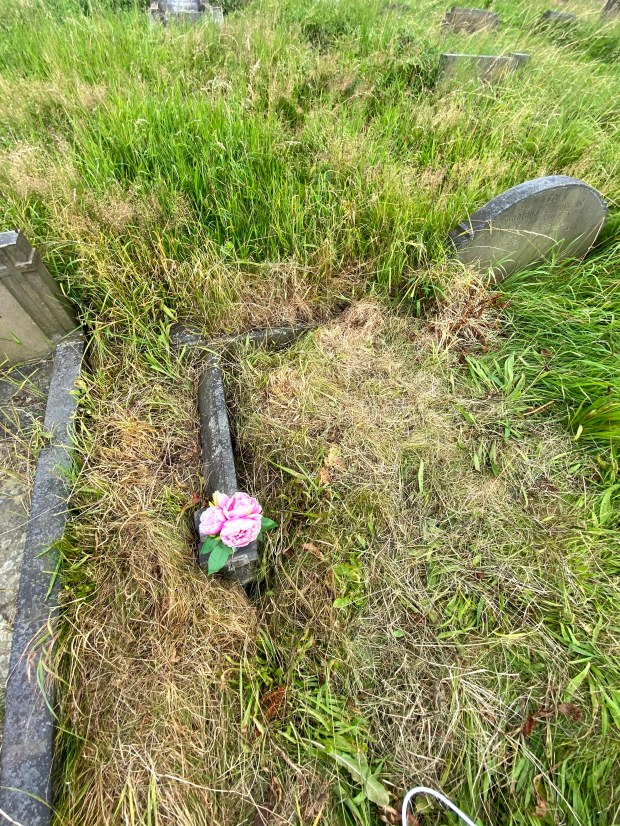
Grave of Ernest and Emily after I had marked it

I wanted to find their grave for a long time and failed to do so until August 2021. The grave has sunk with time, just like both Ernest and Emily’s memory – fading slowly away. Both their legacies are complicated, with one of their daughters remarking that her father should have never had kids. Perhaps that was true to an extent, but both Ernest and especially Emily are awe-inspiring figures. Both clearly had guts and were able to endure and stick together to make sure that, no matter what, in spite of everything, both themselves and their family would survive.

Rainy selfie

To say they died nearly sixty years before I was born, they both mean a lot to me. Both their stories are remarkable but so ordinary, and I hope that as one of the many carrying their ‘Hall’ name, I can live up to their grit and courage.

Rest easy, Ernest and Emily.