Remembrance to Me

Back about seven years ago, in 2014, Britain marked Remembrance Day alongside the centenary of the outbreak of the First World War. I was only nine years old, so I naturally don’t remember a great deal from this time period; however, I do have some strangely distinct memories. We had an assembly on Remembrance Day, and towards the end, a video was played. I can’t remember at all what this video said or was about apart from it being related to Rememberance, of course. Towards the end, many photos of fallen soldiers were shown, which profoundly affected nine-year-old me. I suppose this was down to the fact that I was presented with the fact that the millions who died years ago were all human with aims, dreams, fears and hopes. As a kid, I was a sensitive soul, and I have no shame in saying that I had teary eyes walking back to class.

I always took Remembrance Day seriously subsequently, but it was a while before anything of significance happened. I joined the Air Cadets in 2017 and, because of this, partook in Poppy Selling and also marched at the Cleckheaton Remembrance Day parade.

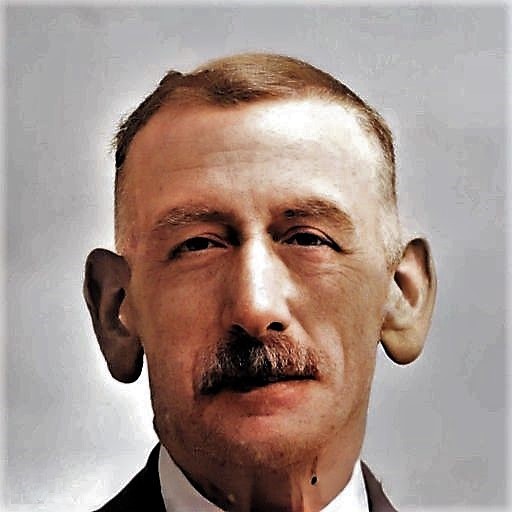
My genealogical research began in March 2020, just before the lockdown was announced, and I came across the story of my Great Great Great Uncle George Alfred Dale. I have told his story on a Hidden Branch blog post which can be found here, but I became deeply connected to George. I couldn’t for the life of me tell you why but I bought/searched anything to find out more about him. I was lucky enough to have a picture of him already uploaded onto Ancestry and, in the early months of 2021, found a second picture of him online. I suppose what attracted me to him was simply that he was the first soldier I had come across and the fact he made the ultimate sacrifice. Another reason is that I am, in a way, named after him as my Great Grandfather George Ronald Dale, who I am named after, was named after him.
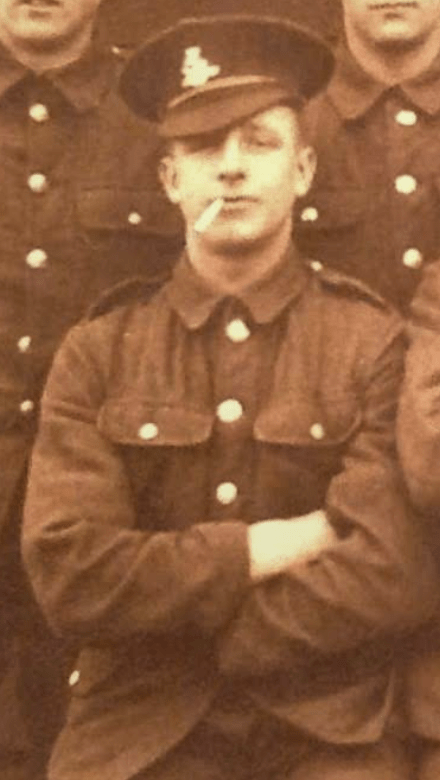
George Alfred Dale

The next major story I uncovered was the service of my Great Great Grandfather Ernest James Hall. He was born in 1885 in Batley and had a rough childhood with a notorious alcoholic father. He married Emily Butcher in 1908, and the couple had seven children over their marriage. Ernest joined the 8th Battalion of the King’s Own Yorkshire Light Infantry at some point after the birth of his daughter Phyllis in 1915. He would have served across France but also Italy towards the end of the war. Quite a few of the Halls served in the First World War, including his nephew Walter and his brother Lewis with whom he appeared to enjoy a close relationship. Ernest was injured at some point in 1917 and suffered injuries to his sight, and was awarded a pension that lasted for about a year. He received the British War Medal, and Victory Medal, one of his medals was inherited by his son and my Great Grandfather Percy Hall. It remained displayed with pride by my Great Grandma even after my Great Grandfather’s death and is still in the family to this day. Ernest also sadly had PTSD, or as it was more commonly known at the time “shell shock” and kept himself to himself and rarely saw his grandchildren towards the end of his life.
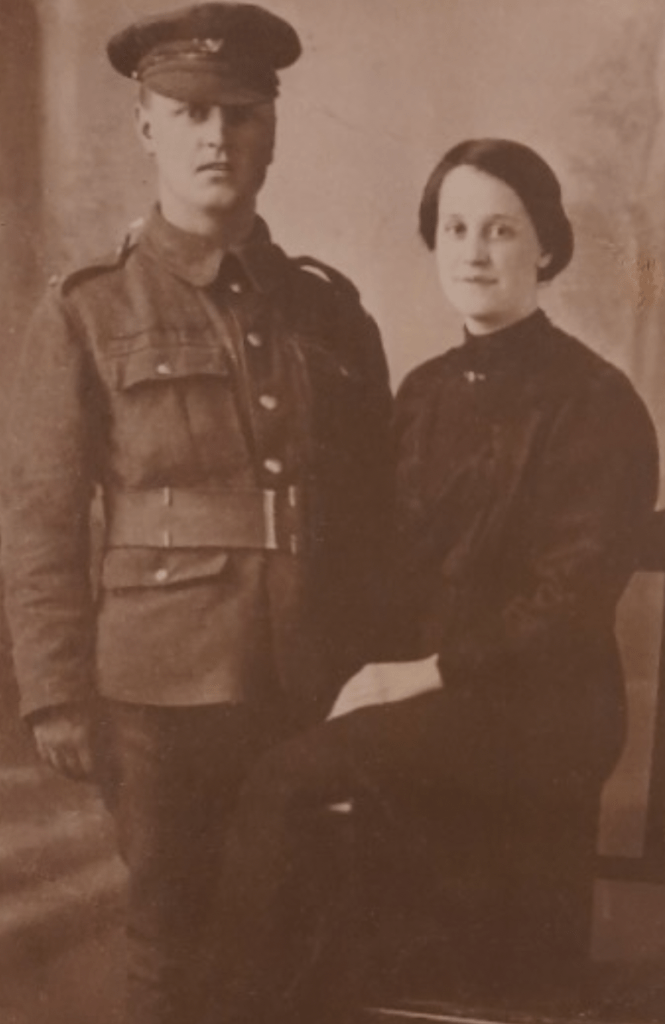
Ernest in his army uniform alongside his wife Emily

Fred Hopkinson, another Great Great Grandfather, was born in 1896 in Birstall also served during the First World War. He joined the King’s Own Scottish Borders and served in a variety of different battalions and was sent to France in October 1915. In the summertime of 1916, he was injured, although the nature of the injury is unknown. He was awarded the British War Medal, Victory Medal and the 1914–15 Star. His experiences of the war were rarely mentioned, although my Great Grandmother Shirley, Fred’s only daughter, recounted that when he was in trenches, he was knee-deep in mud and water.
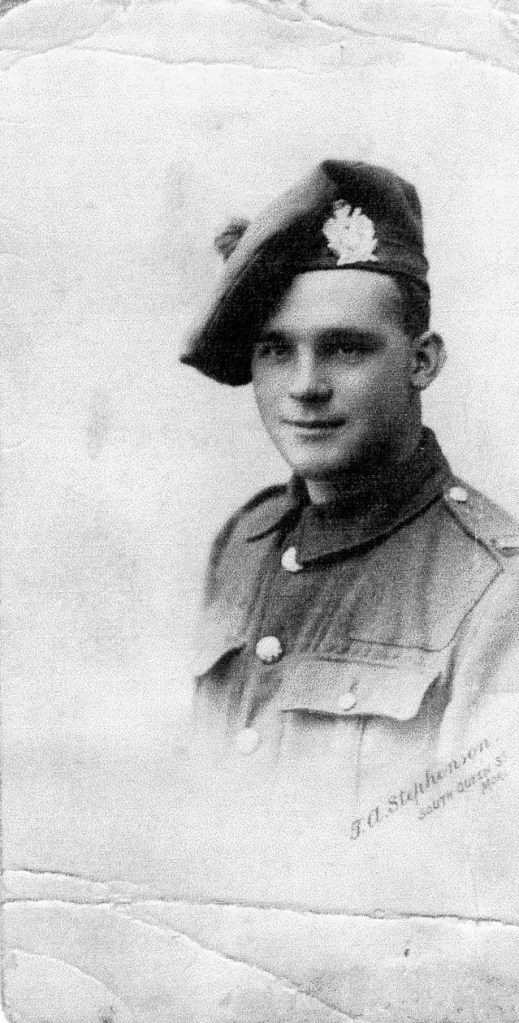
Fred Hopkinson in his uniform

My final connection is a larger project I have undertaken, researching and writing up the stories of all 36 known soldiers buried/commemorated at Liversedge Cemetery. The book will be published relatively soon (all will be announced on my website and social media), but it has been an experience writing it. The sacrifices, bravery and selflessness of the wartime generation bled through the individual acts of bravery and sacrifices to provide a model that everyone should strive to follow in the modern-day.

Remembrance Day means a lot more to me than it did before, and I hope that this can prove to you that there are many different ways to engage with remembrance. I haven’t even mentioned any of my Great Grandfathers that served during the Second World War or that of their siblings, both male and female, who contributed and made sacrifices to the war effort in their different ways. It is essential that we remember our fallen troops just as much as the ones who lived with the consequences of their service up until their passing. We must also ensure that in 100 years, Rememberance remains as significant as today and 100 years ago as if we forget, we are doomed to repeat.

The Brigantes and the Pre-Roman Spen Valley

According to local historian, Thomas William Thompson, the Spen Valley was once inhabited by a “brave, fearless people” who were “small in stature” but made up for that by their physical strength. They were known as the Brigantes and controlled the vast majority of Northern England in pre-Roman times.

Approximate territory of the Brigantes

The Geography of the Spen Valley would have been key to how these lived, and Thompson also gives us a captivating description of what the Spen Valley may have looked like in this pre-Roman era. The area of Spen was “densely wooded with beech, oak, pine and thorn trees” and “gorse, broom, and blackberry bushes” would reach the edge of the “broad stream of water” that would one day be known as the River Spen. This river itself twisted down the valley, collecting driftwood and other debris brought downstream by melting snow or stormwater. There were probably stretches of moorland, at places like Harsthead Moor, that were “covered with bracken, ling, gorse, broom, and blackberry bushes”.

Bee-hive shaped “wattle-and-daube” huts may have been built in this landscape. These huts were built by the Brigantes and were supported by a network of tree branches, interwoven with twigs, and covered with mud or clay. It was dark inside the huts, night or day, as there was only a small hole to enter or exit. One family resided in one hut, and they were all built close together, forming a small village that was protected by a fence or enclosure to keep out dangerous wild animals.

A typical wattle-and-daube hut

The Brigantes didn’t have any knowledge of metal, so, therefore, could only use tools made of bone, wood or stone. They typically used choppers and hammers for weapons, which were mainly used for defensive or hunting purposes.

Men would leave to go hunting in parties, typically killing wolves and bears, to secure their skins, which were then taken to the village to be preserved. Women would use these skins to create clothing for the village; they would use bone needles and strips of hide to sew the clothes together. Of course, the men would also hunt other animals for various other purposes, including to eat.

The people were likely self-sufficient, eating a diet of fish, deer and wild boar. They also collected nuts and succulent roots to be eaten in winter and during summer and autumn could rely on an abundance of wild fruits. The Brigantes could make fires, and these would be lit outside where they would cook communally, away from their huts to avoid setting them on fire.

There is not much known about the religion of the Brigantes, but they probably worshipped a goddess named Brigantia.

A statue depicting the goddess Brigantia

The Brigantes remained a dominant force across the North of England up until the Roman conquest and would take the Romans decades to subjugate. It is arguable that the distinct identity of Yorkshire and the unique genetic identity of West Yorkshire can be traced back to the Brigantes, to an extent.

Finding our Ernest and Emily

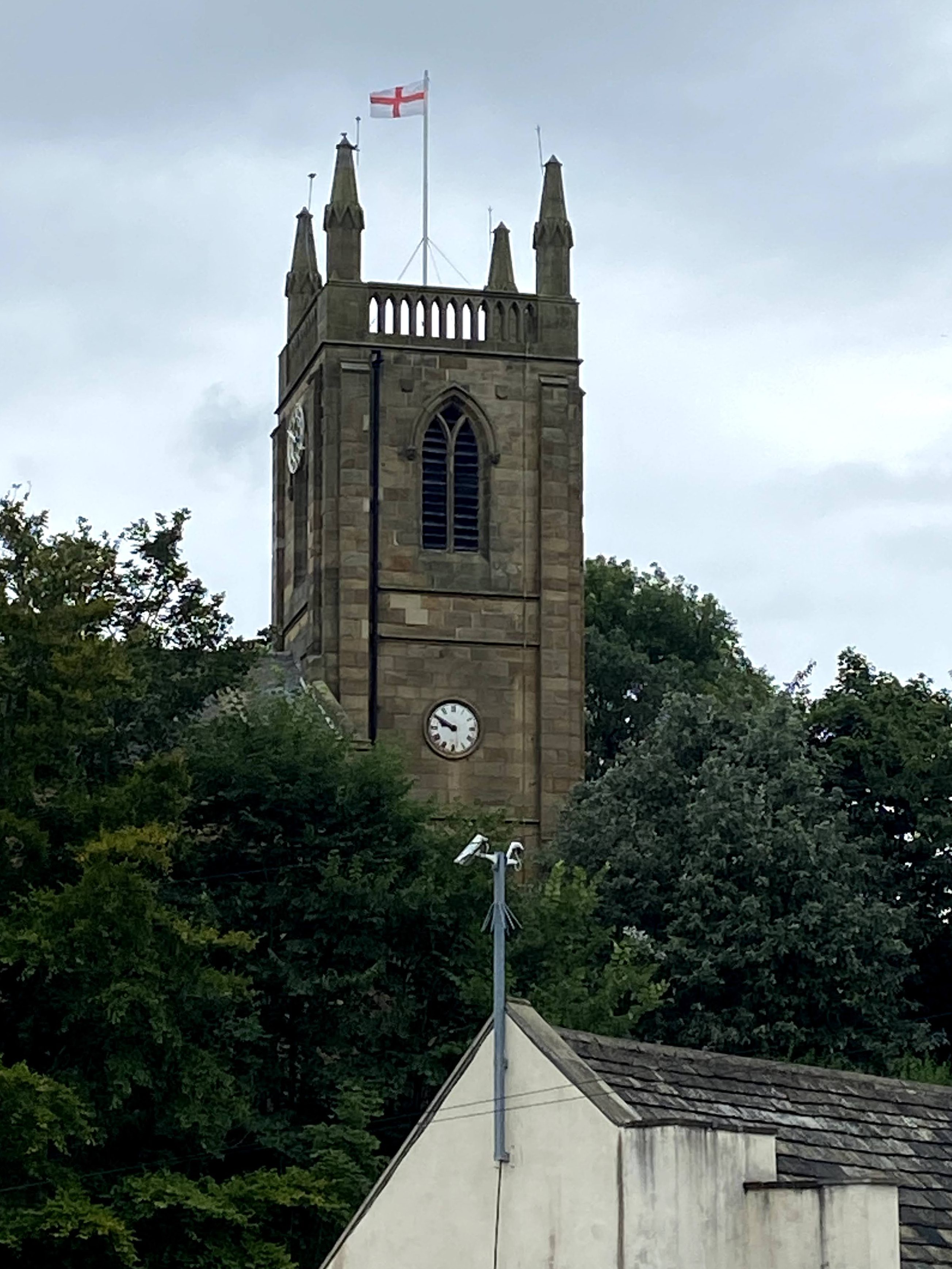
I ran out of the door, already late for the 254 bus to Dewsbury, with the intent to finally find the grave of my Great Great Grandparents. It was the dying days of August, and the weather was aptly grey and gloomy. I had to catch the 202 from Dewsbury, up to Hanging Heaton, which I managed to catch just in time, and got off by St. Paul’s Church.

It was finally time.

St. Paul’s Church, Hanging Heaton on 16 August 2021. Taken by George Hall.

Alright, maybe I am being a little overdramatic, but I had been looking for this grave for over a year, whether it be marked or not. I had come across the burial record of Emily Hall by accident when I was supposed to be doing my maths homework and a few days later found Ernest’s burial record, which hadn’t been indexed for whatever reason.

I went up with my mum, and we walked around trying to find the grave, armed with a plot number that made no sense. To nobody’s surprise, it was pointless, and I left somewhat disappointed. It didn’t help that the churchyard was so extensive and in such an overgrown state.

Many moons passed as well two national lockdowns alongside my GCSE exams, so I became pretty preoccupied. I managed another search with my dad but to no avail and a post on the Batley History Group Facebook group.

The proper breakthrough came when I read, page by page, the burial register and came across a plot number that was one digit higher than mine. So I searched the fantastic Find A Grave and found that grave, and luckily it was visibly marked.

The Hanging Heaton Jungle.

Back to my excitement, in August 2021.

I strode into the churchyard and found the section I was looking for; it was hardly a beautiful place of rest but rather a jungle of weeds with bits of stone sometimes sticking out. I had accepted the challenge, though and began looking for the marked grave I knew that would be nearby to my Great Great Grandparents plot. Finally, after getting harassed by two dogs and probably being judged by their walkers, I found the grave. The tension was unbearable as I checked the grave on either side and realised that I was right.

I had found our Ernest and Emily.

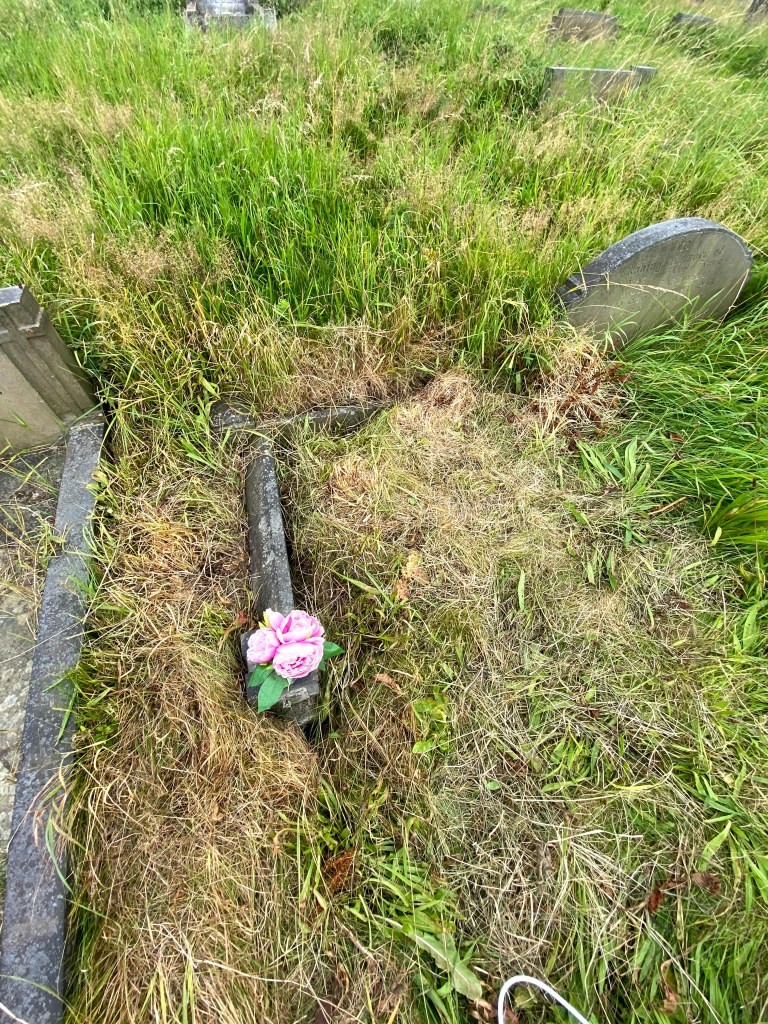
Now, the grave has sunk, and half of it is missing, so it isn’t great and was a disappointment to me to an extent as I so greatly connect with Ernest. We were born on the same day, just 120 years apart, and he served and was injured during the First World War. Emily’s story and family are interesting and quite mysterious too, and once I found their grave, the connection between me and Emily got a lot stronger.

I tried my best and managed to make it more visible and left some fake flowers, that were quite pricy, to make it look and feel more loved.

Ernest and Emily’s grave

There’s no great end to this story or an important message, but I suppose it serves the purpose of warning you that you should expect the unexpected but also be prepared to persevere, and you will probably get there in the end.

Catherine Conley: A Life of Loss

Catherine Conley was born in the July quarter of 1873 in Monkwearmouth, Sunderland in County Durham. She was the eldest daughter of James Conley, a coal miner, and Bridget Cook. Bridget had another child from a previous marriage named Charles McIlroy, but her husband sadly passed away around the time of his birth. Bridget’s loss caused Catherine’s life in many ways and loss was to follow her for the rest of her transient life.

Baptisms and burials were the main events for the Conley family over the next few years. George Conley, born 1875, survived infancy but the next brother, James, died aged only one in 1878. Peter was born in 1879 and managed to survive infancy. The family resided in cramped conditions, at 38 Brooke Street, in 1881, with the house holding two families totalling eighteen people.

John Street, Monkwearmouth (where the Conley family lived during the 1870s) circa 1850. Courtesy of Brian Dunn.

The new decade that the 1880s brought seemed to stop the relentless losses for the Conley family. Mary Ann, the second daughter of James and Bridget, was born in 1882, followed by the birth of John in 1885. Another daughter called Julia was born two years after John in 1887. Sadly, this happiness was a cruel mirage because death creeped around the corner.

Tuberculosis was the killer.

The silent plague that swept the slums killed Bridget, aged only 42 years, on 13 January 1891 just shortly after the birth of her daughter Martha Conley. Martha would survive for about 2 months before dying in March 1891. A small snapshot can be seen of the family after these two losses on the 1891 census which was taken a mere 26 days after the death of Martha. James resides with his children at 18 Stobart in Monkwearmouth and continues to work as a Coal Miner. Catherine’s responsibilities would have skyrocketed after her mother’s premature death as she was the eldest child. It Is likely she would have filled a large portion of the domestic work Bridget used to complete.

Death Certificate of Bridget Conley

More deaths occurred in the shattered remains of the Conley family during the early 1890s. John Conley died aged 7 years in 1892 and was followed to the grave by his sister Mary Ann, in 1894, aged 12 years. James and Bridget had eight kids in total; half of them died in their childhoods. Catherine was only twenty years old and had seen the death of her mother and all these siblings. More was to follow.

Catherine married John William Jobling in the first quarter of 1895, aged 21 years. They probably got married at the local catholic church or registration office. Their first child was a girl who was born in January at home. She was named Bridget, most likely after her maternal grandmother Bridget Cook, and like her grandmother would suffer a premature death, at the age of two years, in 1898. The couple had moved to 1 Back Dundas Street, not that far from James Conley, by the burial of their daughter Bridget on 17 Aug 1898.

The death notice of John Jobling in the Sunderland Echo

Possibly the worst of Catherine’s losses was to follow with death of her husband, John Jobling. 21 May 1899 was an unremarkable day for the Jobling’s, apart from the fact that John got a piece of broken glass from a vase stuck in his heel. He did not bother about it much until he fetched a doctor on 29 May 1899 to treat him. Despite their best efforts, it was all in vain, and Jobling perished on 6 June 1899 at roughly half past seven in the evening.  

Tragically, Catherine was pregnant when John died. She gave birth to a boy in mid July 1899 at home which would be named John, presumably after his late father. 6 weeks was all it took for John to join his father and sister in death.

Catherine was abruptly alone.

She seems to disappear after the death of her son John Jobling, as she is not present on the 1901 census as far as I have searched. It is likely she stayed local though as she moves to Whitburn Street by 1904.

Catherine married Luke McGinty, a 44-year-old widower, on 12 July 1905. He had an equally as tragic background and lost all but one of his ten kids to his first wife Sarah Hannon. The couple moved into 20 Whitburn Street by 1906 where my Great Grandfather James “Jim” McGinty was born on 14 November of that year.

Jim McGinty (Catherine’s son) in later life

Catherine was only 34 years old when Tuberculosis prised her from her family on 28 February 1909. My Great Grandfather had barely turned two years old when he lost his mother. She was buried at Mere Knolls Cemetery, like the rest of the family, on 3 Mar 1909.

My grandma did not even know her grandmother’s name until 2017. Her story remained a mystery even after that as the records were unclear and conflicting for a long time. Once her story was discovered, it was apparent it was clearly one of loss. Not just merely loss of life but a much deeper loss; a loss of memories, a place in history and the loss of being a mother.

Catherine’s courageous story will be remembered now as it should have been years ago.

Richard Totton: An Extraordinary Extra Ordinary Man

After a pregnancy in the wettest summer and autumn in years, Alice Totton (formerly Berry) gave birth to a boy on 25 November 1875. Given the name Richard, he was the youngest boy of Alice and William Totton. Just under three years later, his sister Ethel would take the spot of the youngest child. This gave the couple nine children in total (three boys, six girls), with two girls sadly dying in their childhood.

A postcard showing Cowcliffe wherw Richard grew up via Huddersfield Exposed (https://www.huddersfield.exposed/)

Death struck Richard’s childhood traumatically in another way, with the untimely death of his mother Alice, when he was just five years old. Cancer of the uterus tore her away from Richard and his siblings in January 1881. It is unclear how this loss affected Richard and if it changed much about him and his future as he was so young.

Childhood continued regardless of the loss as Richard managed to obtain a one hundred percent attendance record in July 1884. He was being educated at Cowcliffe National School and after a ceremony of songs and dance, he got his award.

Singing was the passion of another Totton sibling; Clara preformed at a variety of places including the Methodist Free Church in Lindley. She also performed recitations and readings which were greatly appreciated by the audience. I can imagine William sat watching proud as punch while Richard and his siblings just want to go home and play outside!

Methodist Free Church in Lindley via Huddersfield Exposed (https://www.huddersfield.exposed/)

Richard ended up working as a gent servant by 1891, when he was 15 years old. He lived at 32 Thornes Lane working for the Whittam family in Thornes, Yorkshire. We sadly do not know much about this period of his life, only this quick snapshot via the 1891 Census.

He returned to the homeland of Lindley, by Autumn 1895, where he began to work as a labourer.

Richard married Betty Smith in the fourth quarter of 1897 in the Halifax registration district. Soon after their marriage, the couple moved into one room in the Lindley Moor area. The birth of their eldest child, at home, followed the move, at around 17:30, on 25 May 1895. With the arrival of this baby boy (named George), Richard began to work as a coal miner to provide for his growing family.

The family decided to up sticks by 1904 and relocate approximately 7 miles to Halifax Road in Liversedge. George was baptised at the unusually late of 6 years in 1906 at the local church in Hightown. The next year another boy, Wilfred “Wilf”, was born to the couple on 7 August 1907 at roughly 20:15. Wilf would also be baptised two months after his birth at the same church.

Halifax Road via Google Images

The third child of Richard and Betty, Lucille, was born in the early hours of 13 February 1911, at home. Richard was promoted to be a Colliery Deputy at some point between the baptism of Wilf and birth of Lucille. Things were looking up for the family with the boys being educated and George starting part time work to help out his parents but sadly it was not to last.

Death would strike again.

Lucille would become ill with Tubercular Peritonitis in March 1912. The disease is a form of extrapulmonary tuberculosis which affects the tissue lining the abdominal wall. She fought it for an impressive two months, but she succumbed to the disease, aged 15 months, on 30 May 1912 at home. She was buried at the nearby Liversedge Cemetery on 3 June 1912.

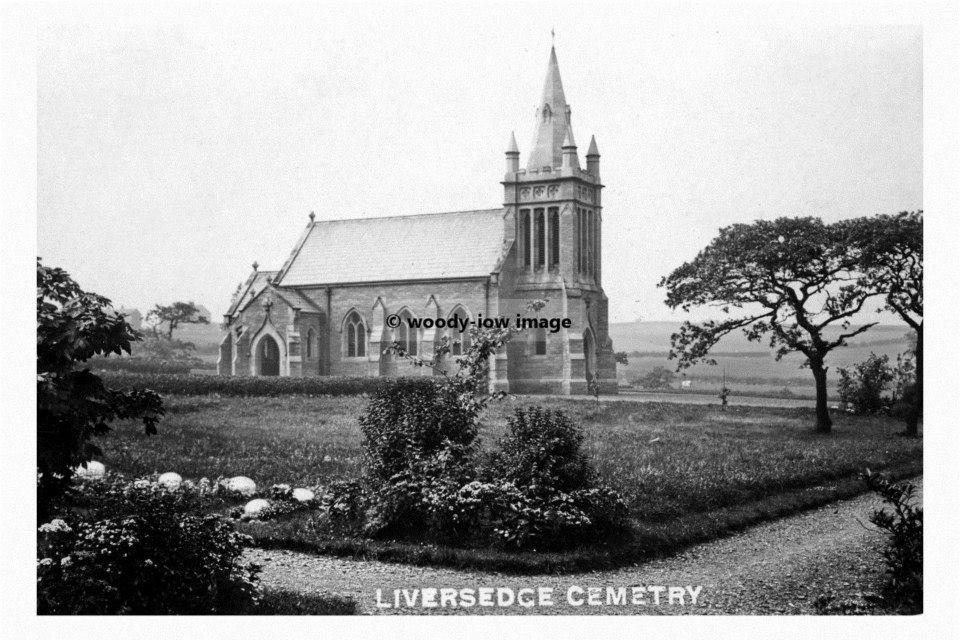
Liversedge Cemetery circa 1903 via Ebay

My Great Grandmother, Doris, was born 26 June 1914 at Sycamore Cottage in Liversedge. She was baptised at St Barnabas Church on 25 February 1917. The family had moved to Clough Lane by this point, and Richard continued to work in the coal mines.

The Tottons moved into the village of Hartshead by 1920, where they resided at Highfield House which they rented at the value of £18, from Sir Geo. A Armytage. The house came with land and stables. We know from Richard’s notebook that he had some sort of interest in horses and a photo pictures Wilf with a horse too.

Wilf outside Highfield House with a horse

George married Ada Whitley at Upperthong Parish Church on 2 April 1923. The couple lived with Richard and Betty up until 1927, when they moved a few houses away to Walker’s Buildings. The couple’s first grandchildren were born in this period, Edith in 1924 and Jack in 1925.

The reason of the move might be quite simple, as Richard and Betty would move into one of the smaller neighbouring Parkview houses. With less space, George and Ada may have preferred to have more space for themselves and their young family. The reason for the move for Richard and Betty may have been down to a variety of factors including downsizing or issues with their finances.

Wilf would get married in 1930 to Minnie Ripley and the couple moved down Peep Green Lane. Richard and Betty continued to live up at Parkview in Hartshead with Doris. Five became three and was sadly about to become two.

Two of the three, Doris and Betty outside their house

10 May 1934 was a dark day for Richard Totton. His wife of 36 years died, aged 60, at home. She was interred in Section A Plot 986 with her daughter Lucille at Liversedge Cemetery on 12 May 1934.

Betty’s death was caused by Pernicious Anaemia, which is caused by a lack of vitamin B12, which is used to make red blood cells. Bad cases of pernicious anaemia can damage the heart, brain etc… but can also cause a variety of other issues such as memory loss and digestive tract problems.

Richard has also changed occupation by this point, becoming a road labourer for the County Council. This was perhaps due to his age or better conditions and pay.

Doris and Richard would live together up until the early 1940s. Richard had met a widow, by the name of Miriam Roberts, who resided in the nearby village of Clifton. The two got married at St Peter’s Church in Hartshead on 29 Mar 1941, in the midst of the Second World War.

Richard’s marriage to Miriam

Richard would not make it to the end of the war. He became ill with a form of cancer and died, aged 69, on 24 April 1945 at his new house in Clifton. His son Wilfred was in attendance at the time of his death and registered it. His burial took place on 27 April 1945 at Sowerby Bridge Cemetery in the Roberts family plot. Richard retired shortly before his death.

The Tottons hold a special place in heart. They were the first family I managed to find a large variety of sources on, building a story which was not just names and dates. I am able to hold Richard’s notebook in my own hands, which is the strangest feeling I can think of. It is hard to compute that I am holding the notebook of a man I know so much but so little about, my direct ancestor and a man that will have never even thought about my existence as a passing thought.

Richard is special to me for the reasons above, but also for the fact he went through so much in his life. I will always remember and ramble on about the story of my Great Great Grandfather Richard Totton.

A truly extraordinary extra ordinary man.

William Henry Hall: The Drunk

The youngest child, William was born on 13 February 1842 in Batley, Yorkshire. His father was Jeremiah Hall and his mother was Harriet Hall. The couple married at Batley Parish Church on 8 September 1830 and had five children (including William) that survived infancy.

I do not want to dwell too much on William Henry’s childhood as my previous blog details it.

Find it here: https://genealogywithgeorge.com/2021/06/06/jeremiah-hall-the-forgotten-hall/

William married Eliza Ann Day, illegitimate daughter of Sarah Ann Day, at Batley Parish Church on 27 Jan 1866. The couple boarded with William’s mother, Harriet, from their marriage up until her death in 1877.

The only snapshot we have of this time is the 1871 Census. The Hall family was living on New Street in Batley (see map below) with Harriet Hall, a shopkeeper, recorded as the head of the household. William worked as a plucker and Eliza was the housekeeper.

Map of where the Halls lived in Batley

Two years after the death of his mother, which he was present at, William was charged and fined for being drunk and riotous. He is described as having no education, sandy hair and being five foot and a half. He worked as a card fettler. He remained in this occupation in 1881, and the family moved, not very far, to live at Spring Gardens, Batley.

He was back to court in 1884, where he was probably sent to prison for being drunk and riotous. The description remains the same but we get some get more details. He is described as a Wesleyan, he has freckled arms and a cut on his right eyebrow.

Maybe it was his traumatic childhood or the loss of his mother, who he seemed very close to, but William began to have troubles with alcohol. There was a story from his son Lewis which detailed the fact that his father made extra money selling shell fish in pubs to help fund his alcoholism.

His convictions died down for just over a decade. The family lived at 25 Beaumont Street in 1891 and William continued to work in the mills as a machine fettler.

Eliza and William had nine children in 18 years, with their first two children (a boy and a girl) dying as infants. Their youngest child was my Great Great Grandad Ernest James Hall, who was born on 11 Feb (my birthday!) 1885.

William got sent down again, in 1897, for being drunk and riotous and in 1900 for the same crime. By 1901, the family moves to 42 Cobden Street and William changes his occupation to a Willyer. According to my Grandad, this was an easier occupation compared to a Card Cleaner (or fettler) so this may show us that William was beginning to age.

In July 1904, William began to suffer from Cancer of the Thyroid. In a short two months, he died of the disease, aged 61 years, at Batley District Hospital on 24 September. His interment into plot 476 in section R at Batley Cemetery took place on 23 September 1904.

Plot 476 in section R at Batley Cemtery on 27 Dec 2020

William and his, ostensibly, undesirable story is one of my favourites. He wasn’t a perfect character at all but his story is very real; you can see the turning points in his life.

For those on Twitter, that is why the unmarked grave is so important to me.

Jeremiah Jackson: A Dyer Doomed to Death

Jeremiah Jackson was born in the second quarter of 1885 to Elizabeth (maiden name Broadhead), aged 36, and Thomas Hulme Jackson, aged 35, in Robertown. He was baptised shortly after birth on 21 Jun 1885 in Liversedge.

The couple married in the second quarter of 1875 and by 1891, the family resided in 3 rooms, on Lumb Lane in Robertown. Thomas worked as a mechanic and the couple had 2 sons (including Jeremiah) and one daugther living with them.

The Family moved to Barlborough in Derbyshire by 1901. Thomas worked as an engine wright at a colliery with his newly wedded son Daniel. Jeremiah lived with the family still but with no occupation.

Jeremiah and his family returned home to Liversedge before his marriage on 29 May 1909. He was wedded to the 23-year-old Harriet Lee at the Westgate Congregational Church in Heckmondwike. He resided on Lumb Lane and worked as a dyer’s labourer. Jeremiah and Harriet moved into Heckmondwike after marriage and Jeremiah took up work at Hunsworth Mills.

Wednesday 16 Mar 1910 would start as any other typical, boring day. Jeremiah arrived at work and began to mind a padding machine in the dyehouse. A crimp appeared in one of the pieces and when he tried to fix it he fell forwards. The rapid-moving piece dragged him into some hot liquor where he met his untimely, tragic end.

He was quite small and this caused him to be more prone to overbalance which made this tragic accident more likely.

He was buried at Liversedge Cemetery on 19 Mar 1910. His parents would follow him in the next decades.

Jeremiah Hall: The Forgotten Hall

The third child of Joseph Hall and Ann Gledhill was born on 4 Mar 1804 in the Parish of Batley. A boy, he would be given the name of Jeremiah and would be baptised1 at Batley Parish Church on 2 Apr 1804.

The Baptism of Jeremiah Hall at Batley Parish Church

Batley Parish Church was also the place where Joseph Hall and Ann Gledhill got married2 by banns on 20 Nov 1799. Joseph was able to leave his signature while Ann left her mark. By the baptism3 of his eldest child in Jul 1800, Joseph worked as a clothier. Clothiers4 made and sold woollen cloth with the wealth and status of each clothier varying greatly.

Batley Parish Church in the snow circa 1904. Kindly uploaded by Maggie Land Blanck (http://www.maggieblanck.com/).

By 1817, the couple had nine children in total, 4 boys and 5 girls, over a span of 17 years. The family resided in a world that was rapidly changing, with Batley feeling the effects of the Industrial Revolution. Deserted rural northern villages were becoming influential, populated industrial towns.

Jeremiah’s father, Joesph, aged 49 years, would be taken, by an unknown ailment, to the grave in June 1826. His burial5 would take place on 15 Jun 1826 at Batley Parish Church. Jeremiah was 22 years old when this took place.

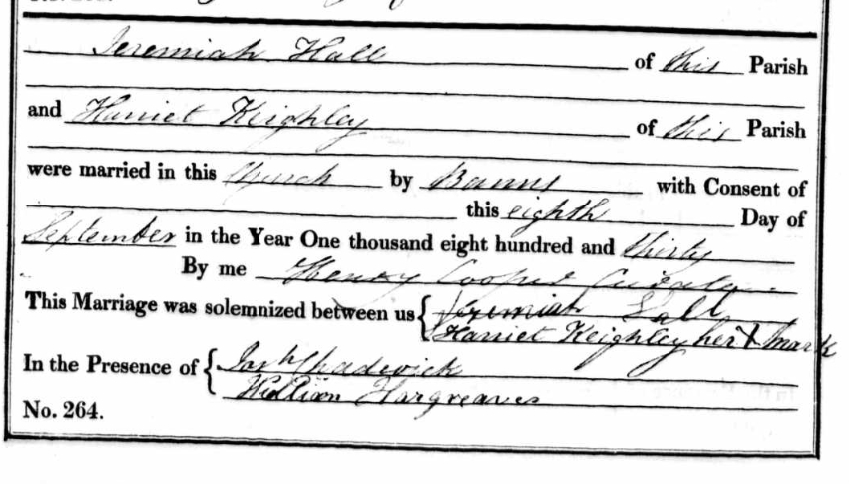
Four years later, Jeremiah married6 Harriet Keighley at Batley Parish Church on 8 Sep 1830. The marriage took place after banns, with Jeremiah being able to leave his signature, like his father, while Harriet left her mark.

The Marriage of Jeremiah Hall and Harriet Keighley

The family continued to live in Batley, with Jeremiah taking the same occupation of his father. Jeremiah and Harriet would have 6 children over a period of 11 years. Their eldest daughter Grace Hall would die as an infant of an unknown cause. Her burial7 took place at Batley Parish Church on 22 Apr 1833.

By 18418, the Hall family was living at New Batley in Batley. Jeremiah continued to work as a Clothier in an everchanging world. 1842 would mark the last addition to the Hall family, with the birth of my Great Great Great Grandfather William Henry.

He drew his final breath9 on 14 May 1845 at New Batley at the young age of 41 years. Phthisis, tuberculosis or a similar wasting disease10, was what dragged him away from his family and life. His brother was in attendance at the time of his death. All five children that survived infancy outlived him, his mother and his wife also. Like his daughter and father, he was buried11 at Batley Parish Church on 18 May 1845.

The Death Certificate of Jeremiah Hall

He was just another of my Hall direct line to die young, following his father and like my Grandfather. His children may not have necessarily forgotten he existed, but I think mainly about my Great Great Grandfather William Henry, who was only 3, at the time, of his father’s premature death. He most likely wouldn’t even have had a strong memory of his father which is just heartbreaking.

I will never forget about Jeremiah Hall and his short but important story.

Citations

  1. West Yorkshire, England, Church of England Baptisms, Marriages and Burials, 1512-1812, Baptism, Batley, All Saints, 1804, Page 3, Jeremiah Hall; Digital image, Ancestry (www.ancestry.co.uk : accessed 7 Jun 2021); citing the new reference number WDP37/2, West Yorkshire Archive Service, Wakefield, Yorkshire
  2. West Yorkshire, England, Church of England Baptisms, Marriages and Burials, 1512-1812, Marriage, Batley, All Saints, 1799, Page 27, Joseph Hall and Ann Gleadhil; Digital image, Ancestry (www.ancestry.co.uk : accessed 7 Jun 2021); citing the new reference number WDP37/15, West Yorkshire Archive Service, Wakefield, Yorkshire
  3. West Yorkshire, England, Church of England Baptisms, Marriages and Burials, 1512-1812, Baptism, Batley, All Saints, 1800, Page 5, Elizabeth Hall; Digital image, Ancestry (www.ancestry.co.uk : accessed 7 Jun 2021); citing the new reference number WDP37/2, West Yorkshire Archive Service, Wakefield, Yorkshire
  4. https://www.geni.com/projects/Clothiers/27180
  5. West Yorkshire, England, Church of England Deaths and Burials, 1813-1985, Batley, All Saints, 1826, Page 5, Joseph Hall; Digital image, Ancestry (www.ancestry.co.uk : accessed 7 Jun 2021); citing the new reference number WDP37/40, West Yorkshire Archive Service, Wakefield, Yorkshire
  6. West Yorkshire, England, Church of England Marriages and Banns, 1813-1935, Batley, All Saints, 1830, Page 19, Jeremiah Hall and Harriet Keighley; Digital image, Ancestry (www.ancestry.co.uk : accessed 7 Jun 2021); citing the new reference number WDP37/18, West Yorkshire Archive Service, Wakefield, Yorkshire
  7. West Yorkshire, England, Church of England Deaths and Burials, 1813-1985, Batley, All Saints, 1833, Page 4, Grace Hall; Digital image, Ancestry (www.ancestry.co.uk : accessed 7 Jun 2021); citing the new reference number WDP37/40, West Yorkshire Archive Service, Wakefield, Yorkshire
  8. 1841 Census of England, Yorkshire, Batley, Subdistrict Batley, Enumeration District 9, page 13, Jeremiah Hall Household; Digital image, Ancestry (www.ancestry.co.uk : accessed 7 Jun 2021); citing Class H017, Piece 1267, Folio 49, GSU roll 464238, The National Archives, Kew, Surrey
  9. PDF copy of death certificate in personal collection of George Hall
  10. https://languages.oup.com/google-dictionary-en/
  11. West Yorkshire, England, Church of England Deaths and Burials, 1813-1985, Batley, All Saints, 1845, Page 8, Jeremiah Hall; Digital image, Ancestry (www.ancestry.co.uk : accessed 7 Jun 2021); citing the new reference number WDP37/41, West Yorkshire Archive Service, Wakefield, Yorkshire

York and Me: Blood and Beauty

York has always been a place I have loved since my first visit was in 2012, aged only 7 years. I went with mum and grandma to visit the city but also to see the Queen and the extended royal family who were in the city at the time.

My love of York began after this visit. I don’t remember a great deal about the trip in 2012 but we visited countless times throughout the next few years. I’ve been to the Dunegons; Jorvik centre; walls; minister amongst other things.

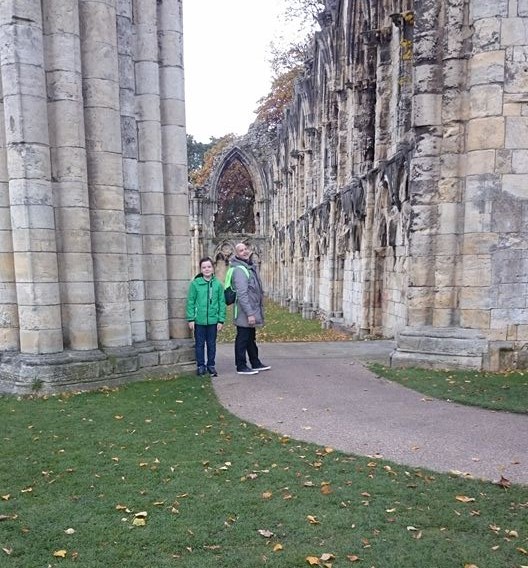
Me and my Dad at the ruins of St Mary’s Abbey in York (28 Oct 2016)

York blood flows through my veins, with 1893 marking the last time a direct ancestor (my Second Great Grandfather, Arthur Dale) was born in the city. The Dale line represents many tales of dramatic rises but equally as dramatic declines. Rising from being an orphan to a somewhat important local figure, William Dale’s tale represents the unlikely happening to a hairdresser in Jubbergate. He still had to face death in the eye throughout his 55 years, even meeting a morbid, sudden end himself.

The death of his grandson, Alfred Dale, at the hands of cancer, in 1906, left 7 children fatherless but also a widow who had to support them. They moved away from the city to find work in the mills of West Yorkshire, arriving in the Batley and Dewsbury areas by 1908.

Alfred Dale and his wife Mary Jane

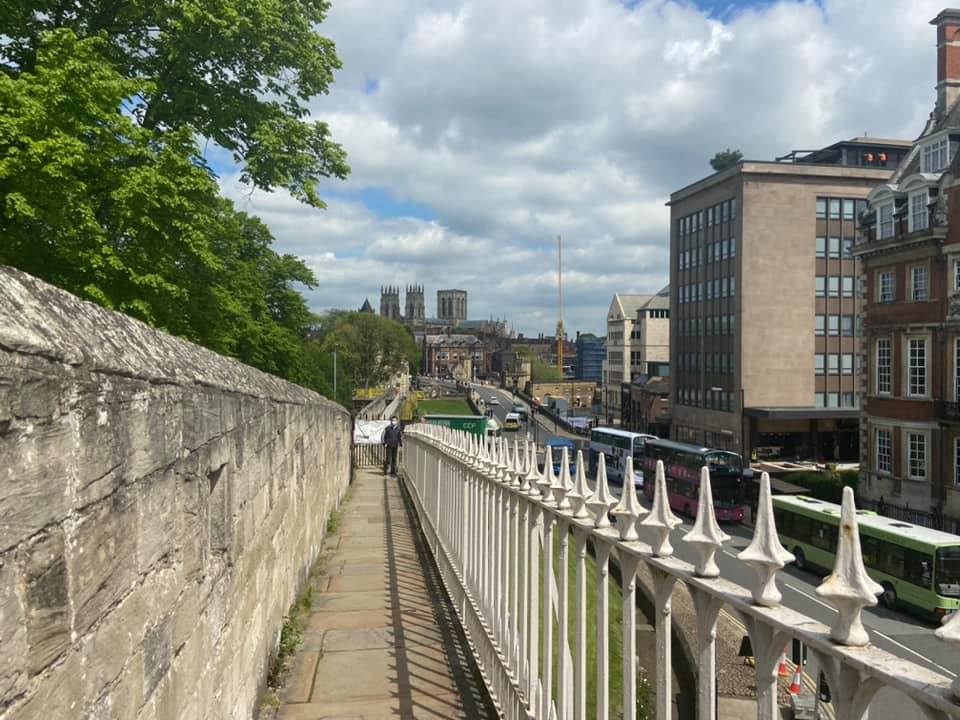
Walking the streets felt different when I visited last week. Stories I had never known could be seen as I walked them and I felt a connection across the decades and centuries to those that preceded me in this city. Regardless if you’re a spiritual person, the spirits of the ancient city’s former residents truly do walk its streets.

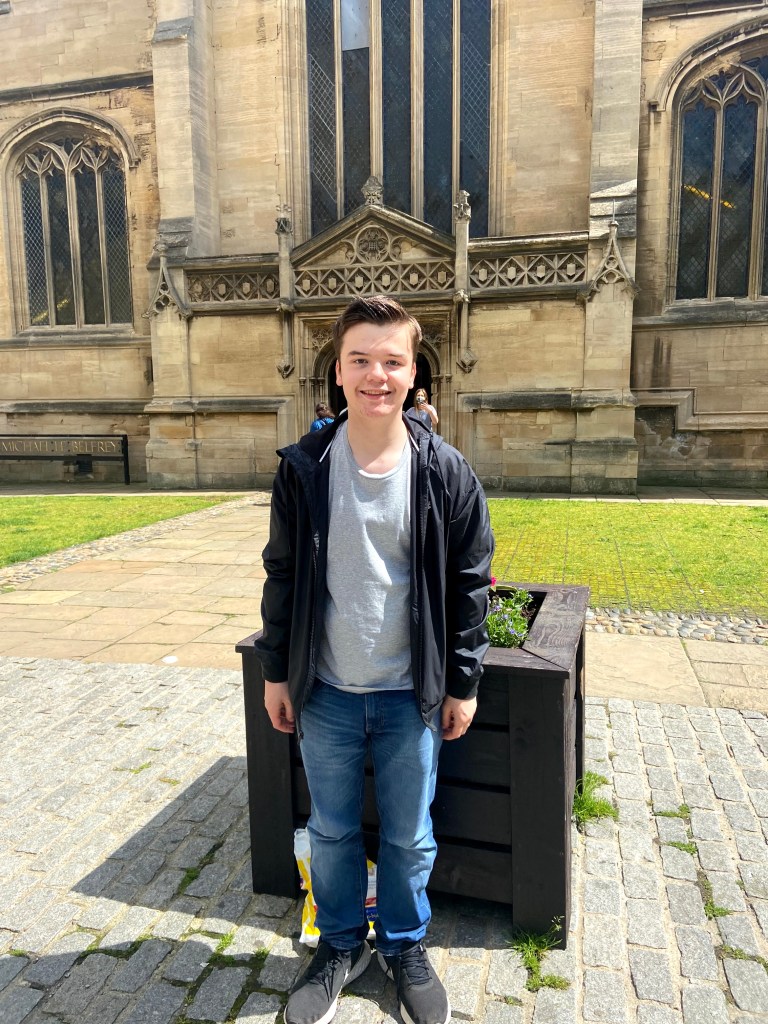
Me otuside St Michael Le Belfrey’s Church (27 May 2021)

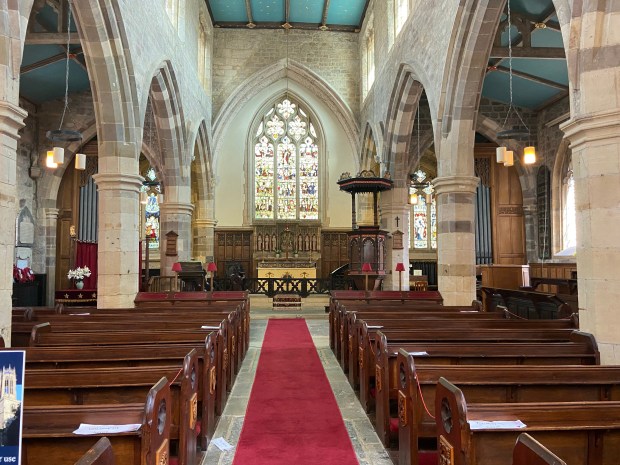
When the organ played as I walked around All Saints Pavement Church, it was the strongest connection I had ever felt to my ancestors. The fact that they were sat or stood in the church I was stood in centuries ago, celebrating birth and marriage but also grieving the loss of their family and loved ones struck me at the moment. I appreciate (even more) the ability to tell these stories and the hours of research and frustration is worth it when you see the bigger picture.

Ostensibly my connection to York was simple; it was one of a local city where I made a few memories but that’s not the case as it is much deeper. The stories and fragmented memories of my ancestors can be lived and breathed down the ancient winding streets of the city which is truly a rarity in a world that forgets about its history.

Please visit your ancestral homelands if you ever get the opportunity. It is very much worth it! I wouldn’t fret if you can’t though as merely remembering your ancestors is something to be proud of. Remember that we are not our ancestors but we can always still walk in their footsteps. Possibly learning something along the way.