A Long Line of Georges: Facing Conflict

Sometimes, when I walk the dog or cut the pizzas at work, I will come up with ideas for the blog. It was around last Monday as I write this when I considered looking at the long line of Georges, basically looking at how the name was probably passed down the family for at least nearly three hundred years. From Newcastle to York to Batley and then finally Liversedge. I wanted to dive into how the name stood up in times of conflict and suffered through generations of strife and loss.

Jumping forwards to Thursday now, I got up early (well, early for the school holidays) at around nine and took the dog out for a walk. It was strange weather that day, ranging from snow to sun to hail. It had just started the snowing part when I checked BBC news and realised that Putin had done the unthinkable and plunged Europe back into war. I have no shame in saying I felt physically sick.
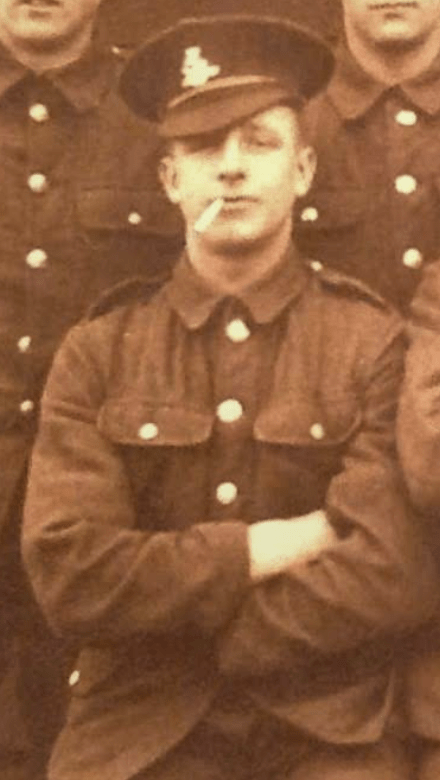
George Alfred Dale

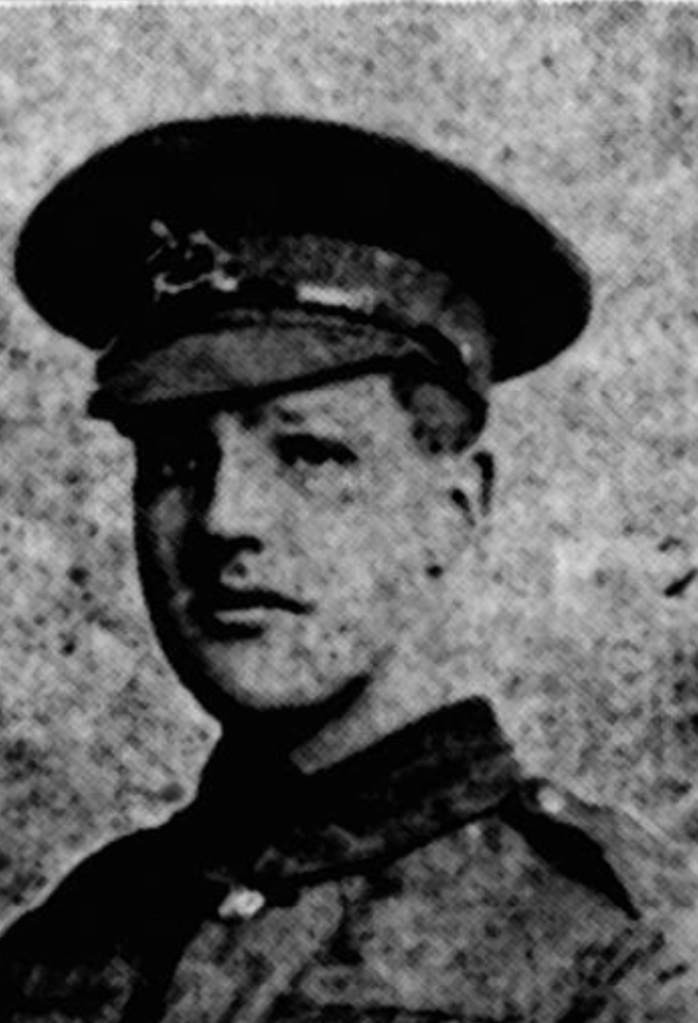
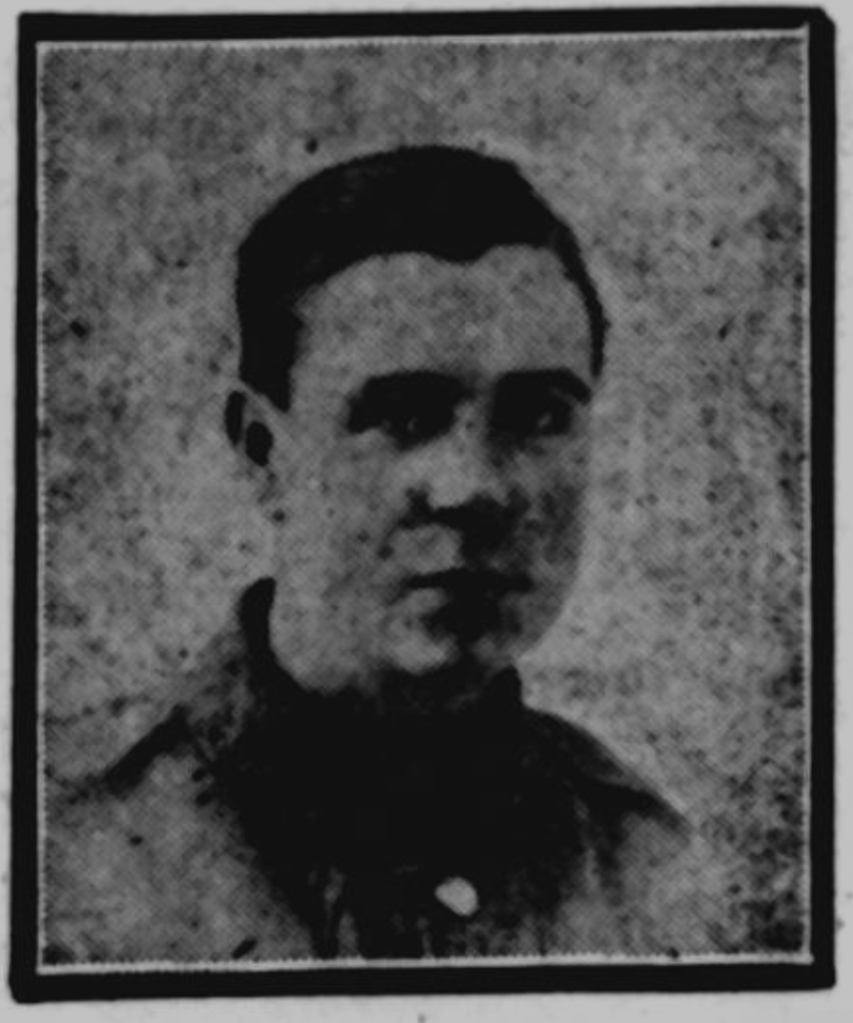
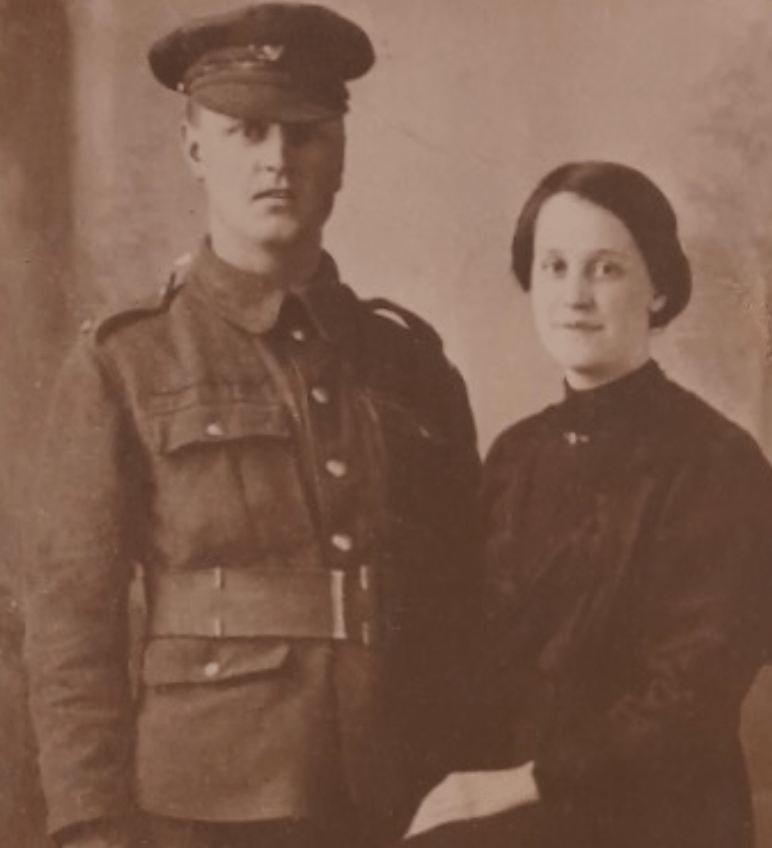
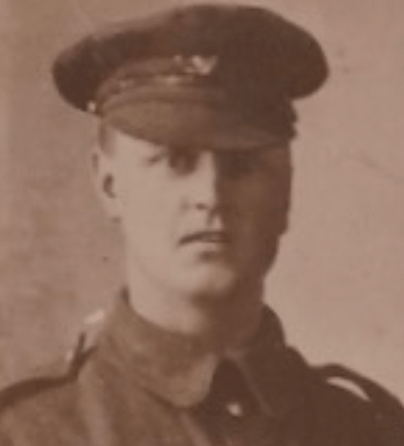
George Alfred Dale, my Great Grandad’s uncle, is someone who I deeply look up to and, in the strangest of ways, love. He was the first lad that I came across in my family tree that made the ultimate sacrifice in the First World War. There was a fair bit of information on him, and also, luckily, there was an ace photo of him uploaded onto Ancestry. I wrote my second Hidden Branch Blog post on his life, and he is also mentioned in my Remembrance Day post. Furthermore, I recently wrote a second biography of him, really weaving in some more personal thoughts and feelings and submitted it to my School’s creative writing competition.

G. A. Dale enlisted underaged, and the horrors he must have seen are unthinkable. Villages, towns, homes destroyed, men mutilated or killed on a daily. As a lad of my age, he saw the worst of humanity – death, destruction, and cruelty in its most naked form. We will never his exact own thoughts and experiences, but it is genuinely unthinkable what his generation experienced, only to be repeated by the next one.
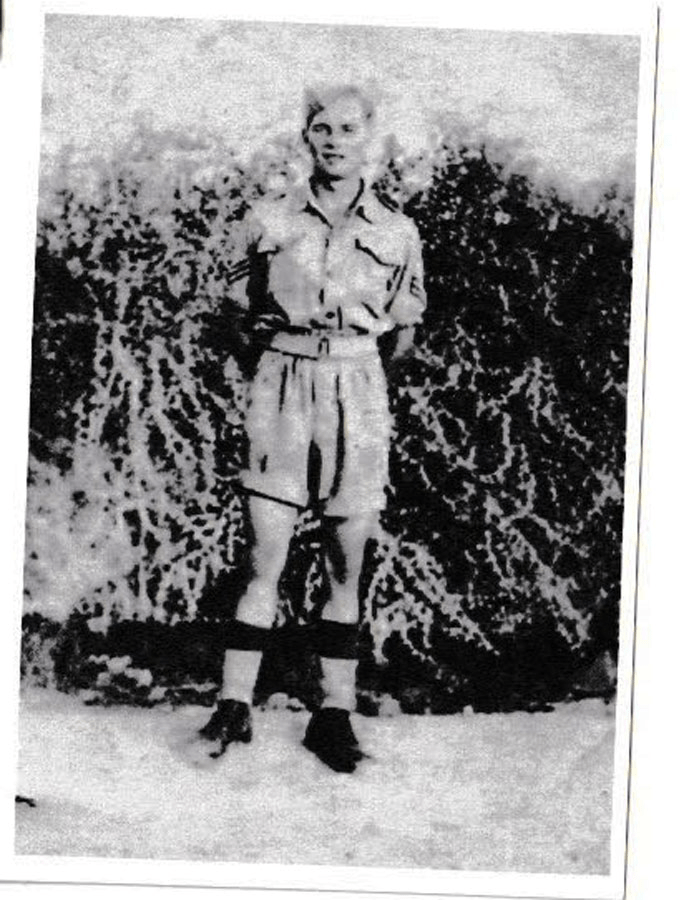
My Great Grandad George R. Dale

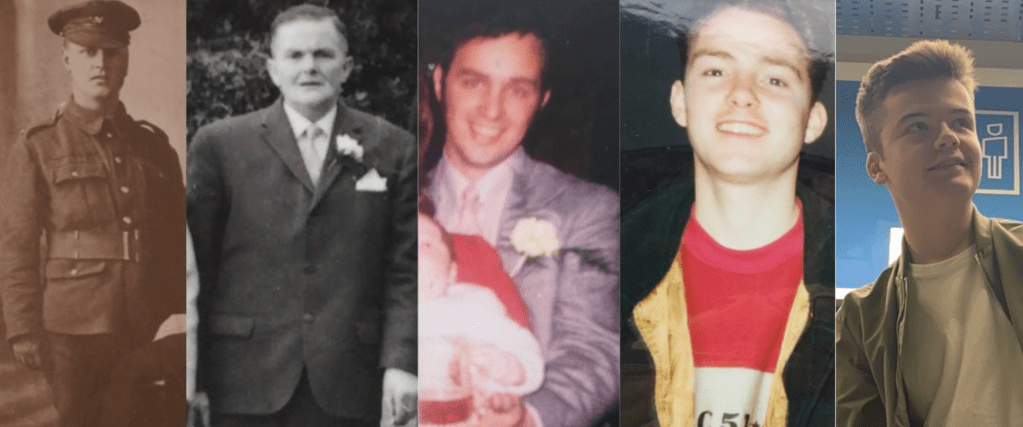
My Great Grandfather, George Ronald Dale, was a kind man that I unfortunately never got to meet. I have quite literally never heard a bad word said about him. He worked most of his years at Batley Park, but due to the fascist terror spreading across Europe and during the late 30s and early 40s, he ended up serving just like his uncle George.

He joined up in March 1941, just after turning twenty, and served with the Royal Signals, eventually serving across France and the Netherlands. He worked his way up to the rank of Corporal and was also very physically fit, helping run a fitness camp in Ossett at some point during his service. He was a little older than his uncle but again likely saw the worst of humanity as he helped liberate Europe from its Nazi tranny.

Whether they were a woman, man or child, everyone made sacrifices and took part in the war effort, and this was clear as crustal when it came to my Great Grandad George’s marriage. He married Shirley Hopkinson, another kind and loving soul, at Birstall Parish Church in 1944. George’s brother Harry was his best man and also served in the Royal Navy. I guess the war shadowed even the supposed happiest day of his life to an extent. I can only think of the dread that those left at home must have felt every morning waiting to hear in case the worst had happened. Imagine also looking forward to your wedding and your future with your sweetheart while fighting a war.

It is almost unthinkable.
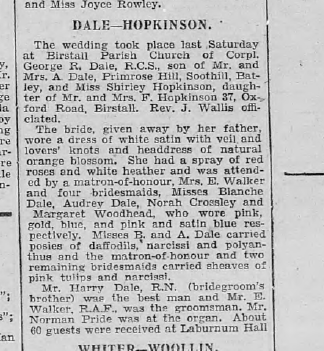
George and Shirley Dale’s marriage notice

But there I was, almost glued to Twitter, the BBC News website or Facebook, watching the human tragedy unfold. I do not wish to be political, but it is as clear as day that the war which is unfolding is all things said above; cruel, unnecessary and the worst of humankind. Whether they be a soldier or civilian, each fallen person is another soul lost to war.

It seems ironic and poignant that I wanted to discuss this. Still, regardless of what happens across the world, this legacy of loss associated with the name George in my family has hopefully faded away. The wars experienced by my great grandfather and his uncle made strong, courageous men willing to give everything for those they loved in the face of the worst. It is truly inspiring to me to be related and directly connect to those two men.

I will leave you with a simple statement from the memorial book at Dewsbury crematorium after my Great Grandfather’s death in 1987. Although written for my great grandfather, words that very much apply to his uncle George.

“Courageous in Life and Death. Gentle, Kind, and much loved”.
The Crimes of Fanny Fell

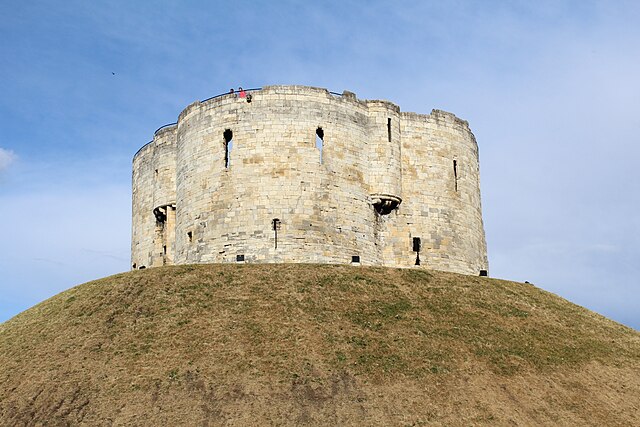
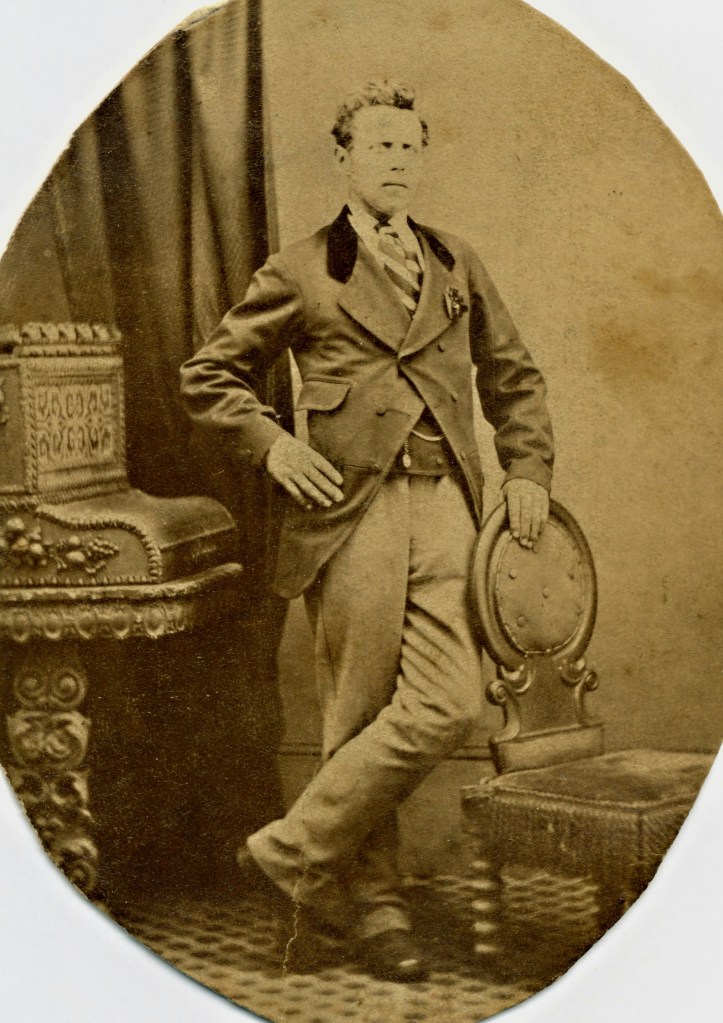
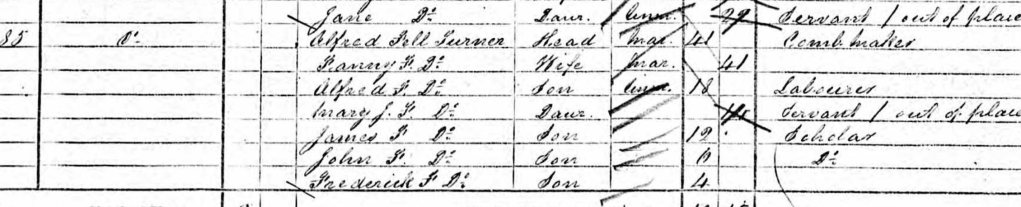
Fanny Fell was an ordinary working-class York lass, her husband worked as a comb maker, and by 1872 the couple had six children. They were raising their family on King Street. The area was dominated by the famous Clifford’s Tower and the imposing Victorian Prison. The great irony in this is that unbeknownst to Fanny, she was going to spend nearly seven years of her life in its confines.

The Fell family on the 1871 Census

Not much is known regarding the specifics of her first crime, but we know she entered custody on 21 November 1872 and was charged on two counts of larceny (the theft of personal property) for stealing some beef and a pair of trousers. She was charged with six months of hard labour and was locked away in the very local York prison. Her daughter Rose was barely a year old and now had her mother ripped away from her.

The beautiful but imposing Clifford’s Tower (2018) via the Wikimedia Commons

Victorian prisons were harsh, inhospitable places with strict regimes imposed upon their inmates. In my research, I haven’t come across any specifics regarding York prison at the time, but there was generally a difference in how men and women were treated. There was a real push for women to reform their character by reclaiming their “true domestic hearts”, which was achieved by controlling every little aspect of a female prisoners’ life.

Six months of dreary domestic labour, religious instruction, and degrading moral supervision dragged on, and Fanny finally re-entered free society as a marked woman. Sadly, due to the sexist attitudes of the time, she will have likely been notorious. This notoriety may have led to a breakdown in some of her relationships and made it difficult to find any work at all. Luckily, Alfred, her loyal husband, seemed to stick with her. Although we can’t say the specifics of how both Fanny and Alfred felt about their relationship at this time, it seemed to be quite strong, indicative of true, near unbreakable love.

Female prisoners working a fire pump via the Wikimedia Commons

Another aspect found in my wider research of Victorian female prisoners was that although during the period there were fewer women were convicted than men, it was more likely they would re-offend. Perhaps this was down to the aforenoted factors which led to a downward spiral. Despite having unusual support from her husband, Fanny followed the pattern and was once again convicted of larceny in February 1878. She had stolen some wool and two skirts and was locked away for nine more months.

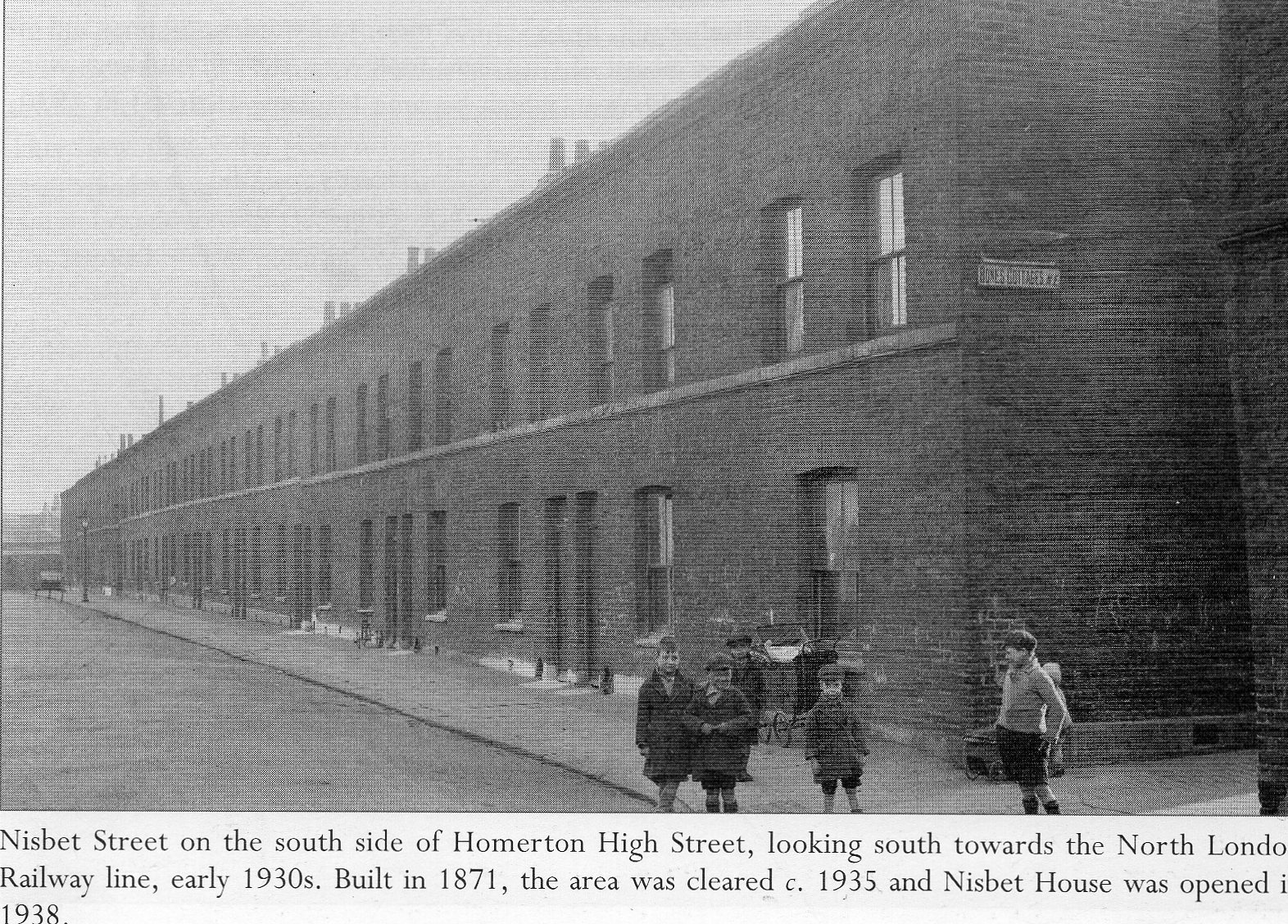
After being released later that year, Alfred and Fanny may have decided they needed a change and, therefore, by 1881 moved to London. Thanks to research done by a cousin, the conditions where the family moved to (Nisbet Street in Hackney) were appalling. The houses were built in the 1870s upon a strip of gardens and had a squalor, cramped and plainly awful conditions. At the time, this may have been seen as alright, but there is no justification for the living conditions people suffered through. It was simply immoral and unacceptable.

Nisbet Street and some context via user @soxgnasher on Twitter

I’m a Yorkshireman through and through, however, so I don’t want to focus on this move to London too much. Instead, I frame it as a detour as the family were back in York by 1882.

In late September 1882, Fanny rose early on a Saturday morning and visited William Hansell’s shop to price a pair of boots. Whilst in the process, she walked off from the general dealer’s store but was soon caught redhanded and brought back to the shop. The reporting of the theft liked to emphasise the fact that she let the stolen boots fall to the floor when she returned to the shop, but I don’t understand what they expect of her? She certainly wasn’t going to be happy that she was caught. However, her feelings were irrelevant, and she was sentenced to another three month’s hard labour.

She was set free early in the New Year but would return to the prison not even eight months later when she was caught stealing again. This time, she stole a stuff skirt from Ernest Haythorne’s shop. She was actually in the process of carrying the skirt away when Ernest’s brother caught her and handed her to the police. There was much scoffing and disdain when Fanny stated that “drink did it”. Ignoring the scoffing, this comment gives us a unique into her mind. She was obviously suffering because of her crimes which were caused to an extent by alcohol. The notoriety and grim life she lived through likely led to more drinking and then crimes. A vicious cycle of despair – Fanny’s worst enemy was herself.
She spent another twelve months doing hard labour and stopped offending (or wasn’t caught) for two or three years. This time, in 1887, she went to John Jackson’s shop and asked if she could look at a hat in the afternoon, and when leaving, she grabbed a brush hanging from the door. This was witnessed by a lady called Mary Burley, and soon after, P.C. Mason apprehended her. She admitted the theft and was once again sent to prison, albeit for a longer sentence of 18 months and one year’s police supervision was also attached to the sentence.

1890 rolled around, and Fanny likely turned sixty; both Fanny and Alfred were getting older and had a fair few grandchildren. However, this didn’t stop Fanny’s compulsion to drink and steal, and she was once again sent down for a year’s hard labour with an increased two year’s period of police supervision. I term it a compulsion down to another quote from Fanny’s mouth that “she couldn’t help it” after she was handed to the police once caught.

John Close, Lord Mayor of York in 1893

Three years later, in April 1893, Fanny was once again before the Lord Mayor, accused of stealing a cloth jacket from the door of George Merriman’s shop. Once accused, the police searched her house and found the jacket situated between the bed and mattress. In an almost heartbreaking way, at least to me, Fanny asked the police officers, “Will you do the best you can for me?” and further stated, “I am sorry I took it”. Undoubtedly Fanny was probably only sorry because she was caught, but I find it admirable that she never tended to deny her guilt. She was always able to face up to her actions. She was once again sent to York prison.

She left prison on 5 May 1894 after serving her twelve months of hard labour. She had spent her final months of this term of imprisonment throughout a severe winter. I wonder how Fanny felt when her lightly pillpocked (marked by smallpox) skin felt the air of the city again, or how she felt when seeing her family again through her hazel eyes. Did she smile when she saw Alfred, showing the few teeth she was missing? Was she welcomed at the gates or left to walk home alone? If so, was she easy to spot walking down to the family home on Laurence Street by the distinctive situated above her lip on the right-hand side of her face?

Her final recorded crime occurred in 1895 when she was around sixty-five; she stole a shawl from a local shop. Just as she made her exit, a shop assistant noticed it was missing and ran out into the street, where they found it wedged between the apron that Fanny was wearing. It feels incredibly monotonous to repeat the fact that she was sent down for a year’s hard labour. But, intriguingly, the jury actually recommended that she was granted some mercy in the sentencing due to the fact she was of an “advanced age”.

We haven’t spoken much about Alfred regrettably, but her conviction led to a poignant piece of reporting. We have Alfred’s direct testimony declaring that Fanny “was a good wife when sober” – perhaps adding further credence that her stealing was a compulsion brought on by alcohol. The fact that was Alfred was dead within less than two months adds more weight to his testimony. He clearly loved his wife and was willing to defend her after a life of absolute turmoil.

The loss must have been significant to Fanny but what must have been worse to her was the fact that she probably didn’t get to be with him when he passed away on 16 November 1895. He was buried in a public grave (18875) at York Cemetery not long after his passing – it is unclear if Fanny was able to attend. It is clear that Fanny regretted her crimes, but what must have stung more was that she probably missed her husband’s funeral for the sake of a shawl.

York Cemetery in Autumn, by Johnson Cameraface on Flickr

By 1901 she had moved onto North Street, Castlegate and her twenty-year-old granddaughter, Mary Jane Fell, lived with her. She worked as a laundress whilst Fanny, now about seventy, stayed at home. A few years later, she passed away on 26 June 1906 and was buried in a different public grave (19402) to her husband. A sad irony is that they were divided by bars in life and also divided in death.

At first, I didn’t know how to feel about Fanny’s life and found it hard to reconcile her actions. However, over time and after undertaking more detailed research, I have developed a surprising fondness for her story. She may have been a criminal, but she was only a petty one at that and one who always seemed to be caught. I accept that she was causing damages to others by stealing things, but they were replaceable. Her husband’s funeral, raising your children and cherishing your grandchildren were things Fanny stopped herself from doing/attending. As I alluded to before, Fanny was indeed her own worst enemy, and I hope that in death but also the final years of her life, she finally found some peace.

Mary Jane and Alfred Dale, my 3 x Great Grandparents. Mary Jane is Fanny and Alfred’s daughter.

It might be controversial to some, but I can proudly claim Fanny Fell as my Great Great Great Great Grandmother.

Eliza Ann Day: A Remarkable Life

Batley was changing fast, growing from a small village where everybody knew everybody to a booming town enriched by the industrial revolution in the space of about forty years. However, the wealth didn’t trickle down to everyone, and society split into two distinct classes; the haves and the have nots. Eliza Ann Day was born into this changing society.

Born on 10 April 1847 in Batley Carr, her birth likely caused some controversy as her mother, Sarah Ann Day, was unmarried. Illegitimacy was typically looked down upon, and many infants faced cruel fates at the hands of baby farmers, but Eliza was lucky.

Eliza’s birth certificate

Lucky as her mother, Sarah wedded James Rayner, a widowed farmer from the nearby Osset, on 5 June 1848 at Dewsbury Parish Church. He was about thirteen or so years older and came from an interesting background. Firstly, his parents never married but had about nine children together. Secondly, as mentioned before, he was a widower, but I have struggled to find out what happened to his first wife. He was living with his mother in 1841, so I think it is likely she sadly passed away prematurely.

This was significant for Eliza because it represented some stability in her life. Her dad was a farmer and brought home a regular income. I refer to James as Eliza’s father for a few reasons but mainly that there is a strong case that she was his biological daughter. He came from an unorthodox background himself, and there is some flimsy but firm DNA evidence suggesting so. Regardless, from this point onwards, James Rayner became her father.

Growing up, Eliza lived in Gawthorpe, which wasn’t too far from where she was born and would live in later life. It was likely a tough and gruelling childhood, as was typical of the time. James brought stability but not comfort, simply providing an escape from near-death or extreme poverty. Sarah and James had some children, so Eliza didn’t grow up alone, but she was the eldest child and perhaps stuck out a bit. In the 1851 and 1861 Censuses, she is the only one in the household not to bear the name Rayner.

Batley Parish Church

Eliza married William Henry Hall at Batley Parish Church on 27 January 1866. He was a Batley lad who lost his father when he was only little and came from a similarly difficult childhood. It wasn’t long after this marriage that their son Jeremiah, named after William’s father, was born. However, this happy start to their marriage was tinged due to Jeremiah’s passing before he was even three months old. This was followed by the birth and death of a daughter who wasn’t even named. I have given her the name of Betty.

However, happiness did develop for the couple when Margent Ann Hall was born on 28 February 1869, and she was their first child to survive infancy.

The couple likely lived with William’s mother Harriet after their marriage, and by 1871 they remained living with her. William’s brother lived not so far away, so it was a close-knit family. Their second son Joseph Hall was born in March 1871, and a fair few more children would follow.

Harriet was a strong woman who suffered through a lot in her life. By 1877 she was an old woman, and she passed away aged 66. William Henry Hall registered her death and was present at it. I can’t speak for him, but as tradition follows, Hall men tend to be close to their mothers and considering his youth, I think he was. This might explain his turn to alcoholism, I can never be sure, but it seems to me that this is the most likely moment for his habit. Perhaps he already was an alcoholic by this point; we will never know for sure.

Harriet’s plot at Batley Cemetery

What we can be sure about is that he was notorious for his alcoholism. He was arrested and either imprisoned or fined countless times, and Eliza likely paid for it. We do not know what kind of drunk William was, he might have been alright, and there was never any talk of violence or abuse, but you can never be sure. I think he was a man who struggled, and that wouldn’t be atypical of the family. Still, his struggles deeply affected those around him as their stability, security and happiness were put at risk.

His second youngest son Lewis refused to drink, and his in-laws disapproved of the match due to his father’s reputation. The family always seemed to move about, living at Spring Gardens, Beaumont Street, Taylor Street, and Cobden Street. These addresses were all spotted around Batley and could indicate a chaotic family life.

The area of Batley where Eliza and William lived in later life

Eliza lost her father in about May 1884. I don’t know her feelings towards him, but I hope that he provided her with the stability she needed, and it didn’t matter to her if he was her biological father or not. Fortunately, this loss was followed by the birth of my Great Great Grandfather Ernest James Hall on 11 February 1885, who would be the last child she gave birth to.

Her family was complete but still victim to her husband’s drunkenness. It isn’t easy to imagine what Eliza felt; I’d like to think she did love William and that she didn’t get with him just because he was the only one that would take her. I want to believe she had a great sense of self-worth and became a victim of her husband’s addiction. It doesn’t matter what the answers are, though, because she was clearly a strong woman and one I take pride in descending from.

Hanging Heaton Church where Eliza’s mother was buried

1903 and 1904, two deaths of high importance occurred.

Firstly in 1903, Sarah, Eliza’s mother, passed away. It is ironic that we haven’t discussed her much, perhaps indicative that she was another “Jane” lost to time, but this was a significant loss to Eliza. I don’t know her exact feelings towards her, but their survival in the early days wasn’t certain, possibly forming a powerful bond between them.

In 1904, William fell ill, suffering from Thyroid Cancer. He died within three months on 10 September 1904 at the Batley Cottage Hospital. Eliza registered the death, and it is unclear if she was present the exact moment he passed away, but she was clearly in attendance. He was buried at Batley Cemetery a few days later, and even a short death notice was published in the local paper.

William Henry Hall’s death notice

She remarried in 1909 to a widower called George Bennett, and by 1911 they lived on Bradford Road, Dewsbury. Things had seemingly improved for Eliza, who was now in her mid-sixties. Sadly, however, things became more complicated.

The First World War broke out.

At least two of her sons (Lewis and Ernest) served in the war, and their brother Joseph’s son Walter also enlisted. He made the ultimate sacrifice and died in 1918. She had to wave goodbye to at least two children and likely many more grandchildren as she approached her seventies, an impressive age at the time. She couldn’t be sure she would ever see them again.

As fate would have it, she would never see peacetime again passing away of bronchitis at the age of 70. Her son Ernest was injured in the summer of that year, so she likely saw him then, but it is unclear whether she saw any other serving kids or grandkids before her passing.

She was buried in the same plot as William Henry Hall alongside some of their grandchildren who died as infants. The plot is unmarked, and I was lucky enough to mark it with a small plaque in the summer of 2021. Unfortunately, it was soon “minced” over by the council lawnmowers, but as the legal process would be a massive headache, I will likely never be able to mark their grave.

Irrespective of that, Eliza remains marked in my heart. She was a remarkable woman who survived through a lot and against all odds. Lamentably, she was lost to time, not for any particular reason, but she was, and I hope I can do her some justice by writing this biography.

We will never know her true feelings about the events of her life, but deep down, I hope she is proud of me and my family, who are carrying the Hall name onwards as much as I am proud of her.

Taken back in July 2021, the closest I will ever get to a photo with Eliza

Coincidental Comrades: George and William Roe

Defined by Collins Dictionary as a friendship between several people doing the same work or sharing the same difficulties or dangers, comradeship is easily created during times of conflict and war. Unquestionably, this allows men from wildly different backgrounds to become as close as brothers in a matter of weeks, as did William and George Roe during the First World War.

George Roe was born in mid-February 1897, the youngest of nine children, with two sadly dying in infancy. His father was George Roe, a mill worker, and his mother was Hannah Maria Roe, who undertook the typical but trying domestic duties. His family lived in the White Lee area of Heckmondwike. He was baptised into the Methodist Free Church near White Lee on 30 May 1897, aged 15 weeks.

George was educated at Healey Council School and then later St. James’ School. Despite his humble background, he was awarded an apprenticeship in the tailoring department of the Heckmondwike Co-operative Society and was held in high esteem there. Furthermore, he was a regular attendee of the White Lee United Methodist Church and its Sunday School.

In late June 1914, Franz Ferdinand was assassinated, and the spiralling web of alliances across Europe soon led to the outbreak of the Great War.

George Roe

George was called up and enlisted promptly afterwards. He was posted to the Prince of Wales’s Own (West Yorkshire) Regiment’s 9th Battalion. He had been involved with the Batley Ambulance Corps before his enlistment.

He was soon sent to train in Blyth and Whitley Bay and became acquainted with a William Roe of Oakworth. The two lads were not related but had lots in common; they were both the same age, both worked for a co-operative society, both were called to the colours on the same day. Perhaps down to these similarities, they both became incredibly close over their period of training.

William Roe

Just before Christmas 1916, when the two lads were sent to France, they were both made Lance-Corporals and began the horrors of active service together.

Both lads were close to each other and had become true friends and comrades. The horrors and dangers of the war only furthered the connections they both shared, and they became coincidental comrades.

War is cruel, and despite their luck in both being unscathed after being buried by the same shell, a different shell killed both George and William instantly on 17 January 1917.

They made the ultimate sacrifice for their country with a gallant and noble attitude and, through all the horrors, forged an unbreakable bond that not even death could break. Despite my focus upon the more locally based George Roe, it is clear that both William and George’s legacies are strong, and both men deserve to be remembered equally.

George Roe from the Bradford Daily Telegraph

Winging it: #MyGenealogyStory

Daniel, from Daniel’s Genealogy and also a Hidden Branch colleague alongside the wonderful Mish Holman, has set the genealogy community a challenge to tell their genealogy story.

Daniel’s tweet

My genealogy story isn’t that profound nor does it have a particularly impressive backstory. I have always been vaguely interested in my family history but I didn’t really have the means to pursue it. I know that this may seem a little against the whole ‘#GenealogyForAll’ movement but I was too young to pursue it as I didn’t wish to sit down researching for hours, didn’t have the knowledge or much self-confidence to learn nor did I have the financial means. I was only eight years old!

However, my Grandad Richard, my dad’s dad, remained a mystery throughout my childhood. He was rarely discussed; once I became a little older, I was told that he sadly took his own life. My dad was only nine years old when he died, so didn’t remember a great deal about him. I remember being relatively young, perhaps six to nine years old, in the car with my dad driving up Lady Ann Road in Soothill just thinking and imagining who / what the Halls were like during the Victorian era. I obviously didn’t imagine that my Great Great Grandfather, William Henry Hall, who was born in 1842 and died in 1904, nicely just about encompassing the Victorian era, was a rampant alcoholic!

It seemed weird that the family name would even have meaning. I even remember walking to French or Form in about Year Eight, call it late 2017 to mid-2018ish, and considering dropping the name Hall because it ‘meant nothing’ and taking my mother’s maiden name Richardson. But, of course, the great irony in doing that is that I would have dropped a surname that had nearly half a millennium’s history for one that elusive Great Grandfather Fred probably made up.

What ‘meant nothing’

Let’s jump forward a bit now. Despite my cringe-worthy attempts at a tree when I was about eight and a half-hearted attempt at a school project in late Year Seven (2017), I hadn’t probably begun my Genealogy story. However, that changed one late Friday night, just as Covid was becoming a significant issue, on Friday 13 March 2020. That Friday the 13th turned out to be a lucky one!

I was, for unknown reasons, scrolling through my old Virgin Media email address and came across an advert from Ancestry, probably related to my old account. I had recently begun taking photos of graves as part of the DofE skills section and became deeply interested in all the possible stories they could represent. Therefore once I had seen the advert, I decided to create an account and start a free trial.

I put in my dad and mum’s details and then my living grandparents’ details. I then put ‘Richard Hall’, died ‘about 1982’ and low and behold, the mysterious and unknown figure of my paternal grandfather came somewhat into focus. Well, at least his grave up at Morley Cemetery did.

I was hooked from then on.

Messages to my mate at the time, moments after I found Grandad Richard’s grave.

The defining feature of my whole journey since the somewhat cursed March 2020 is the connections I have made. Sure, I found my major interests in history but also developed my passion for writing and words but meeting all the wonderful people I have since then has truly been life-changing. Not just finding family through blood, but family in all different definitions the word has. I already know I have made life-long connections with people I would have never met or known about.

Thank god for that advert, eh?

I don’t know what the future will bring. I hope it will be good, but God knows, at this point but I’m just thankful for what I have got. After all, I have just winged it all up until this point.

The Batley Cemetery Incidents: Part Two

Now, to understand the proper context behind this incident, I’d ensure you have read about the 1905 incident.

To start, we have to discuss an ending, more specifically the death of Mr. Joseph Brook. Prior to his passing, he resided at 38 Pyrah Street off Carlton Road in Dewsbury and was employed for many years at the woollen manufacturers Messrs. Mark Oldroyd and Sons Ltd. He married Emma Ellis in 1872, and they went to have five children that survived infancy, with at least three passing away in their childhoods. Out of the five surviving children, there were four girls and one boy.

Joseph Brooke, photo uploaded onto Ancestry

However, his health began to decline in 1907, and he was unable to work regularly and passed away on 7 August 1907, aged 56 years. He was interred in a plot at Batley Cemetery with three of his deceased children three days later. The funeral was a large one, attended by more people than the Chapel could accommodate, and everything passed satisfactorily.

The day after Joseph’s funeral, alongside one of her daughters, Mrs. Brooke visited the cemetery. She wanted to ensure that the grave had been filled in and to have a look around and perhaps visit her husband.

In an almost familiar scene to that of Mr. Marsden’s visit in 1905, Mrs. Brooke instantly sensed something was wrong, remarking to her daughter that she was certain that her father was buried in the wrong grave. Again, a certain type of tile surrounded the grave, and Mrs. Brooke noted it was not disturbed.

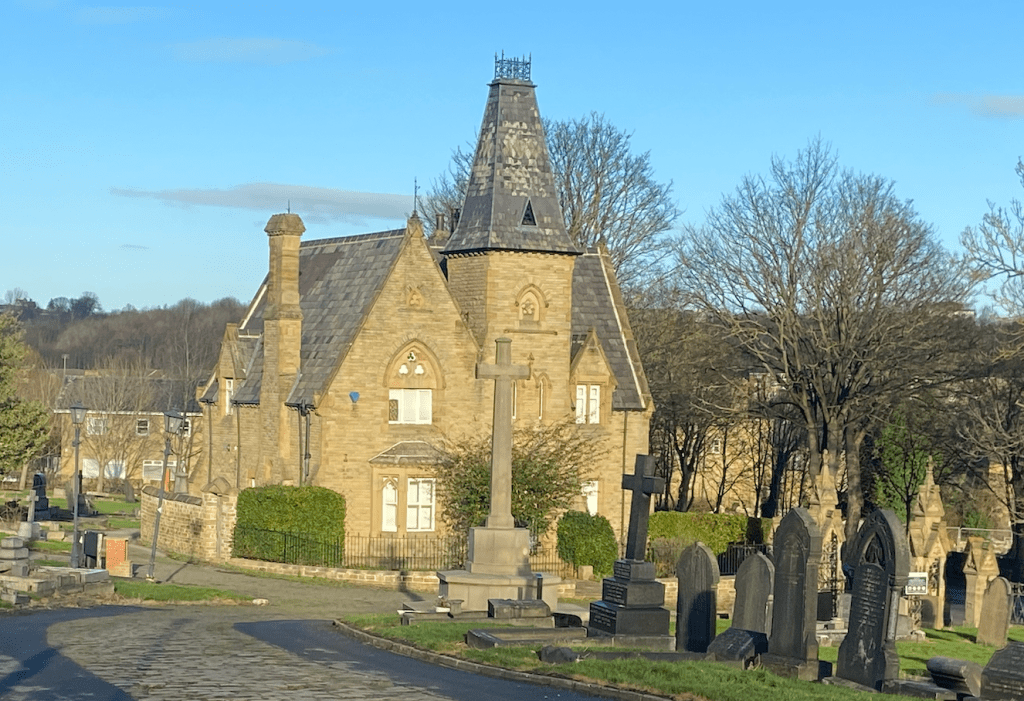
Now convinced the error had been made, Mrs. Brooke was unsure what to do. Naturally, this deeply disturbed her, and she was unable to sleep at night. Not only had she lost her husband, the breadwinner, and had four children to look after, but she now had to sort out this error. Finally, about five or six days after the burial, after taking some advice, she decided that the best course of action would be to head to the cemetery lodge and talk to the Registrar, Mr. William Henry Atkinson.

The Cemetery Lodge, taken on 5 Jan 2022 by George Hall

Atkinson didn’t believe her at first but was willing to check to ensure a mistake hadn’t been made. It quickly became apparent that Mrs. Brooke was correct in her assessment, and Mr. Brooke’s almost perfect funeral had one fatal flaw. He was buried in the wrong grave.

The Cemetery Registrar immediately expressed his deep regret to Mrs. Brooke and promised her the incident would be sorted. Afterwards, Mrs. Brooke communicated with a Town Council member and the Deputy Clerk of the Council, with the latter being contacted as the Town Clerk himself was away. She was even advised to contact the Mayor (Cllr. W. J. Ineson), who assured her that everything would be sorted in a satisfactory manner without a doubt.

This greatly comforted Mrs. Brooke but being a woman of incredible grit and steel, she refused to rest until her objective was met, continuing to contact the relevant bodies for the next week.

A short while passed, and it was reported that the Home Office had been contacted and that the official form required for the reinterment had been received. However, owing to the typical bureaucratic nature of government agencies, it took a while to arrive. Furthermore, it was reported that Mrs. Brooke and her family were satisfied that everything was being done to rectify the mistake.

Eventually, on 29 August 1907, the permit for the reinterment of Mr. Brooke was received in Batley. The following day at 6 am, Mr. Brooke was interred into the correct grave, finally resting with his three deceased children. Mrs Brooke, the driving force in ensuring the mistake was rectified, alongside three other family members and various representatives of the council and Atkinson, the Cemetery Registrar.

Emma Ellis, Mrs. Brooke in later days

The incident is a testament to the courage, determination and perseverance of Mrs. Brooke. After all that she had been through, she had managed to get it sorted. However, the incident also shows the impact of the 1905 incident as everything is done “above board” with no chance of any legal comeback.

With that comes the end of my interest in these two very unnecessary and unfortunate incidents in 1905 and 1907. Unfortunately, I know for a fact that incidents like this would continue up until at least the 1990s, if not the present day. I suppose this is a sad reality that we must face, but it seems so cruel that families have to face these incidents in times of grief.

The Batley Cemetery Incidents: Part One

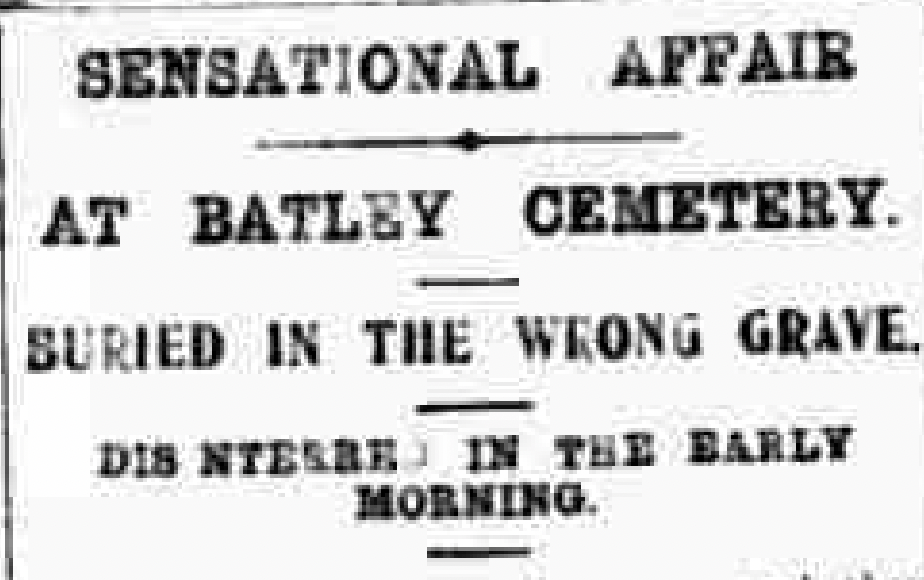
A sensational headline was recorded in the Batley Reporter and Guardian on 16 June 1905. But how did this incident happen and what was the true story behind it?

John Edward Marsden was an average bloke. Born around 1872 in Dewsbury, he married Rachel Emma Kelsell in 1895 and went on to have three children (Edith, Harry, Hilda) with her. Their eldest was a daughter named Edith, who was born on 27 February 1897. Sadly she passed away aged sixteen months and was buried in plot R 360 on 25 June 1905 at the Cemetery. Her father worked in the mill and could not mark the grave with a headstone, but a bottle was placed on the grave, containing a card with Edith’s name written on it. Furthermore, the grave was enclosed with some red tiles, and Mr. Marsden paid half a crown a year to help keep her plot in order.

The Marsden Plot (R 360) taken by George Hall on 5 Jan 2022

It is unclear precisely from who, but John Marsden heard that his daughter’s grave had been disturbed around May 1905. Obviously, after hearing the chatter, he went to check up on her grave. Much to his horror, he was able to confirm the grave had been disturbed almost immediately as the “little mound” upon the grave had grown by about a foot and also the soil on top of it appeared to be freshly broken. Additionally, the bottle containing the card was removed, and the tiles around the edge were scattered.

However, this was not the most worrying thing as the cut flowers that now upon the grave suggested there had been a fresh internment in it recently. Obviously, as the grave owner, Marsden knew that permission was not granted for the grave to be disturbed nor for a fresh interment, so he went to see Mr. William Henry Atkinson, the Batley Cemetery Registrar.

Atkinson was adamant that the grave hadn’t been disturbed at first and went into his office and checked his book. Marsden insisted that the grave had been disturbed, and Atkinson reviewed another book and consulted the grave plan. Both men then decided to check the grave together, where Atkinson hoped to convince Marsden that the grave hadn’t been touched.

Once at the grave, it was pretty obvious for the reasons said before that it had been disturbed, and Atkinson admitted that a mistake had been made but assured Marsden that the mistake would be “put right”.

The Twin Chapels located at Batley Cemetery in July 2021

Marsden called upon Atkinson a fortnight later, and he was told that the situation had been resolved. However, Marsden reasonably wished to receive some proof, and after some convincing, both men visited the grave, and Atkinson took a rod and bored it into the soil. He then said that it had gone to the bottom and, therefore, Mr. Marsden’s daughter was the only person interred in the grave. Mrs. Marsden visited the grave after it had been “put right” and noted that the cut flowers previously on her daughters grave had been moved to another grave nearby.

Mr. Atkinson was called upon for a statement by the Batley Reporter and Guardian. He explained that when a grave is opened for another interment, a rod is placed upon it in an upright position. Mr. Atkinson didn’t necessarily see the said graves until the interment took place but still was unsure exactly why or how Mr. Marsden’s plot was disturbed. Perhaps the rod had been placed incorrectly or moved by some unknown party from the intended plot to Marsden’s, which were situated close to each other. He also explained the fact that his daughter had been seriously ill around the time of the burial and was therefore not in his usual state of mind.

Nevertheless, Mr. Atkinson took responsibility for the mistake and ensured that the deceased was reinterred into the correct grave. However, Mr. Atkinson didn’t write to the Home Office to ask for permission to reopen the grave as was the law. Therefore in July 1905, the Cemetery Committee heard a letter addressed to the Mayor of Batley from the Secretary of State asking for his observations of the matter. A subcommittee was formed to discuss the matter after the Cemetery Committee met on 15 June 1905 and met on 16 June 1905.

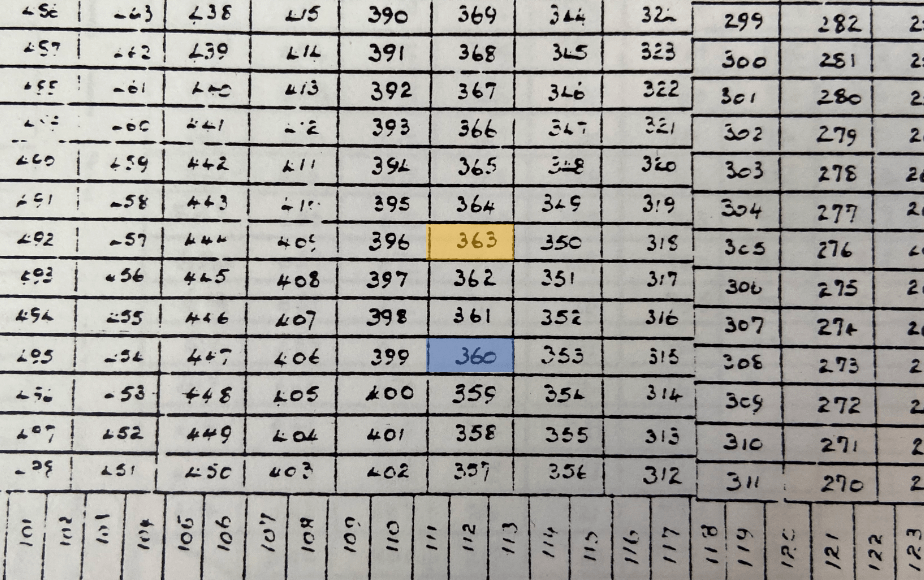
Now you may be asking, who was the person interred into the incorrect grave? Atkinson gave us a clue as he stated it was a woman but logically refused to provide a name. After looking at the Batley Cemetery burial register located at Batley Library, I believe that Mrs. Susan Regan, a 70-year-old widow, was incorrectly buried in the Marsden plot.

Blue = Marsden plot, Orange = Regan plot

She resided on Talbot Row, which was located on Bradford Road. She was meant to be buried in R 363, which is situated close to R 360, the Marsden plot. Furthermore, the burial date of 13 May 1905 allows Mr. Marsden to discover the issue, report it to Mr. Atkinson, and come back in two weeks time. After that, the excess time can account for gossip spreading, which the article (which obviously takes some time to produce) wished to quell. I cannot be 100% certain but there is a strong chance it is her.

Not much was reported in the Batley Borough Council minute books located at the wonderful Batley Library regarding the matter. The subcommittee which was formed isn’t mentioned. The only aspect mentioned is the Mayor’s reply to the aforementioned Secretary of State’s letter, which was approved. Either way, the Committee must have decided against taking any action against Mr. Atkinson as he remained in his post of the Cemetery Registrar.

No matter the reasoning behind the error, it clearly reinforces that everyone is imperfect and human error and chance can affect various fields. Mr. Atkinson shouldn’t be held entirely at fault and clearly took his duties seriously as registrar. However, you would expect lessons to be learnt and changes to be made.

Unfortunately, another familiar headline would be reported in a Batley newspaper a mere two years later.

John Thomas Crossley: A Difficult Life

John Thomas, the son of Joshua Joseph Crossley and Margaret Murphy, was born on 7 January 1866, on Bradford Road near Batley Carr. He was born into atypical circumstances as his father was already married with two children to a lady named Emma Parker. However, Joshua had probably left Emma before the birth of John as on his birth certificate, he is registered as Margaret’s son, who is in fact also recorded as Joshua’s wife.

The couple did marry eventually, around two years after the death of Emma, at Batley Parish Church on 11 July 1870. The couple already had another two children by the time of their marriage, Emma in 1869 and George in early 1870. Over the next decade or so, the couple would have three more children.

Batley Parish Church in July 2021

Just around sixteen months after the couple’s marriage, on 11 November 1871, Joshua was brought before Batley Borough Court to face charges of assaulting his wife. In the words of Margaret herself, on 18 November 1871, Joshua returned home drunk and struck her. The Huddersfield Daily Examiner reported that Margaret appeared in the witness box with a black eye which appeared greatly swollen. Margaret was reluctant to testify as she had agreed not to press charges as Joshua had promised but admitted that Joshua had struck her again since the original incident. It seemed that when Joshua was under the influence of liquor, he was in the habit of beating his wife. Joshua ended up pleading guilty, and the Mayor allowed Joshua to remain free but warned him that as these cases were becoming frequent, another case would see him sent to prison.

Times were hard for everyone, especially the working classes, and individuals may have found it hard to cope. Furthermore, individuals typically repeat the actions they were taught, so we must consider these and many more factors before condemning Joshua as an absolute villain. But being truthful, I find it hard to view him in anything but a negative manner. I appreciate the many factors that could cause it, but his apparent lack of respect for women is unjustifiable and plainly wrong, even if it was 150 years ago.

After an illness of a year or so, John Thomas Crossley’s father died of heart disease in August 1887. John remained living with his mother up until his marriage in 1893, and in this period before his wedding, the consequences of a difficult childhood became apparent.

John was either imprisoned for two weeks or fined for being drunk and disorderly in 1891. More convictions would follow in 1901, 1905 (this one was for obscene language) and 1913, with perhaps even more taking place. At least one or two convictions would end up in John being sent to prison for a week or two. It was said that John was a hardworking man but would leave his family penniless as he spent most of his money on alcohol.

He married Fanny Eliza Tasker at Birstall Parish Church on 11 December 1893. They went on to have two daughters, including Alice, my Great Great Grandmother, and three boys.

Alice Crossley, my Great Great Grandmother, during her youth

One of his sons, James Edward, was born in late June 1900. Around this period, it seems that John enlisted into the 3rd King’s Own Yorkshire Light Infantry’s Militia Battalion. He first tried to desert the battalion based in Strensall and succeeded for a while but was eventually arrested and detained and attached to an escort. However, he managed to break away again despite being handcuffed and concealed himself in a house in Birstall, the town where his family was living. Eventually, he was caught hiding under a bed in an upstairs room with the handcuffs from his original arrest in his pocket. He was sentenced to 85 days imprisonment, on 30 August 1900, for absence, breaking away from an escort and loss of kit.

Three of his children were living with their elderly maternal grandparents up Blackburn Road in Birstall by 1911. His daughter Frances was adopted out of the family by that point. Fanny Eliza, his wife, died in 1914, aged only 47 years.

John’s later years remain a little more mysterious. It is possible he remarried to a lady named Mary Frain in 1915, but from about 1924 to 1926, he lived with a relative without a wife registered to vote at that address. He appears on the 1939 Register, aged 73 years, as an old age pensioner living at some unknown establishment situated in Batley.

John Thomas Crossley’s 1939 Register entry

There is no clear record of his death, but it is likely he died in the 40s or, at a push, the early 50s.

John’s life was clearly a complex one. He may have simply been a victim of the times and also circumstances, struggling to cope in a harsh world and being affected by his father’s behaviour towards alcohol and his mother. This would, in turn, affect his own family, just like it affected him. However, he was also clearly a defiant character, willing to do things his own way, even breaking away from an army escort for unknown reasons.

Alfred Dale: The Man who Missed Out

Alfred Dale was born in November 1858, most likely at the family home situated on Dennis Street in Walmgate, York. He was the sixth child of William, a composite, and Mary Dale, formerly Stead. Mary undertook the typical but still gruelling domestic work while William Dale worked as a printer compositor, arranging a movable type for printing. It was a skilled profession, and William would have had to be skilled at spelling alongside probably needing a basic understanding of grammar and punctuation. In addition, he likely worked under high-pressure conditions with the machines moving at high speeds and mistakes being very costly.

Alfred was baptised on 30 November 1858 at St. Deny’s Church in Walmgate. In 1861 the family lived at Butter’s Buildings, remaining in the Walmgate area, and by 1871, the family moved to 2 Hope Street in the same area. All nine Dale siblings had been born, six boys and three girls by that point. In that year’s census, Alfred is described as a scholar and, at some point before his marriage, would take up work as a glassblower, perhaps following the footsteps of his older brother Edward.

St. Deny’s Church

Alfred married Mary Jane Fell towards the end of 1879. Mary Jane’s family was a challenge to wrap my head around, but due to an illegitimate birth a few generations before Mary Jane, the family seems to switch between “Turner Fell” and “Fell Turner” as their surnames. It seems to settle out as Fell towards the end of the 19th century.

The 1881 Census gives us a picture of life for the newlyweds; they were living at 14 Willow Street, again around the Walmgate of York. Interestingly, Mary Jane is recorded as working as a combmaker’s labourer, probably working for her father, alongside Alfred’s work as a glassblower. Their first daughter, Frances Lily, was already three months old by this point, so it is interesting to note that Mary Jane remained working. Another daughter, Mary Jane, followed in 1882.

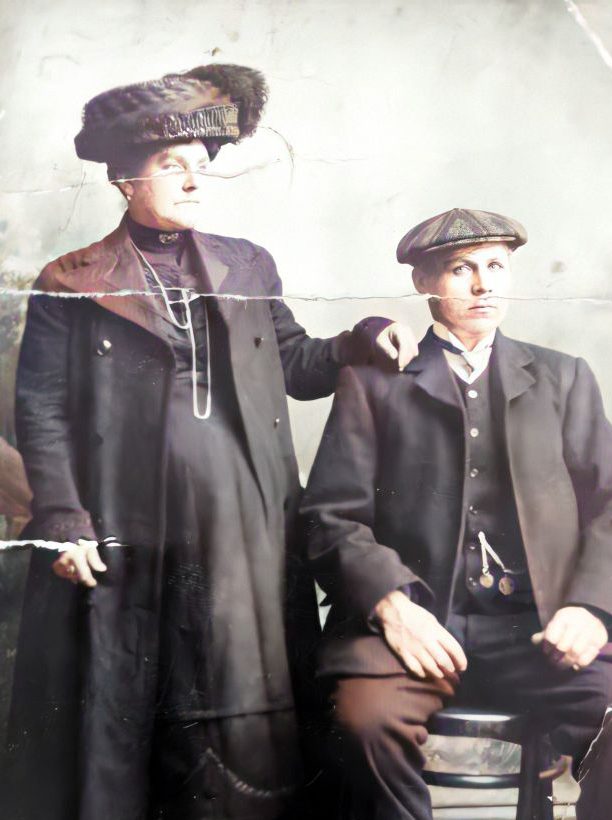
Mary Jane alongside a man likely to be Alfred

Sadly, Alfred’s father passed away on 26 August 1883, aged 62 years. His father’s loss represented his first significant loss, apart from the death of his Grandfather back in the 1860s. His father was buried in a public grave (10027) at York Cemetery in the afternoon at around 3:30 pm. Another loss followed in 1884 when his first son Edward was born. Unfortunately, he lived a mere five hours and died on 3 March 1885. I can’t be sure, but Edward may have been named after Alfred’s older brother, who he likely looked up to, perhaps making the loss sting that bit more.

The birth of his daughter Ada in 1886, ironically born on or around the same day as her brother Edward and then followed by the births of Albert Victor in 1888 and Florence Edith in 1890, cemented the end of his period of quite tragic loss. In 1891 the family lived in four rooms at 33 Duke of York Place in Walmgate. The birth of my Great Great Grandfather, Arthur Dale, followed in 1893 alongside the birth of the youngest child, George Alfred, in 1898. The family remained living at 33 Duke of York Place in 1901.

Map showing Duke of York Place

Things seemed to be looking up for Alfred. He had managed to replace a period of loss with the growth of his family. Things mightn’t have been easy, and fears for his job security might have started to bubble up towards the beginning of the 20th century, but regardless it is arguable he had managed to get through the worst and had a lot to look forward to in life.

Life is perhaps more cruel than we like to acknowledge, and this cruelness was seen when Alfred became ill with tongue cancer. He passed away aged only 47 years, at home, on 30 August 1906. He was buried at York Cemetery in a public grave, just like his father twenty three years earlier.

Alfred’s grave

In Alfred’s memory, a kerb was erected on the grave, but it has since sunken. It seems almost to be the direct words of Mary Jane: “In Loving Memory of my beloved husband Alfred Dale, who died 30 August 1906”. Of course, we cannot put words into the mouths of others, whether they are dead or alive, but I, at least, believe that this shows the deep affection and love between the couple and only adds to the tragedy of his unnecessary and plainly cruel death.

I genuinely believe that Alfred was the man that “missed out”. Not only did he miss seeing all of his children growing up, but he also missed any real chance to get to know his grandchildren or see much of the dramatic changes of the 20th century. Furthermore, his son, George Alfred, served during the First World War and made the ultimate sacrifice in the spring of 1918. Sure, to some, it may seem a blessing that he missed the pain of the loss, but he never knew that his youngest boy would be capable of such courage and selflessness in serving his country.

George Alfred Dale

And surely, after all the loss and hardships of his life, knowing that courage was his legacy would have only made everything worth it?

Ernest James Hall: The Spinner and Soldier

The youngest child of William Henry and Eliza Ann Hall, Ernest James Hall, was born at the family’s home, 48 Taylor Street in Batley, on 11 February 1885. His family came from a pretty typical working class background, with his father working a variety of jobs at local woollen mills and his mother raising her seven surviving children and performing dreary and demanding domestic work.

What was atypical, at least to an extent, was his father’s rampant alcoholism. Not only did William Henry Hall have a reputation of being an alcoholic, but he was also convicted of being “drunk and riotous” at least four times. Furthermore, Lewis Hall, the second youngest child of William and Eliza, would recall to his grandchildren that William went around local pubs selling shellfish to fund his habits. It is unclear if this led to William being abusive to his family, as there is no evidence directly confirming or denying abuse. None of his youngest two boys, Ernest and Lewis, ever spoke of facing abuse, but either way, the possibility stands.

In 1891 the family had moved to 25 Beaumont Street; the house is recorded as having three rooms and housed both parents and seven siblings of Ernest. Two of William Henry’s convictions occurred before the next census in 1897 and 1900, both resulting in a hefty or prison time. In 1901 the family resided at the four-roomed 42 Cobden Street, which was located near Batley Town Centre. In July of the same year, Ernest’s brother Walter married Annie Butcher at St. Paul’s Church, where he probably met his future wife, Emily Butcher, Annie’s sister, for the first time.

A map showing the areas Ernest spent his childhood in

After an illness of about two months, William Henry succumbed to Thyroid Cancer, aged 62, on 20 September 1904 at the Batley District Hospital. Three days later, he was buried at Batley Cemetery in the unmarked plot R 476.

Banns of marriage were read between Ernest James Hall and Emily Butcher at All Saints Church in Batley on 26 April, 3 May, 10 May 1908. The wedding took place on 24 May 1908; they were both living on Cobden Street. Emily is listed as living at number 49, and Ernest’s house number is not specified. Emily’s siblings, Walter and Agnes Butcher, witnessed the marriage.

Batley Parish Church

The couple moved to 1 Providence Street, nearby Cobden Street, after their marriage. Their first child, Percy, was born on 17 September 1908. His baptism took place on 11 November 1908 at Batley Parish Church. Ernest took up business in the mill to support his young family.

The Hall family appears on Lloyd George’s 1910 Tax Valuation. They had moved to 5 Providence Street, which had a gross annual value of £5 10 shillings and a rateable value of £3 15 shillings. The house had two rooms recorded on the 1911 Census. The couple’s first daughter, Evelyn, was born on 26 May of the same year. Interestingly, she was baptised alongside many Hall cousins at Batley Parish Church on 6 July 1910. Some were unusually old to be baptised, but it is interesting as it shows that the family have been quite close.

Emily holding a young Evelyn circa 1910

Marion was born three years later in 1913 with a deformity in her legs. This prevented her from walking, so she effectively lived on the couch until she was aged three. Luckily, she had a relatively normal life past that point but was just a little shorter than her peers.

Phyllis Hall was born on 1 July 1915, and at some point after her birth, Ernest was either called up or voluntarily enlisted into the army during the First World War. He served as a Private in the 8th Battalion of the King’s Own Yorkshire Light Infantry and was given the service number 35562. He likely served across the Western Front for a few years before serving in Italy towards the end of the war.

Ernest and Emily Hall

He was injured at some point in his service, as he is included in a list of the wounded in the Sheffield Daily Telegraph on 10 July 1917. Furthermore, he suffered from PTSD (or “Shell Shock”) due to his war service for the rest of his life.

He was awarded the British Victory Medal and discharged from the army on 16 June 1919.

One of Ernest’s war medals

A few more details of Ernest’s injury can be found on his army pension record, which states that he had defective vision attributable to his war service. His pension commenced on 17 June 1919, describing the degree of his disablement as 20%. On 29 October 1921, the record states that there were no grounds for the claim to stand.

The family moved to 99 Whitley Street, around the Westown area of Dewsbury, by 1919. It is quite tricky to pinpoint a direct date on the move, but the town of his next of kin is Batley on the war injury newspaper report, so the move was most likely after July 1917.

Jack Hall, the couple’s second son, was born on 5 June 1920, and Ernest had returned to his pre-war occupation of a card fettler in a woollen mill by that point. Frank was born soon after on 22 July 1922, and the final child, Mildred (or Millie), was born in May 1927.

Ernest’s brother Lewis lived close by at Green Lane during the same period. Lewis’ granddaughter described the conditions of their house; “The bedroom ceiling was open to the rafters, and it was so cold in winter that a glass of water would freeze solid. The house was lit by gas mantels and candles. The mattress was stuffed with straw animal bedding, and they would have to pick the flees off it”. It is possible that Ernest and the family lived in similar conditions.

Evelyn (right) and Phyllis (left), probably during the 1930s

The family continued to live at 99 Whitley Street for about seventeen years when they moved to 32 Oakfield Terrace, Commonside in Hanging Heaton, in 1936. The houses had much nicer conditions, and at least one member of the Hall family would remain living on the Oakfield Terrace row of houses for the next sixty years. Lewis Hall, Ernest’s brother, moved next door at number 30 in about 1938.

Many marriages ensued during the next four years. Firstly, Phyllis married Herbert Grimbleby in the summer of 1936 and was the first child to move out. Next, my Great Grandfather, Percy Hall, married his wife Edith Annie Whitaker at St John the Baptist Church on 17 July 1937. The last marriage of this period was Evelyn’s marriage to Tom Senior in mid-1939.

Evelyn alongside her parents on her wedding day

The 1939 Register details a few things about Ernest’s children who remained at home, barring Mildred, whose record is closed. Both Ernest and Jack Hall worked in woollen mills, with Ernest specifically working as a hopper minder. Emily undertook domestic work alongside help from Evelyn, especially helping outside. Frank worked as a grocery shop assistant.

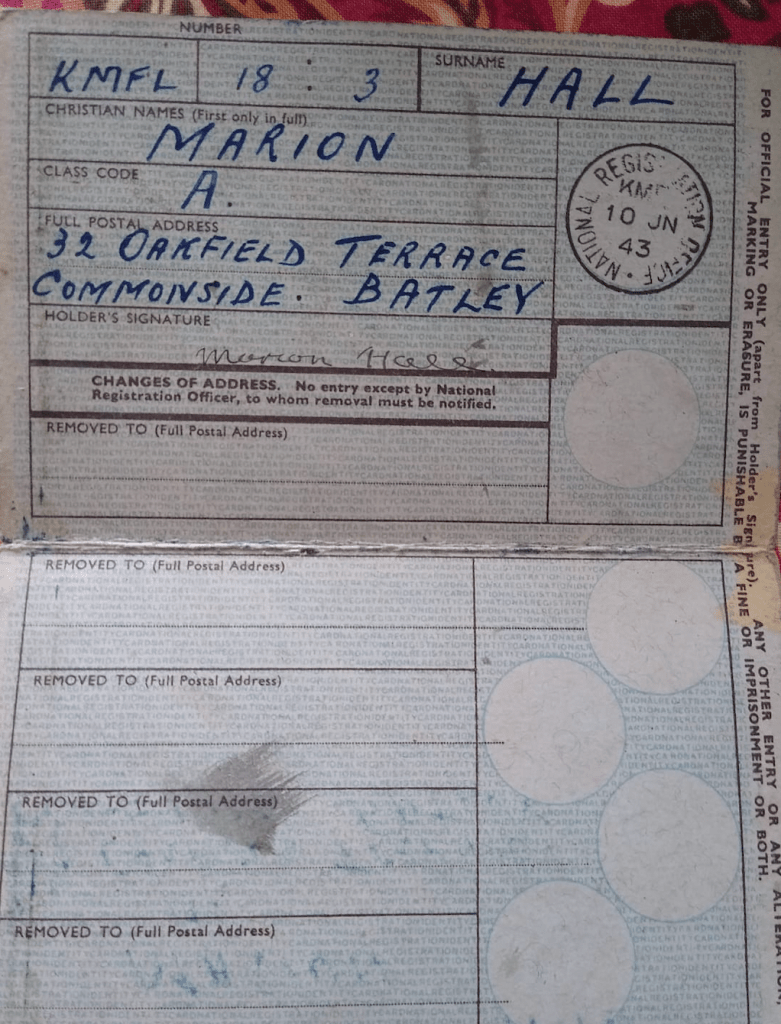
Marion’s identity card

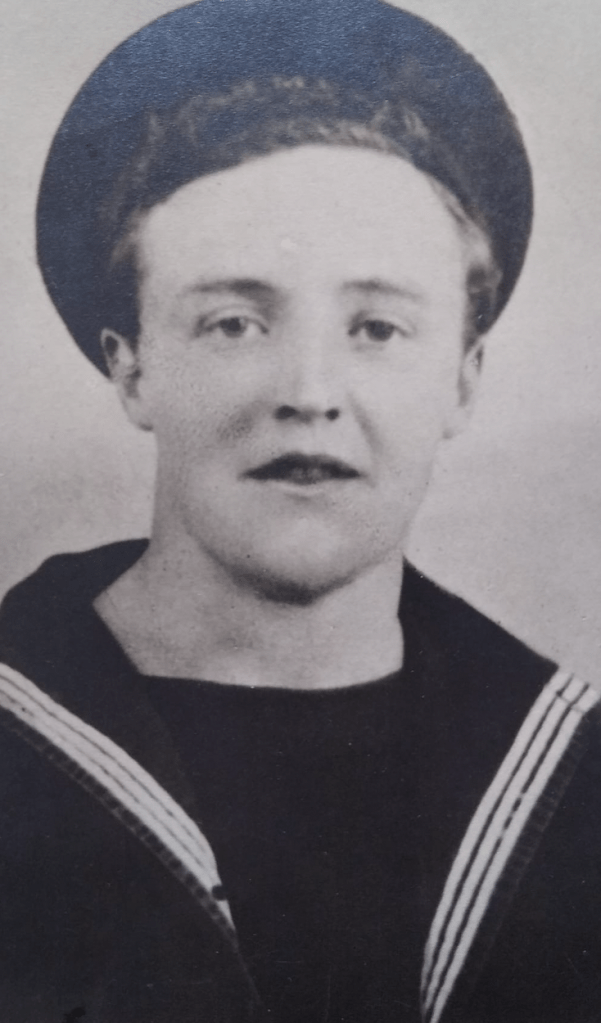
The outbreak of the Second World War affected Ernest’s life in two ways; his son Frank went to war serving in the Navy, and the more obvious but slightly overlooked effects of the war domestically. Rationing, fears of invasion, and the Blitz, which hit the towns of Dewsbury and Batley directly.

Frank Hall in his army uniform

Life went on, and the first grandchild of Ernest and Emily, Phyillis’ son Brian, was born in late 1940, followed by my Great Uncle John Edward Hall in October 1942. Percy, my Great Grandfather, had moved to 36 Oakfield Terrace, next door but one to his parents, by the birth of my Grandfather Richard on 14 January 1944.

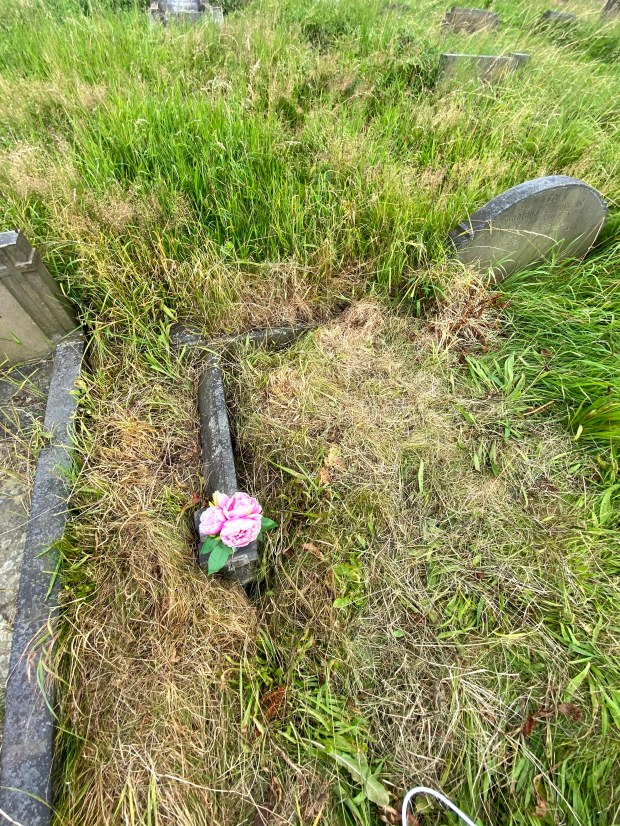
Emily Hall passed away at home due to cancer on 6 June 1948, at the age of 61. Her daughter Marion registered her death and was present at it. She was buried at the Hanging Heaton Churchyard on 9 June 1948. His wife’s death made Ernest even more reclusive, and he was always in the other room to others. He passed away at home due to a heart attack on 2 December 1948, aged 64 and was buried in the same plot as his wife.

Ernest and Emily Hall’s grave at Hanging Heaton Churchyard

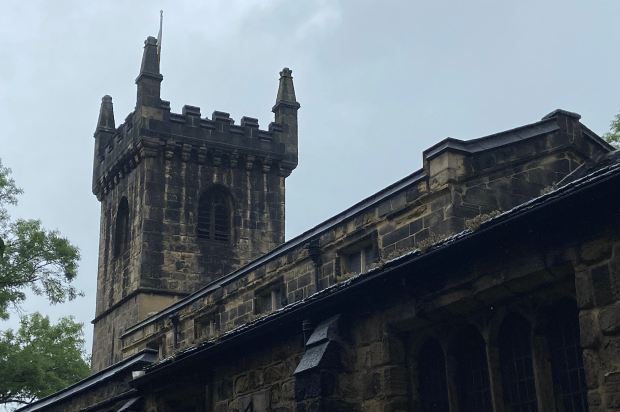
Ernest is easily one of my favourite ancestors, and I am incredibly proud to be a descendant of his. There are many reasons, but his story has literally taken about 20 months to uncover, and I am proud of the research I have managed to undertake. Furthermore, I work not far from Hanging Heaton Churchyard, and the Church overlooks me, connecting me to Ernest’s story on a more personal level. We also share the same birthday, albeit exactly 120 years apart. I just deeply connect to him as a person and love his story, which is far from rosy but one I am proud to be able to tell.