Heckmondwike in 1852: Crisis and Change

Liquid sewage once ran down the surface of Heckmondwike’s footpaths. Dead pigs lay rotting a mere six feet from people’s front doors. These front doors opened to small and ill-ventilated rooms. Public health was in dire straits. By the 1840s, things became even more dire as the wells that provided the town’s water supply started to dry up and become contaminated. There was a desperate need for action. A desperate need for change.
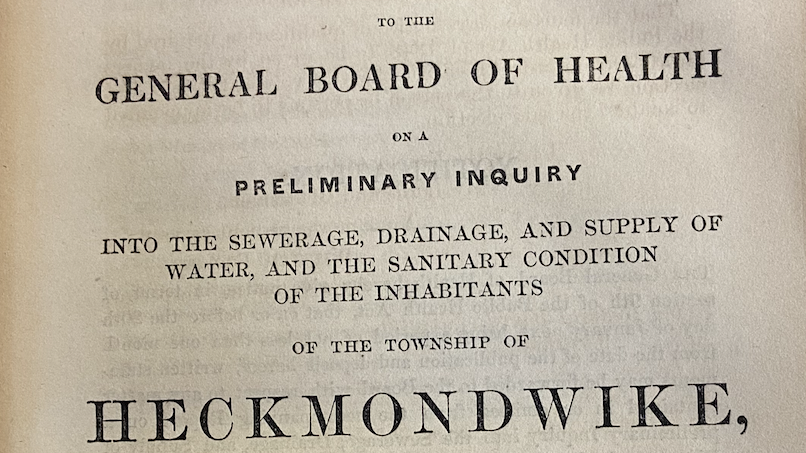
The 1852 report.

Heckmondwike’s population rose dramatically throughout the Georgian and early Victorian period, doubling from 1,741 in 1801 to 3,537 in 1841. This coincided with the Industrial Revolution and its significant social and economic changes. In specific regard to the water supply, not only was there an increased demand from the population but there was also a need to supply both the new mills in some form. Moreover, wells used by the general population began to dry up due to the sinking of deep coal pits, which led to increased demand and decreased supply. 

We can look at later testimony to bring home how bad things became. 

In the 1852 inquiry, Mr. Crabtree describes how, during an extended drought in the spring of 1852, people had been obliged to get water from a colliery, and the owner made them pay for the privilege. He had even known when his house had been without a drop of water. Another gentleman had spent 6 pence a week for his water for over two years, and he had to wake up at 6 am to carry the water for a quarter of a mile home. Quality became irrelevant, and some people, such as Mr. J. Wood, fetched his water supply from a pond where cattle drank. The richer you got, the higher the chance you had a private well or pump that supplied some water, but even these began to dry up.

A solution was not straightforward, though. 

At the same time, a larger societal debate surrounding public health occurred across the country as groups began to argue for greater spending towards and institutional regulation of public health. It was, for many, less of a moral crusade but one focused through a lens of spending efficiently. The logic was that many people reliant upon poor relief only became so due to the dire state of public health. This, alongside fierce campaigning and another cholera outbreak in 1848, led to the Public Health Act.

The Act allowed the creation of local-based authorities that could fund the development of new local infrastructure and enforce public health standards. This Act did not compel its adoption, and in many places, such as Heckmondwike, where local government structures were to some degree outdated or lacking, whole new structures would have to be created. This was not necessarily popular, and Heckmondwike seemed sceptical about adopting the Act. 

However, irrespective of the town’s political desires, the crisis continued to cause misery, and as water quality dropped, mortality rates increased. By 1849, local leaders were spurred into action by a nasty outbreak of cholera. They gathered and decided to try to raise £2000 to create a public company to supply water for the residents of Heckmondwike. The scheme was met with apathy or opposition, with just £700 raised despite an extensive public campaign. It may be speculative to point out, but it is interesting to note that those wealthier residents who would have been needed to contribute to the scheme likely already made a profit from the population relying upon them for water supply. 

After the initial attempt at creating a public company failed, a petition was sent to the Board of Health to adopt parts of the 1848 Act surrounding water supply. There was still some hesitation in the need for this new public institution. The government replied that the Act had to be adopted fully, and the petition was rejected. 

Action was taken again in January 1852, when just over a hundred Heckmondwike ratepayers sent a new petition to London to hold an inquiry to adopt the Act and form a Local Board of Health. A public inquiry was held over two days starting on Wednesday, 30th June. William Ranger was sent to lead an inquiry based in the Freemason’s Hall. Sessions took place during the day and also during the evening to allow working people to attend and give their evidence. Ranger notes that attendance was quite high, especially in the evening. 

Drawing of Heckmondwike during the 1840s.

According to the injury’s report, in 1851, Heckmondwike had a population of 4,540, an increase of just over a thousand in ten years. The gender divide wasn’t significant, with just 70 more men than women. The town had 939 houses, which led to an average of 4.8 people per house. 

The town had the following:

  • Seven woollen mills
  • One corn mill
  • Two carpet and coverlet mills
  • One dye work
  • One foundry
  • One railway
  • Five coal mines

Local government was not formalised in a way we would recognise it. A mix of antiquated roles and more modern roles administered the town. There was a general feeling from many that those in positions of power could not enact any meaningful changes to help the sanitary condition of the town. They lacked the power of enforcement through legal means. In many ways, it was solely down to those who built and owned land, buildings, and other infrastructure to maintain them to high standards.

“The respiration of pure air is essential to health, but the occupants of these places do not know what such a thing is.”

Housing conditions were dire. There is no other way to describe what people lived in. “Not fit for human habitation” was a quote regularly said by people of all classes and perspectives throughout the inquiry. 

Frank Peel’s drawing of a typical 1830s Spen Valley cottage seems somewhat homely and inviting at first glance, but this was very far from the truth. An average cottage had little more than two rooms –  a living space and a bedroom. Windows of the cottages were generally too small, and many of the bedrooms lacked fireplaces. Ventilation was, therefore, relatively poor. Cottages are described by one local man as “small, close, confined, ill-ventilated”, with a significant emphasis placed on the “accumulations of decomposing refuse” filling the rooms. A constant, aching reminder of the squalor people lived beside.
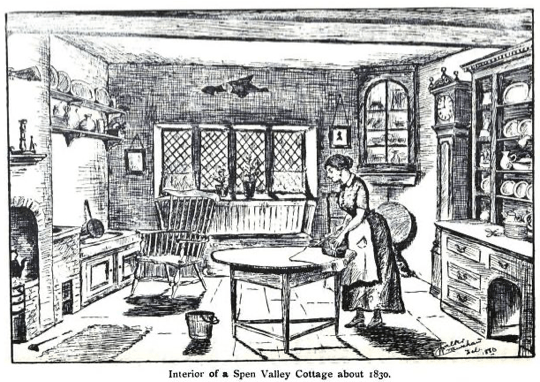
Taken from Spen Valley Past and Present by Frank Peel.

People did not have easy access to privy (or toilet) accommodation. This was especially the case in the older parts of the town, where if any accommodation was provided, it was in a deficient state. The Reverend E. N. Carter stated that in the neighbourhood of his parsonage in Heckmondwike, there were 23 houses, each occupied by a separate family, and only two privies for shared use, which were also described as “very dirty”. If we apply the earlier stated average of 4.8 people per house, this equals 55 people per toilet. Furthermore, Valentine Newsome, who lived in Chapel Lane, describes his area as having a “great want of privy accommodation”, including in his own property. However, his landlord refused to let any be built, no matter who funded it. Landlords and property owners could seemingly get away with whatever they wanted to and face no repercussions.

“The least and defective sewage in the localities where it is most absolutely required”

Spen Beck received the majority of the town’s sewage, but there was no sewage system in place to get it there. Mr. A. Goodall stated that from where he lived, “the yard leading from Goose-hill to Hill-house,” the houses at the upper end were without any drainage. This led to liquid refuse running over the surface of the footpaths. Moreover, if there was no privy accommodation at all, such as in the twelve houses on Post Office Lane, waste had to be thrown out of windows onto the street. 

In an unnamed part of the town, fourteen houses had one privy attached to them. This was within five yards of a public well, which ended up being regularly contaminated and nearly impossible to clean. This could lead to infectious diseases, at times, running rampant through more working-class areas of the town. 

It was not just sewage though as there was no formal refuse collection nor any standards enforced. This lack of regulation led to situations such as Mr. J. Walshaw’s where, outside his door, he described accumulations of refuse matter of every description. Dead pigs and offal remained outside just 6 feet from his door. Butchers were perfectly fine killing animals in their own yards, and in some residential parts of the town, pigsties stood nearby raw sewage. 

It is hard to imagine walking through Heckmondwike town centre now with liquid sewage running past you, rotting pigs in the corner of the road, and people being forced to throw excrement out of their windows, but nearly 175 years ago, this was the norm. 

This did not mean that people were mucky either. Heckmondwike’s population was proud, and William Ranger makes special mention of how those from the poorest of backgrounds in the direst of living conditions committed their most strenuous efforts to maintain some level of cleanliness when possible. However, through a lack of regulation and any serious means of redress against private property owners, Heckmondwike was a wild west of muck and disease. 

Drawing of Heckmondwike during the 1840s

William Ranger recommended the establishment of a Local Board of Health, which was first elected in 1853. This body would reconstitute itself into the Heckmondwike Urban District Council in the 1890s before being absorbed by Kirklees in the 1970s. Heckmondwike was the first part of the Spen Valley to adopt the Act. Heckmondwike was recommended by Ranger to join the Batley and Dewsbury waterworks scheme. This had many ups and downs, but eventually, within a decade or so, water was finally provided to the town’s residents. The enforcement of public health standards began as regulations came into effect and practical actions such as building Heckmondwike Cemetery to ensure there was enough burial space were taken. 

Heckmondwike would, in the following decades, become a pioneer of the new institutions, such as School Boards, which were established by Westminster Acts of Parliament. They would push them to their boundaries, and slowly but surely, the Local Board became an established and respected part of the town. Of course, to say one body of middle-class men truly changed the experiences of working people across the town is quite naive, but problems did begin to be resolved.

Bibliography

Peel, Frank. 1893. Spen Valley, Past and Present.

Ranger, William. 1852. Report to the General Board of Health on a Preliminary Inquiry into the Sewerage, Drainage, and Supply of Water, and the Sanitary Condition of the Inhabitants of the Township of Heckmondwike, in the West Riding of Yorkshire. London: Her Majesty’s Stationery Office.

UK Parliament . 2024. “The 1848 Public Health Act.” UK Parliament. 2024. https://www.parliament.uk/about/living-heritage/transformingsociety/towncountry/towns/tyne-and-wear-case-study/about-the-group/public-administration/the-1848-public-health-act/.
The Heckmondwike Wesleyan Disaster of 1829

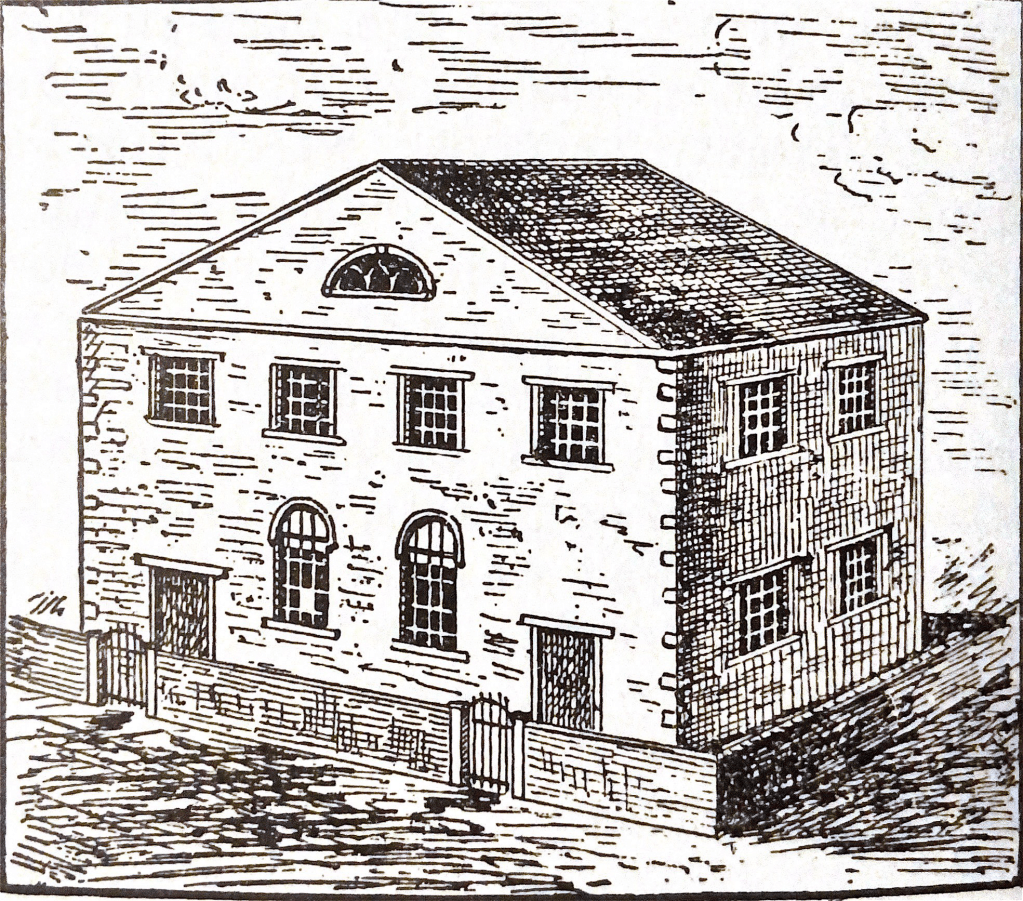
The First Wesleyan Chapel of Heckmondwike

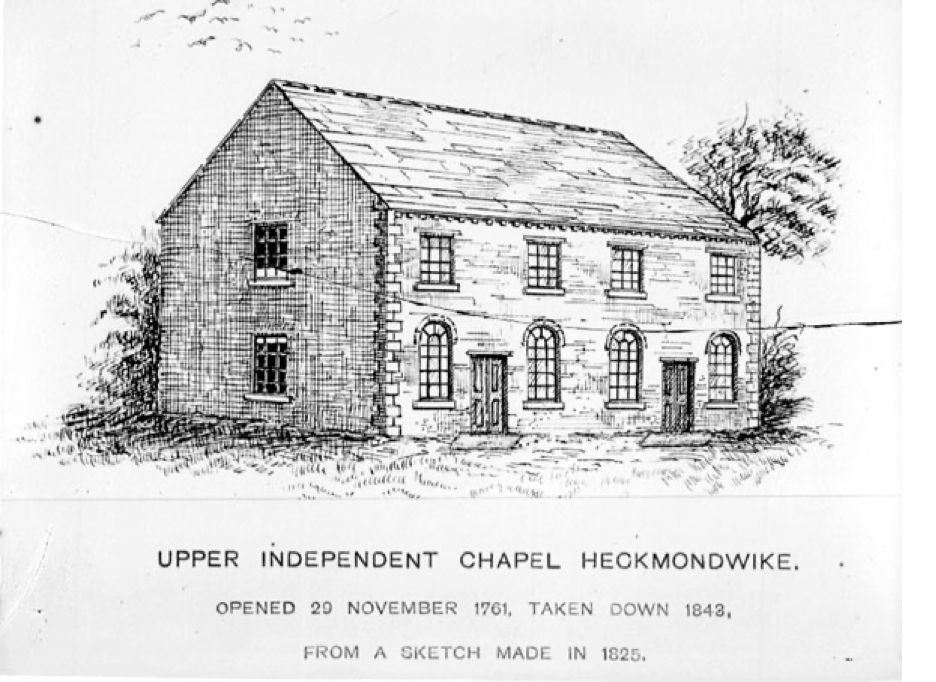
From the great religious conflicts of the 17th century to the present day, Heckmondwike, and the wider Spen Valley, has a proud tradition of dissent and non-conformism – religious or otherwise. Religious non-conformism can be traced back centuries, becoming especially prominent in the 17th century. In 1689 after the passage of the Toleration Act, local non-conformism flourished – the ‘metropolis of dissent’ as Frank Peel put it in 1891, was born.

A strong congregationalist tradition was established in Heckmondwike in the early 18th century, which espoused stringent Calvinist views, believing firmly in fatalism – the idea that everything is already pre-determined by God. They did not welcome the ideas of John Wesley, whose more liberal views began to be introduced to the area, spreading rapidly throughout Birstall and Liversedge. Methodist “Classes” were held in both Heckmondwike and Cleckheaton, much to the discontent of the Congregationalists, who tried their best to slow and disrupt its spread.

Still, the first services were held in the “old houses” on Walkley Lane, opposite Walkley Cottage. At the time, the leading man of Methodism in Heckmondwike was a bookkeeper, Mr. J Wilkinson. He helped to establish a Sunday School, which Peel describes as one of the first in the Spen Valley. It was situated in Wilkinson’s house on the banks of the Spen Beck. He was aided and then followed by Mr. Benjamin Holdsworth, who carried Methodism forward a generation. In 1810, a Methodist Chapel was erected near the town’s green. It was situated on the grounds of the Co-operative Funeral Directors at the time of writing. Holdsworth was essential in its foundation, and by 1811, the Chapel had opened.

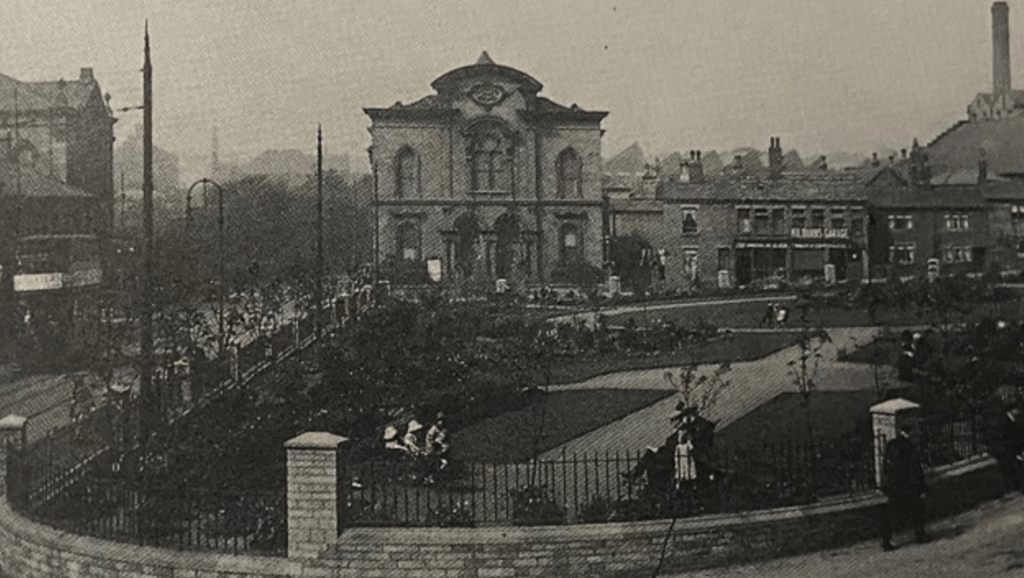
Where the entrance of the Heckmondwike Old Wesleyan Chapel once faced

In spite of deep religious tension, the Chapel progressed favourably, and by 1829 Methodism was thriving in Heckmondwike, considering its slow but steady foundations. The town itself was steeped in poverty, political radicalism, and tension. The Luddite Attack on Rawfolds Mill had happened only seventeen years earlier, and the radicalism did not end with its failure. An infamous article in 1826 discussed how a gentleman had seen children eat out of a pig’s trough due to a lack of food. Furthermore, in April 1829, trade was in a ‘lamentable depression’, with the trade of blankets in both Dewsbury and Heckmondwike being the worst the Leeds Mercury Reporter had seen across the region. Employment was low as the blanket industry declined, with over a quarter of weavers being unemployed and quite literally starving. Considering then that some describe Methodism as a ‘working-class’ religion which is perhaps more hopeful than the contemporary hard-line Calvinist independents, one can see the excitement behind it and why it becomes more entrenched in Heckmondwike.

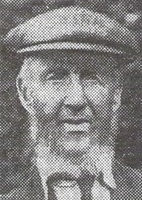
A photo which is likely Mr. William “Billy” Dawson

A new Methodist Sunday School had, at some point, been established. On Sunday, 12th April 1829, popular preacher Billy Dawson was to preach the anniversary sermons of this Sunday School. Dawson was at the height of his popularity, and much excitement and anticipation was held around his attendance; therefore, a collection was also to be held for the Sunday School, perhaps taking advantage of this. The day came, and, in the evening, vast throngs of people flocked to hear Dawson preach. The Chapel was quite literally packed to its capacity. Dawson preached in his usual engaging and eloquent manner from John IX 4. Finally, at around quarter past seven, the Congregation arose to sing. Little could they consider what calamity was to follow.

The force of the people arising knocked the stove in the Chapel’s body near the gallery. This caused the stove’s pipe to fall, causing a noticeable noise. Nobody was injured, although many were alarmed, and some began to leave the Chapel as a cloud of dust and soot arose. Panic began to spread. As this panic spread, a young lad overheard one of these people leaving saying that, at first, he thought the Chapel was giving way. This lad then ran outside and broke a square in one of the windows, perhaps with an umbrella, and shouted words that caused turmoil – “The chapel is falling!”.

Almost instantly, the Chapel, full to its brim, became a scene of a most terrible disaster. People from the gallery and the body of the Chapel made a near-simultaneous rush towards the nearest exit. There were two doors – an East door partly shut and the West door fully open. The rush was mainly focused on the latter. The Chapel’s narrow passages were inadequately designed to handle the crowds of people trying to escape. The staircase from the gallery ended in a vestibule – a lobby of sorts – from which those leaving hit the crowd from the body at a right angle. The consequence of this was a very sorry, near indescribable sight.

The two opposing streams nearly closed up the small passageways causing those who were at the front to be thrown down by those behind, who were themselves also thrown down and covered those coming down from the gallery. The staircase from the gallery itself was literally full of people trying to escape. Amid this, Dawson and other preachers attempted to quell the disorder, but their pleas were quite literally drowned out by the ‘shrieks of the terrified, and the groans of the dying’. Moreover, the force of the crowd in the gallery caused someone to be thrown over it into the body of the chapel, luckily falling on another person’s shoulders and escaping injury.

This chaos and terror reigned as a young boy, who was aged just 6 years, held onto his father’s hands. His father was Timothy Rothrey, a local Clothier, and his mother was called Ann. This little boy held on tight, but the velocity and force of the terrified crowd overpowered his father’s strength. Torn away from his helpless father’s side, he was very quickly trampled upon as his father watched on, unable to do a thing.

The baptism of Rothery’s son

The desperate preachers realised their own cries and commands were doing nothing to quell the crowds. The Chapel’s band soon began to strike up a hymn which was also sung by the Chapel’s signers and perhaps joined by the scholars of the Sunday School. The children were instructed to remain seated, and thanks to this action from their teachers avoided injury or death. However, the Hymn did not overpower the chaos – screams, the crashing of those trampling over the fallen pipe, and the creaking of the Chapel’s woodwork. To the alarm of Heckmondwike’s population, these noises of terror, death and chaos were heard for several hundred yards outside the chapel.

It took a quarter of an hour for the crowd to begin to calm and the difficult process of extracting people began. People were piled upon each other to the height of four or five feet, and it was necessary to drag people into the body of the chapel in order to free those at the bottom of the pile.

The scale of the disaster became apparent very quickly – five people were dead, mostly young people. At least 20 were injured in some form, with an extra 6 or 7 appearing in a near-lifeless state. Alarm had spread around the town by this point, and crowds gathered outside the Chapel to help and also ensure their loved ones were alive. The earlier mentioned little boy, son of Timothy Rothery, was found alive but with both his shoulders dislocated and heavily bruised. His name was Henry Rothery, and he was dead, aged just 6, the following day. This made the death total increase to six.

The Town much later in the 1870s

There was an outpouring of support from all walks of life across Heckmondwike and its surrounding towns. Heckmondwike’s inhabitants raised a subscription to aid those wounded and cover the funeral expenses of those who died. Many, if not the vast majority, of the aforementioned people were towards the bottom of society and therefore needed as much support as necessary. The following Tuesday, an inquest was held. Furthermore, Peel later reports that purportedly the lad who shouted that the chapel was falling and arguably increasing panic amongst the Congregation was killed on Walkley Lane by being knocked down. There is no other mention of this elsewhere.

The New Chapel built in the 1860s, closed in 1959 and eventually was demolished. Photo taken circa 1913.

This accident marked generations of Heckmondwikians, being mentioned years later in two descriptions of the town in the 1830s and 1860s. Those born as late as the 1820s died likely in the 1880s and 1890s, but some, like Ceneterain Mary Buckley, who was born in 1810, lived many years longer than this; the memory, therefore, lagged on. Despite this being such a traumatic event in Heckmondwike and the wider Spen Valley’s history, it seems to have been so easily forgotten. This may have been aided by the demolition of the old Chapel and its successor, but still, this event should be remembered. Six people died, and many were injured, never mind a whole town traumatised.

Let us take a moment then to reflect on and remember the terrible events of 12th April 1829.

In Memory Of:

  • John Leeming, aged 14. Apprentice to a shoe-maker at Swithenbank.
  • Emma Whiteley, aged 13.
  • Betty Oxley, aged 33, unmarried.
  • Ann Heald, aged 14.
  • Henry Rothery, aged 6, who died the following day.

The following were considered dangerously injured but made a recovery:

  • Mrs. Susannah Thornton of Liversedge
  • Law Swithenbank of Staincliffe, aged 13
  • Sarah Naylor of Heckmondwike, aged 14.
  • Hannah Ineson of Heckmondwike, aged 12 years
  • Eliza Heald of Heckmondwike, aged 16 years
  • William Blackburn, married man, of Heckmondwike

Revisiting G. A. Dale

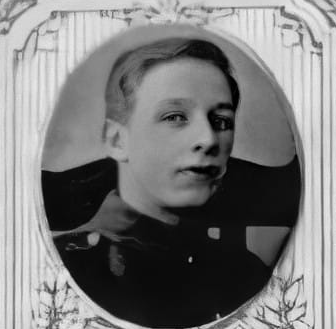
George Alfred Dale

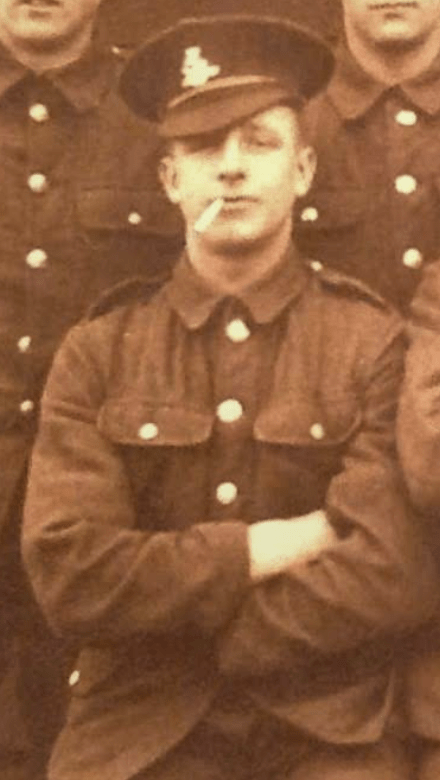
I started my family history research on 13 March 2020, just before the first Coronavirus Lockdown. It was somewhat of a false start; the flashy hints that usually end up inaccurate did not help. However, one of the hints struck my attention. I remember it so distinctly. It was late on, and a photo popped up of my Great Great Great Grandparents. Next followed one of their son, surrounded by comrades, in France, with a jaunty hat and cigarette in his mouth. Then, carrying on, I saw the dreaded records with the short phrase ‘died of wounds’.

Following this discovery, I fundamentally wanted to answer one question – who was this fallen hero I shared a name with? Answering it brought home some answers and also a very tragic tale but also connected me strongly to George Alfred Dale, a lad of late Victorian York.

Mere meters from the ancient city walls of York, at 33 Duke of York Place, Long Close Lane, George Alfred Dale, the youngest son of Alfred Dale and Mary Jane Fell, was born on 7 March 1898. His parents had married some nineteen years previously. Mary Jane’s mother was a regular in York’s courts, sentenced for mainly petty crimes. Alfred’s father was a Composite Printer at a local York Paper, and his uncle was a Hairdresser by trade but also the Swordbearer of the City of York; therefore, their match was somewhat surprising. Criminality and the hairdressing gentry don’t really mix – perhaps then this is indicative of a real match based upon love?

Map circa 1889 showing how close Duke of York Place was to the City Walls

The Dale family moved to 33 Duke of York Place by 1881. Alfred worked as a Glass Blower, and the York Glass Works was just down the road, so it is likely to explain why they moved to that address. They were a typical working-class family of York, and by George’s birth in 1898, the family comprised George, the youngest, his two older brothers and three older sisters. In 1885, another brother, Edward Dale, at only a few hours old, passed away in infancy.

George was baptised likely at St Deny’s Church, near where the Dale family lived, on 27 March 1898, a date which bears significance twenty years later. Just a year after George’s birth, his eldest sister, Frances Lily Dale, married George Garnett and moved out. Therefore, in 1901, his eldest sisters living at home were Mary Jane and Ada, who both worked in York’s famous confectionery business. They left home over the coming decade, being married in 1904 and 1909 respectively. Albert Victor was slightly younger but still aged ten years older than George. Perhaps George got up to more mischief with his youngest older brother Arthur, who was also my Great Great Grandfather. They only shared a five-year age gap, so especially in the coming years, one can imagine the boys running around the streets of the ancient city they were born in.

This rather innocent Edwardian childhood was, however, contrasted with the brutality of what was to come.

Some nearby streets George may have wondered through

Alfred Dale, likely down to the processes of his work as a glass blower, or a specific type of pipe he smoked, or another factor, became gravely ill. It was Cancer – a death sentence in Edwardian England, especially so for someone of his class. The Cancer was based in his tongue, and although we do not precisely know how long Alfred was ill, one can only imagine him slowly fading away in agony. With his youngest child, George Alfred, aged 8, did he try to hide his illness from him? Or was it simply apparent from the beginning? Alfred may have been unable to work, and luckily there were other sources of income for the family, but times will have become much harder for the Dales as they waited for the inevitable.

The Public Grave Alfred Dale is buried in

The inevitable came on 30 August 1906, and by the description of his death certificate, the actual moment of his death was even grimmer than the months preceding it. Alfred Dale, son, brother, father to seven, and “beloved husband” to Mary Jane, was dead. His body was buried in a public grave at York Cemetery a few days later. In spite of her precarious economic situation after her husband’s death, Mary Jane erected a memorial kerb to Alfred’s memory, perhaps as a testament to their love.

Focusing on George, not only had he just lost his father, but soon he lost his home. Mary Jane Dale, George’s mother, now a widow and the family’s matriarch, had to find a way to survive her husband’s and breadwinner’s death. Sensibly to find work, she moved her family to Dewsbury, one of the prosperous West Riding Heavy Woollen towns. Likely travelling by train, one can only imagine how the Dale family felt, especially little George, as they boarded their train and said goodbye to their friends, family and most importantly, home.

Mary Jane Dale, likely with her husband Alfred

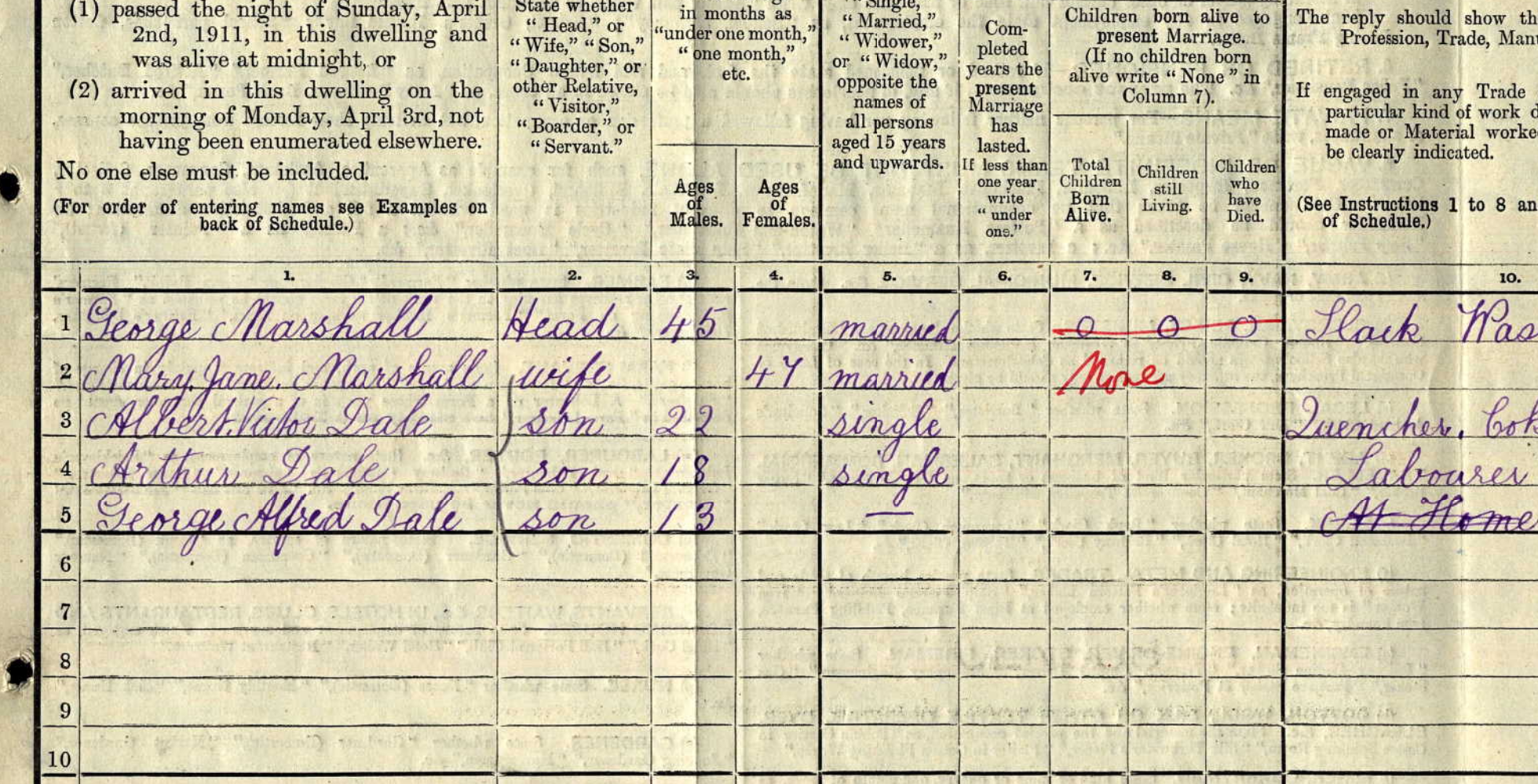
They moved to what was at the time one of the grimmest parts of Dewsbury, the slums of Eastborough. George likely adjusted quickly to this new environment and replaced running around the ancient streets of York with the more modern, industrial streets of prosperous Dewsbury. Furthermore, he gained a new father figure as his mother married a Mr. George Marshall at the now-demolished St. Phillip’s Church on 22 August 1908. The family moved to Primrose Hill, Soothill, by 1911, although with the marriages of Ada and Mary Jane, only the boys, Albert Victor, Arthur and George Alfred, remained at home.

In the intervening years of 1911 to 1914, little is known regarding George’s life. For example, we do not know when he started work or where he first worked. His stepfather George Marshall worked in a local “Coke Plant”, as did his brother Albert Victor. His other brother Arthur worked in the Mill, so there were various possibilities for where he did eventually end up working. However, this is all irrelevant to some extent, as world events would soon send George Alfred Dale down a different path.

The Marshalls and Dales on the 1911 Census

After the July Crisis and weeks of tension, Britain finally declared war on Germany on 4 August 1914, ending a century of relative peace for the British general public. Quite early on in the war, likely in its early weeks, George Alfred Dale, aged 16, enlisted, likely lying about his age by a year or two. Perhaps captivated by the early romanticism of the war, or dreams of adventure, or simply not seeing many opportunities for himself in Batley, he entered service into the Duke of Wellington’s Regiment.

His battalion was the 2/5th, which was formed in Huddersfield in September, initially serving as a home service battalion intended for home defence and other duties. Based in the UK, George’s battalion travelled far and wide, some places including Derbyshire in 1915, Newcastle in late 1915 and Salisbury Plain in early 1916. For a working-class lad like George, seeing so much of the UK must have been thrilling. However, soon it was time to go to battle, and George’s Battalion was sent to France in early 1917 when he was aged just 18 years old.

His battalion was part of the 62nd (2nd West Riding) Division and fought in a wide array of battles, centred mainly around Arras and the rural village of Bullecourt. The first battle George may have partook in was the Operations on the Ancre in February 1917. He was granted leave in May 1917, the last recorded time we know he was at home. Around this time, he also signed a will where he left everything to his mother. Despite being still such a young lad, the spectre of death haunted him and so many others on the battlefields of France and Flanders.

George with some of his comrades.

1918 saw a repetition of the previous year in many regards for George. His battalion fought in the same areas, in the same gruelling conditions. Yet, in spite of this, in photos, he appears to be a character, especially with his previously mentioned jaunty hat and cigarette. Perhaps the army life was for him? Or it simply was a façade for back home.

Heavy fighting began in Bullecourt on 21 March 1918, which was located on the Hindenburg Line. The village had seen heavy fighting in 1917, and the Germans would recapture the village after the 1918 battle, holding it until September 1918. It was either on or just before 29 March 1918, during this battle and ironically just one or two days from his date of baptism, when he was injured during this fighting. The nature of the injuries remains unknown, and to what degree, George suffered because of them also. On the 29th, he was transferred to a hospital in Rouen, where he fought for his life. It was in vain, however, and so far away from home and his family, George died aged scarcely 20 years old on 31 March 1918. The young lad, a loved son, brother, cousin, and nephew, with a life and future ahead of him, was dead.

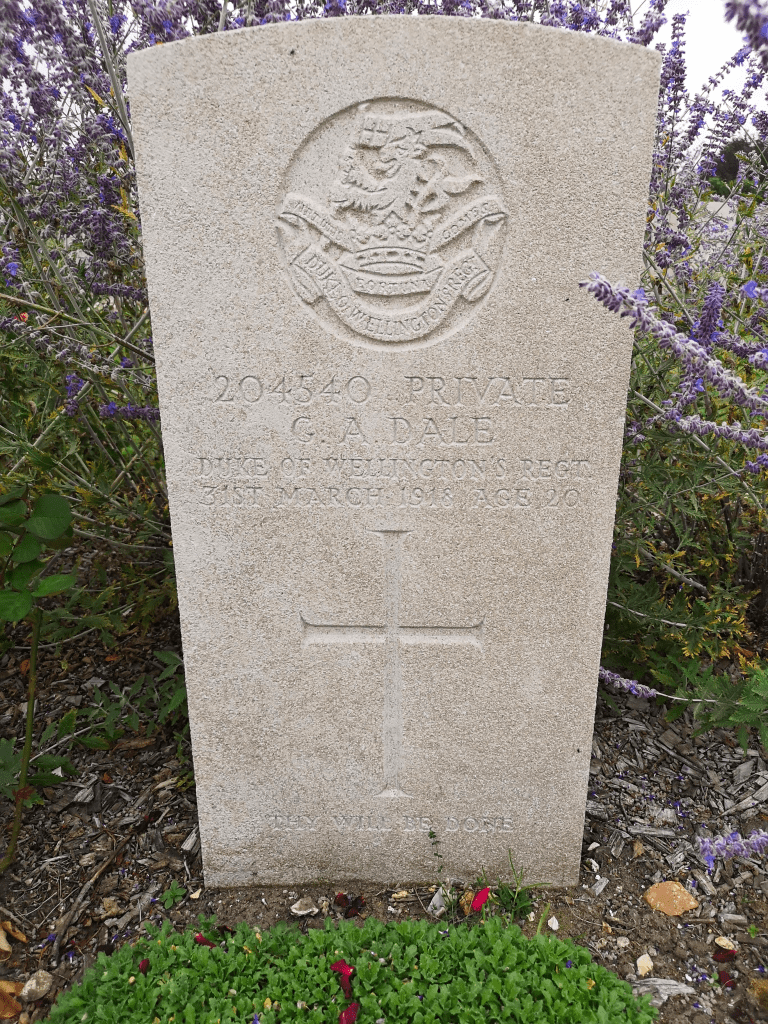
George’s final resting place

He was buried in Rouen, and the family chose the inscription of ‘Thy Will be Done’ for his gravestone. It is a statement I don’t fully understand, I admit. Still, I see it as simply a statement of acceptance and confusion. Acceptance of God’s plan of taking away such a young lad full of promise, but not understanding why, except hoping it was for a good reason. The Dales from Alfred’s death, and to an extent beforehand, were dealt a rough hand in many ways. Perhaps then, it was a comment about that also.

George Alfred Dale’s death affected the family immensely, especially his mother, who is later reported to have “fretted” about his death. He missed the marriage of his brother Arthur in June 1918, but arguably the loss may have contributed to his mother’s sudden death in January 1919 – had she seen too many losses?

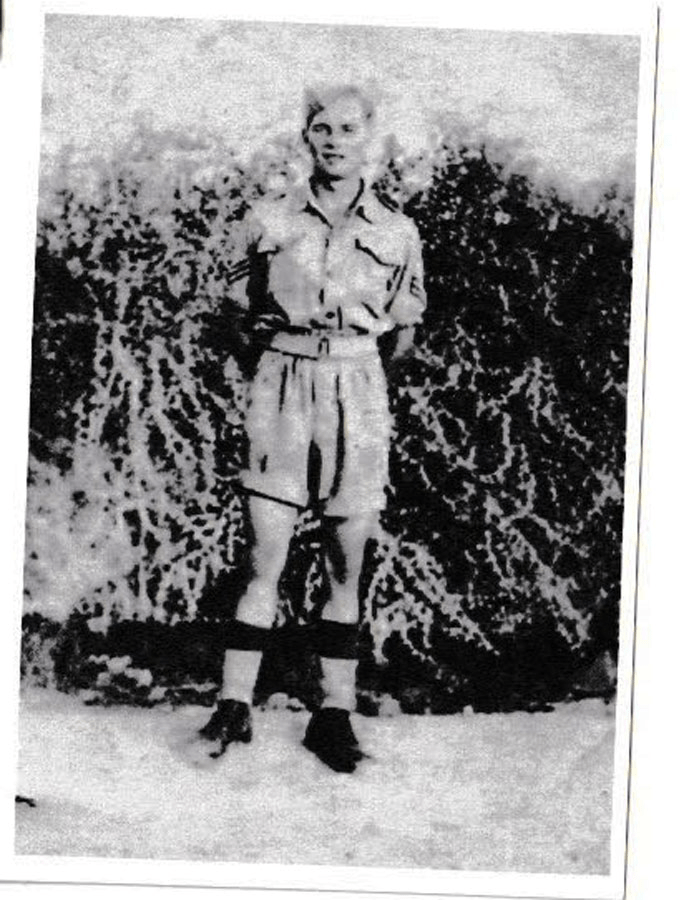
My Great Grandad George during the Second World War

George Alfred Dale’s legacy continued by Arthur naming his son George in 1921. This George was my Great Grandad, a gardener who worked for many years at Batley Park and who also served through the Second World War. He was by all accounts a lovely, generous and kind man and a man I am sure George Alfred Dale would have been immensely proud to call his nephew. Unfortunately, he died in 1987, many years before my birth, and it is now myself who now carries the name George. Named after both my Great Grandfather, and by proxy, my Great Great Great Uncle, I take great pride in both legacies and also in carrying the name ‘George’ into the 21st century.

With this in mind, god-willing, and with some train tickets clutched in my hand; I will set off in the summer to Rouen and find George Alfred Dale’s final resting place. The grave, which has stood for about a century or so, is a testament to a longwinded legacy of a lad taken away from life at the young age of twenty. I am not sure how many family members have ever had the opportunity to visit the grave; I know of one, but frankly, I feel very privileged to be able to. Thinking back to 2020, I remember the first moments of finding out about George’s story, and it has taken three years to understand it fully. I see it as a calling to continue his legacy as his life, death and the war he served in fade further into the past.

The Three Georges of the 19th, 20th and 21st Centuries

Let this post, and my future detour to Rouen, be an example then, that after 125 years of his birth and 105 years since his death, Private George Alfred Dale is not forgotten and never will be.

Heckmondwike in 1881

Sketched by E. D. Brook in 1874

A simple, modest book, tucked away nice and safely in the corner of Cleckheaton Libary’s excellent local studies section, can give a profound and interesting account of Heckmondwike in its prime – an up-and-coming town on its way to make history.

Also sketched by E. D. Brook in 1874

The aforementioned book is the 1881-1882 Heckmondwike Local Board Handbook. It clearly has a purpose and intended audience (generally the middle classes) and was not designed entirely to be a historical document. Focusing on Heckmondwike’s local governance and public services, it certainly will not illustrate the horrors of Victorian poverty or delve into the highlights of the same period’s prosperity. Still, it provides a different perspective of our town’s overlooked history.

A Little Context

The handbook provides some interesting data that can provide a little context for Heckmondwike’s situation in 1881.

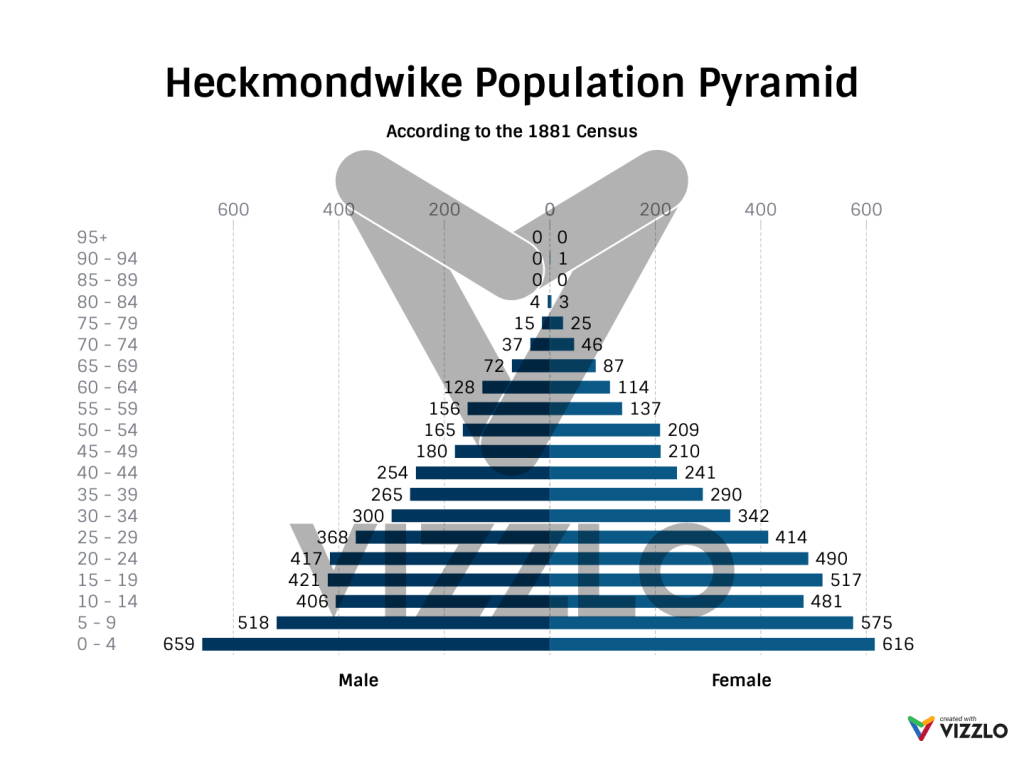
The Township of Heckmondwike covered 697 acres 1r. 3p. and in the 1881 Census had a population of 9326. I was in two minds about whether to include the chart from below as it certainly isn’t a scientific population pyramid. The data was near impossible to read, and I think about 100 odd people are missing off the chart. Still, it is quite a good indication of how society was structured in Heckmondwike in 1881, but please treat it with caution!

A very poor and inaccurate Population Pyramid of Heckmondwike in 1881. Treat it more of a general overview of how society was structured.

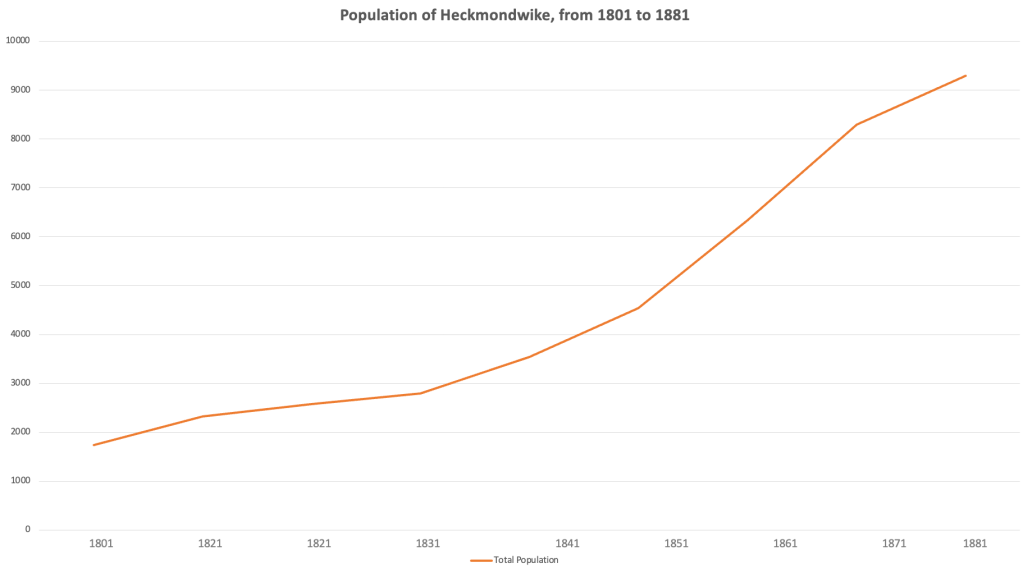
The following graph also gives an overview of how society had grown over time from the 1801 census. This data was taken directly from the handbook and cross-referenced with other sources.

Popualtion data from the Censuses for Heckmondwike between 1801 and 1881

The population rose from around 1,742 people in 340 inhabited houses in 1801 to 9,326 in 1881, with there being 1679 inhabited houses in 1871. There were 2,141 ratepayers in 1880. The most extensive period of percentage growth was between 1851 and 1861, with a 39.7% growth in population.

Just take a moment to consider the fact that the town, over a period of just ten years, had a population that surpassed a third of the population of ten years ago. It is unimaginable.

Who and what was in charge then?

Despite what you might think, local governance is quite an interesting historical topic, especially in the Spen area. There is no need to go into much detail, but after an inquiry in 1852, Heckmondwike was the first area of the Spen Valley to adopt the Local Government Act, forming a local board in 1853.

The Local Board had many tasks from day dot, and its creation arguably was one of the most important events in Heckmondwike’s history. If anything, it allowed the prosperous men of the day to begin societal reforms and develop public services, some of which remain to this very day.

Frank Peel, famous Local Historian and key figure of the history he wrote, especially in Heckmondwike.

The following men sat as members of the Local Board in 1881: J. Leadbeater, Frank Peel (author of SVPP), John Stansfield, Benjamin Firth, Edward Armitage, J. Tattersfield Jnr., Samuel Wood, John Wood, Joss Walshaw, George Keighley, Alfred Crabtree and John Kelley.

In terms of individuals in relation to the Poor Law (loosely the welfare state of the day but by no means anything at all like our Welfare State) – J. B. Oates and William Wood Bousfield were the Overseers of the Poor, with Herbert Armitage being an Assistant Overseer. Joshua Leadbeater and Matthew Firth acted as guardians, whilst John A. Erskine Stuart was the Poor Law Medical Officer of the Heckmondwike Township.

A key individual for local family historians, the Registrar of Births and Deaths, was a Mr. John Robinson of the nearby Littletown, Liversedge. Thomas Taylor of Wood Street, Wakefield, was not far removed from Robinson’s role being the local Coroner.

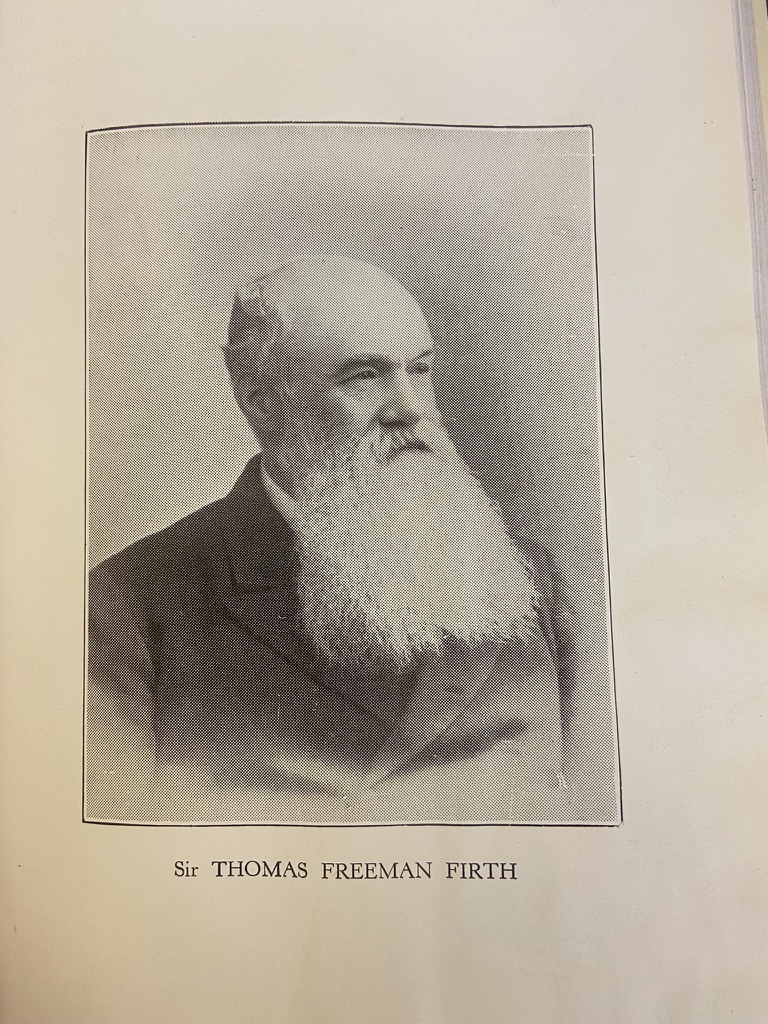
Thomas Freeman Firth

The town was lucky to have a magistrate in its bounds, namely the illustrious Thomas Freeman Firth, one of fourteen magistrates for the Dewsbury Division of the West Riding.

The Town’s Chief Constable in 1881 was John Crowther, who had first picked up the role in 1876.

What about Parliament?

Parliamentary reform was quite literally just about to happen at the time, so consequently, the landmark Redistribution of Seats Act 1885 had not yet passed, meaning the familiar Spen Valley or equivalent constituency did not yet exist. Instead, Heckmondwike had two Members of Parliament, being part of the West Riding’s Eastern Division. The members were two liberals – Andrew Fairbairn and Sir. J. W. Ramsden.

Talking about electoral reform, the numbers of those who were able to vote is quite telling. For example, in Heckmondwike, a town of over nine thousand individuals in 1881, only 407 men were eligible to vote. That represents just over a mere 4% of the total population – there was democracy for some, but not for the many.

Planning to go out at Night?

Heckmondwike had gas street lighting from March 1844 onwards, and the following table lists the times street lighting would commence and would be extinguished.

DateTo commence lighting atAll to be extinguished by
Aug 15 to 317.30 pm4.30 am
Sep 1 to 157.30 pm4.30 am
Sep 15 to 307.51 pm5 am
Oct 1 to 156.30 pm6 am
Oct 15 to 315.45 pm6 am
Nov 1 to 154.45 pm6.30 am
Nov 15 to 304.15 pm7 am
Dec 1 to 154.15 pm7.15 am
Dec 15 to 314 pm7.15 am
Jan 1 to 154.30 pm7.15 am
Jan 15 to 315 pm7 am
Feb 1 to 155.30 pm6.30 am
Feb 15 to 286 pm6.30 am
Mar 1 to 156.15 pm6 am
Mar 15 to 316.45 pm5.30 am
Apr 1 to 157 pm5 am
Apr 15 to 307.15 pm4.30 am
May 1 to 157.30 pm4 am
“Time for Lighting and Extinguishing the Public Lamps, 1881-1882”

It should be noted that on the night of the full moon and two nights before and after, special instructions were issued from the Market Office at 3.30 pm daily regarding the timings.

What about Religion?

The old West Riding of Yorkshire has been described as the heart of religious dissent, and Heckmondwike, and the wider Spen Valley, certainly didn’t buck this trend. The figures below speak for themselves.

Places of WorshipWill Seat.No. of Sun. Scholars on the books
Upper Chapel1300520
George Street Chapel1050410
Westgate Chapel1000338
Wesleyan Chapel810213
St. James’ Church (CofE)600432
Primitive Methodist370258
United Free Methodist Church450269
Moravian Chapel300160
Roman Catholic30040
Christian Brethern100
“Religious Accommodation of the Town, 1881”

There is a note stating that at St. James’ Church, 324 “sittings” were free and unappropriated.

Education and School Boards?

Heckmondwike’s old Town School, demolished in the 1870s.

Heckmondwike was a pioneer of education in the Spen Valley, constructing a now long demolished Town School in 1809 by public subscription. There should be no surprise then that the groundbreaking 1870 Elementary Education Act, commonly referred to as Forster’s Education Act, was quite quickly adopted by the Heckmondwike Local Board. After an intense period of public debate, it was decided in favour of establishing a school board which came into existence after a hotly contested election in 1871.

The board managed the day-to-day of Heckmondwike’s education and paved the way forwards for education in the town. However, its triennial elections brought up many divides locally between those in favour of the bible being read at schools and those not.

The Seal of Heckmondwike School Board

In 1881 there was no fierce debate on the Board, as the Non-Bible readers (generally religious dissenters) had won a complete sweep of the seven seats on the Board in the 1880 election. The members were George Burnley (the Chairman), Alfred Crabtree, Thomas Redfearn, Mark Howard, Samuel Wood, Charles John Atkinson and Benjamin Firth.

In 1881, the Board met every third Thursday of the month, at 6 pm. The Clerk was a Mr. W. Walker and the Attendance Officer was a Mr. R Parkin. Furthermore, in April 1881, the Board was granted a precept of £1,300. Below is a table which shows the accommodation of schools in Heckmondwike in 1881 that were passed by the Education Department as “efficient”.

SchoolsBoysMixed (or Girls)InfantsTotal
St. James’ National Schools29450354
Upper Schools (Board)28268350
Roman Catholic Schools151110261
Battye Street Schools (Board)200200175575
Central Infant School (Board)150150
Total1680
“Day School Accommodation of the Town, 1881”

Societies and “Public Institutions”?

Now, the Handbook describes the following as “Public Institutions”, but I feel like that description only fits a few. Perhaps treat this then as the extra-curricular section, where we can prove to an extent that us Spen Vallyers (a term never used before and hopefully never again) have never shied away from community led groups!

The following list is only a summary:

  • Chamber of Commerce. Established 1873. Meetings every second Tuesday of the month.
  • Naturalists’ Society. Established 7 Sep 1861. Meetings held every fourth Saturday at 8pm.
  • Local Naturalists’ Association. Estavlished at Heckmondwike in 1879. Monthly “rambles and meetings” from April to September.
  • Juvenile Naturalists’ Society. Established 7 Sep 1877. Meetings every fourth Thursday at 7pm.
  • Working Men’s Club. Established 1868.
  • Mechanics’ Institute. Established Sep 1873.
  • Literary Club and Institute.
  • Antiquarian Society. Established 1880. Meetings held every first Monday of the month at 8 pm. Special note that famous local historian Frank Peel was Vice President for Heckmondwike.
  • Choral Society. “Instituted, A.D. 1859”.

Road Works?

Perhaps seeming a little too current, the Heckmondwike Local Board performed roadworks on a variety of different roads in the township. The following list of the lengths of roads repaired by the Board was maybe included as a little boast – who knows – but provides some interesting reading.

Also, I wonder if this may also shed some light on when certain roads were named.

RoadYards
Oldfield Lane194
Railway Street392
Market Street246
Walkely Lane980
Pinfold Hill (Road made across, 22 Mar 1858)64
Greenside129
Northgate285
Jeremy Lane1,075
Westgate583
High Street1,000
Out of High Street onto Oldfield Lane20
High Street, Branch into Batley79
Kilpinhill Roads563
Chapel Lane (Adopted 18 Mar 1861)404
Albion Street (Adopted 5 Sep 1860)268
Cemetery Road (Adopted 4 Nov 1861)742
Brighton Street (Adopted 3 Jan 1870)500
Dale Lane (Repaired as Highway, 13 Dec 1858)800
Low Lane, Little Green (Ditto – Dale Lane)395
Leeds Old Turnpike Road (Trust expired, 1 Nov 1871)1,055
Leeds New Turnpike Road (Trust expired, 1 Nov 1871)1,323
Holme Lane (Gomersal Road)314
Regent Street (Adopted 1 Dec 1874)171
Cooke Lane (Adopted 3 Apr 1878)319
Oak Street (Adopted 1 Apr 1878111
Beck Lane (Adopted 24 Oct 1878)260
Total Yards ….12,272
“Length of Roads Repaired by the Heckmondwike Local Board”

1 Written exactly as it appears in the 1881-1882 handbook

Sources:

  • The 1881-1882 Heckmondwike Board’s Handbook – located at Cleckheaton Library
  • Photos obtained at Heckmondwike Library
  • Frank Peel’s Spen Valley Past and Present
  • Local reporting from the Batley News and Reporter, Leeds Mercury, Cleckheaton Advertiser
  • Histpop for Census Data
  • Fifty Year’s Journalistic Experiences and Chronicles of a Typical Industrial Area
  • Wikimedia Commons

Two years volunteering in a Cemetery?

When I tell people that I volunteer at Liversedge Cemetery and also Morley, I typically get similar responses – raised eyebrows and a look of confusion. That is not unjustified as it can, at first glance, seem strange to someone who doesn’t understand what we do and why we do it. I would like to dispel some of these thoughts and perceptions I have encountered and try, if it is possible, to explain to you why volunteering has been so positive to myself whilst also illustrating how critical voluntary work is in any form in protecting our collective local heritage.

Liversedge Cemetery in May 2021

Off the bat, you certainly don’t have to be a taphophile (a person who is interested in cemeteries and gravestones), interested in the history of death, nor do you have to be a macabre or gothic person. Some, including myself, are genealogists and interested in all forms of history – local or otherwise – but even that isn’t necessary. Nor do you even have to have family buried in the cemetery. At the Friends of Liversedge Cemetery, for example, we have a range array of people who either fit some of the prior points but others who volunteer for other reasons. Some like to get out and get some fresh air, and others enjoy gardening and a nice chat, but we all collectively have one goal in mind – giving back to our community and keeping our cemetery tidy.

I decided to join the Friends of Liversedge Cemetery group for quite a simple reason. It was rumoured that my Grandad’s Grandma, or my Great Great Grandmother, was buried at the cemetery, and I thought it would be great to meet some people who may be able to assist in finding her plot. I also felt that it was right for me to do some volunteering in exchange for any information or assistance and would generally be a net positive for everybody. What I didn’t expect was that I would still be going up every other Sunday two years later!

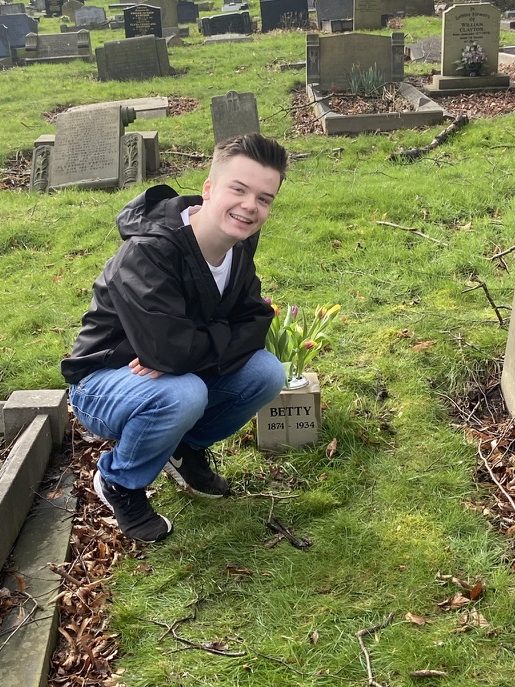
In February 2022, we were able to mark Betty’s unmarked grave after about 88 years,

Being a little self-indulgent here but volunteering at the Friends of Liversedge Cemetery has been a roundly positive experience for me. I have met many different people of all different backgrounds and ages and made many friendships that wouldn’t have ever come to fruition if it wasn’t for the group. Partly by setting my One Place Study of Liversedge Cemetery, but also by meeting people at the tidy-ups, I have become even more informed about our local history. It has also been from the unique perspective of people from a range of different backgrounds, occupations and social classes. I am also now quite a good strimmer and weeder and have more gardening skills than before, but I certainly haven’t inherited the green fingers yet! I also have been able to give back to my local community and can say that I have made a difference. Regular volunteers or not, anybody who has worked with the group at Liversedge Cemetery has also made a difference.

As part of my One Place Study and also my EPQ project at school, I wrote a book on all known graves at Liversedge Cemetery that have soldiers buried in them or commemorated on them. This isn’t a usual thing volunteering at Friends of Cemetery groups, don’t get me wrong, but without my time up at the cemetery volunteering and the regular Remembrance Day events we hold, the book wouldn’t have likely happened.

Myself with a copy of my book at Cleckheaton Library in March 2022

Some would argue that it is the council’s obligation to look after and tidy our cemeteries. Sure this is true, but we have to consider that our local authorities are now quite large. Kirklees, my local authority, for example, is by area the third largest metropolitan district in England, behind Doncaster and Leeds. The council has to look after fourteen cemeteries in this area, and I am sure you can see why people feel like our cemeteries are neglected. It is not that the council is of fault necessarily, but they simply cannot fulfil the work to the standards prior to the 1970s local government reorganisation. This is where organisations such as the friends of Liversedge Cemetery are so vital because we can step in and do what is necessary to keep the cemetery as tidy and as beautiful as can be. The problem with this, of course, is that we are volunteers and not paid to do this.

If we want our areas to look beautiful, to feel cared for and want to protect the heritage of the said areas, it is necessary to create organisations and volunteer. Nobody will do the work for us. I personally do not care to throw the blame at anybody – I simply want to make things happen.

I would recommend if you’re on the edge of wanting to volunteer in any similar organisations, or even the Friends of Liversedge Cemetery itself, that you give it a go. What is the worst that could happen? If it’s not for you, simply do not go again! But, on the other hand, you may enjoy it, you may also enjoy the company it brings, and it could become quite a regular thing for you to do.

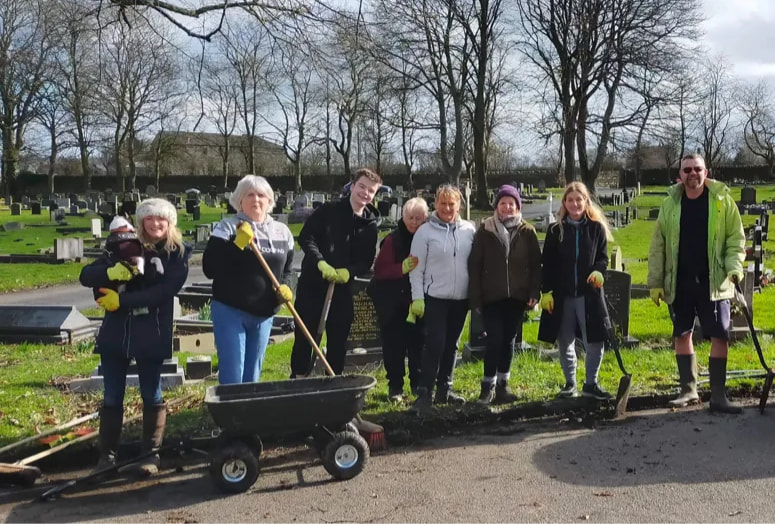
Some of our volunteers at Liversedge, including our local MP, Kim Leadbeater

Mary Jane Fell: Courage and Perseverance

My ancestry has many stories of true tragedy, unimaginable loss and difficult and, to some extent, traumatic childhoods. But there are also remarkable stories of love, survival, and unimaginable perseverance. Sometimes, these stories come hand in hand, and my Great Great Great Grandmother, Mary Jane Fell’s story is perhaps the epitome.

The Woman in Question – Mary Jane Fell in later life

Mary Jane Fell was born into what is quite a complex and quite fascinating family. Depending upon the day, she was either Mary Jane ‘Fell’ or ‘Turner’ or even both. This is owing to the illegitimate birth of her grandfather but then his mother’s quick marriage to his biological father. What about her mother’s unclear origins before her move to York? And what about the fact mother changes her maiden name record to record, either being a ‘Ward’ or ‘Wedgewood’?

As these questions remain unanswered or have quite perplexing answers, let us focus on what we know. Mary Jane was baptised on 12 October 1856 at the now-demolished St Maurice, Monkgate. Her father was Alfred Fell, a comb maker and Freeman of the City and her mother was called Fanny. The couple married a few years previously and had already had one child, Alfred, before the birth of Mary Jane.

The Church where Mary Jane was baptised before it was rebuilt in 1876 – via Secret York (http://secretyork.com/st-maurice-monkgate/)

On this 1856 baptism record, the family is recorded as living on Lord Mayor’s Walk and, by 1861, had moved to Mason’s Buildings, Coppergate. Another brother, James, had joined the family by that point, and two more would follow over the next decade – John and Frederick. By 1871 the family had moved again to 9 King Street, Castlegate. These addresses may ostensibly appear to be dotted all over the city, but the last two are relatively close to each other and even moving from Lord Mayor’s Walk wasn’t the end of the world for young Mary Jane. In 1872 or so, the family welcomed its youngest and final member – Rose.

There was a problem about to materialise for young Mary Jane, her father and her siblings – her mother’s drinking habits and loose fingers.

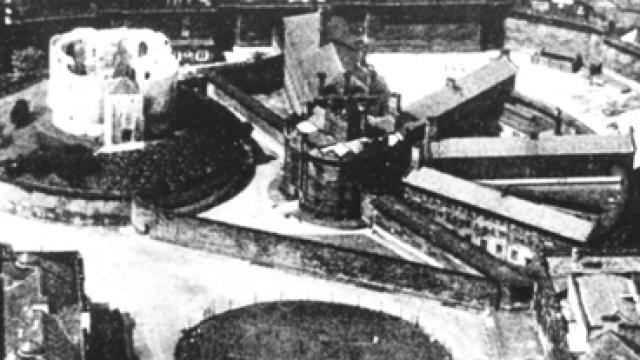
Fanny spent nearly seven years in the confines of York Prison over the next twenty years or so. Years she should have raised her youngest daughter Rose, grown old with Alfred and simply just lived life. I am not claiming that life would have been easy, but certainly easier than the life spent in York Castle. The first conviction occurred in 1872, and from snippets of information, it is apparent that she tended to steal things after drinking but was ‘a good wife’ according to her husband when she was sober.

York Prison next to Clifford’s Tower via historyofyork.org.uk (http://www.historyofyork.org.uk/themes/victorian/the-victorian-prison-building)

This is clearly relevant to Mary Jane’s story, but it is worth discussing why. Firstly, there was the unfortunate fact that her mother had become a ‘notorious’ character well-known for her offences. Holding that burden as her daughter in Victorian society must have been a lot to deal with. Furthermore, Mary Jane was about 16 or so when her mother was first sent down and will likely have had lots of responsibility thrust upon her very quickly. Her sister Rose was still very young and needed looking after her. Additionally, who was to do the housework? Poor Mary Jane not only had to deal with the temporary loss of her mother but also her mother’s workload.

It is not all doom or gloom, however.

She fell lucky and married Alfred Dale in the final quarter of 1879. Alfred’s family was somewhat more prestigious. He was the son of a Printer, nephew of John Dale, the Sword Bearer of York, and grandson of the well-known late hairdresser William Dale. Yet, Alfred’s occupation was not as glamorous as he was a glassblower, but prestige isn’t that important.

What mattered was the birth of the newly wedded couple’s first child, a daughter called Frances Lily, in 1880. By 1881 they had moved to 14 Willow Street, Walmgate, and that year’s census also reveals some unique circumstances about Mary Jane’s day-to-day life – the fact she worked – specifically as a comb maker’s labourer. There is a link here to her father and his occupation, but I find it unlikely that Mary Jane would have been working for him directly. Both Alfred and Fanny (with some of their younger kids) had made a temporary move to Hackney in London by 1881 and would be back in less than a year.

Frances Lily Dale in much later life

More children followed Mary Jane in 1882 and Edward in 1885. Edward sadly passed away, aged only five hours, and it is unimaginable what pain Mary Jane and Alfred must have felt in grieving for their child. Perhaps comforting to some extent was the births of more children – Ada in 1886, Albert Victor in 1888 and Florence Edith in 1890.

By 1890, the family still lived in Walmgate but now at 33 Duke of York Place. Nothing much had changed in the family apart from the loss of Edward and its continuing growth. Mary Jane’s life was perhaps as stable as it had ever been; despite her mother continuing to be imprisoned, she had her beloved husband and plenty of children to fall back upon.

Sadly, despite this newfound stability, she wasn’t protected from reality as her father Alfred Fell died in 1895 and was buried at York Cemetery a few days after his passing in an unmarked public grave (18875). What probably made the loss sting, even more, was that her mother was imprisoned for trying to steal a shawl, so I find it unlikely she would have been present at the funeral. Alfred never gave up on Fanny and always came to her defence and was willing to admit her faults, which makes the prior fact even more painful.

Hope Street in York around 1889, Long Close Lane (Duke of York Place) was the next street. 

By 1901, the final Dale children had been born – Arthur in 1893 and George Alfred in 1898. That year’s census showed that the family remained living at 33 Duke of York Place but indicated that they lived in four rooms. Furthermore, Alfred Dale is recorded as working as a glassblower for bottles and the two eldest sisters (barring Frances Lily, who had left home), Mary Jane and Ada, as working confectionary makers. Life wasn’t easy for the family, but they were getting along with it and doing their bit to help.

Despite the stability of 1901, Mary Jane was to face her two most considerable losses yet.

First came the loss of her mother on 26 June 1905, which was likely a tough loss to deal with. Perhaps there was a feeling that her parents were reunited again by death, and her mother was no longer beset by her life’s problems on this earth. A few days after her death and perhaps some contemplation by those that knew her, Fanny Fell was buried in a different public grave (19402) to her husband, a sad irony reflecting that they were divided by bars in life and also divided in death.

What followed was worse, however – Alfred Dale became ill with tongue cancer and died, aged just 47, at home on 30 August 1906. His death, only from the description on his death certificate, appears to have been unpleasant, and it must have been excruciatingly distressing for Mary Jane to deal with. The death, however, was only just the beginning of her problems. How was she to feed five or so children? How would she keep her house? What work was available for her, a nearly fifty-year-old widow?

The Final Resting Place of Alfred Dale

As Alfred was buried on 1 August 1906 in a public grave at York Cemetery like her parents, perhaps some of these questions subsided. However, we have a unique way to see Mary Jane’s feelings for her late husband, mainly via a kerb erected on his grave. Disappointedly it has since sunken, but its inscription appears to be words of Mary Jane herself: “In Loving Memory of my beloved husband Alfred Dale, who died 30 August 1906”. The fact he even had a marker on his grave is quite unique and testimony to his memory and life as well as those around him.

Linking back to the problems Mary Jane faced now she was a widow, she finally concluded that the family were to pack up and go to the prosperous Heavy Wollen area. There would be plenty of work available in the mills, and if everything went well, the family could cope easier with its added pressures now the main breadwinner was dead. I think they likely moved via train and can only imagine how they all felt as they boarded the train at York Railway Station and said goodbye to their home.

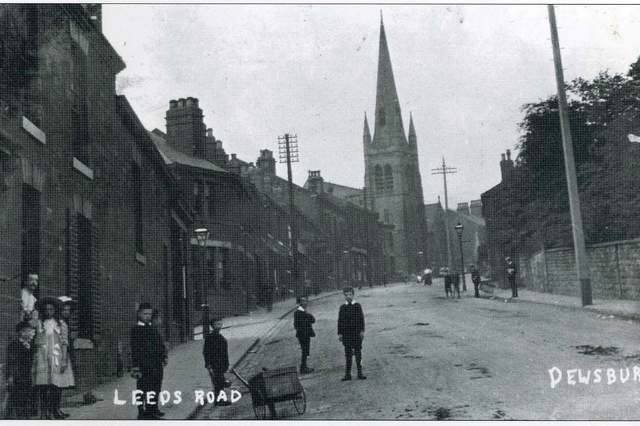
Leeds Road, Dewsbury – via the Dewsbury Reporter

The gamble appeared to work well, and by 1908 the family lived at 4 Leeds Road, Dewsbury. We know this as Mary Jane (or Jenny as her marriage certificate refers to her) gets married to a 44-year-old Bachelor, George Marshall. He lived nearby at 8 Leeds Road and worked with the Coke Ovens as a labourer.

By 1911 the family, now consisting of the three youngest boys (Albert Victor, Arthur and George Alfred) and Mary Jane and George Marshall, ended up living at 40 Primrose Hill, Soothill. This began a long tradition of Dale residency on Primrose Hill that lasted up until the mid-1960s. Arthur was a labourer at a woollen mill, while George Marshall and Albert Victor Dale worked in a Coke Plant. Arguably, Mary Jane had returned to the stability of before, and this was not an easy feat to achieve. It was truly indicative of a robust and decisive character that loved her family deeply.

1914 came around, and everything changed.

The war affected every aspect of life, especially as it dragged on in its later years. Cuts and austerity measures were necessary, and propaganda and war news was plastered all over the local newspapers. Goods may have been harder to come by, and prices may have also altered. Not only this but Mary Jane’s youngest, George Alfred Dale, was serving in the war.

Mary Jane’s youngest, George Alfred Dale

It appears that he joined up pretty much at the start of the war and took the liberty, like many others, of rounding up his age in order to serve. He was a Private in the Duke of Wellington’s (West Riding Regiment) 2/5th Battalion which was originally formed as a home service unit. George travelled the whole country before he arrived in France in early 1917 and served in a variety of battles, including the Battle of Bullecourt (May 1917), The Cambrai Operations (November 1917) and the first stages of the First Battles of the Somme (1918).

Quite tragically, he was wounded in combat on 28 March 1918 and was sent to a hospital in Rouen the following day. He gallantly fought his injuries until 31 March 1918, when he passed away at age 20.

Mary Jane had lost her youngest boy.

Remembering George Alfred Dale and his bravery

George Alfred Dale wrote and signed an informal will on 12 May 1917, where he left his entire estate to his mother. Perhaps I read too much into it, but I always find it quite moving that he left all his estate to his mother, maybe a final nod to how much Mary Jane had done for him and his family.

We know a lot about Mary Jane’s further experience of 1918, and it doesn’t appear to have treated her well. Her son’s death had deeply affected her as she was described as ‘fretting a lot’ over his death. I resent that term because it almost trivialises her grief. Regardless, she was described as able to function and “carry out her work” despite the loss.

Adding to an already emotionally exhaustive year, she even caught influenza in November 1918 but luckily recovered.

Her death is one we know quite a great deal about owing to the inquest into it.

25 Jan 1917 – Dewsbury District News

Her husband described Mary Jane as being a ‘stout’ lady who was sometimes short of breath. The previously mentioned period of influenza in November 1918 didn’t help Mary Jane. Still, she appeared to be in alright health after it, with her daughter-in-law Hannah (who also happens to be my Great Great Grandmother) stating that “she seemed the same to me”.

On Monday 20 January 1919, Mary Jane had a light supper, removed herself to bed at about 8.45 and was in her normal state. However, this all changed when she awakened her husband at about 3 am, complaining of chest pains. George Marshall then made his wife a cup of tea, and she managed to drink about half of it. George remained downstairs, and Mary Jane later came downstairs at around 4.30 and collapsed onto the hearthrug.

Hannah and Arthur Dale, my Great Great Grandparents, in the 1950s

George placed his wife in a chair and quickly rushed for his stepson’s wife, Hannah, and they both put Mary Jane back to bed. Quite heartbreakingly, Mary Jane remarked, “I am going to die” when put back to bed, and George Marshall replied to his wife, saying, “Don’t talk like that”.

George then rushed for a doctor while Hannah remained with her mother-in-law. She made Mary Jane’s bed after her mother-in-law told her she wasn’t well. Mary Jane reportedly continued to complain of pain in the chest and was “fighting” for breath.

George managed to return just in time, and at about 5.30 am Mary Jane passed away, aged 62 or so, on 21 January 1919. 

An inquest found she died of heart failure caused by the fatty degeneration of the heart. She was buried at Batley Cemetery in the following days.

Batley Cemetery – July 2021

I would say that Mary Jane Fell, or Dale, or Marshall led a remarkable life. It had many ups and downs – every win was paired with an equal loss and vice versa. She fought hard from her mother’s first conviction right up until the end and those final pivotal hours. She moved her family across Yorkshire as a widow and lost a son soon after birth and one to war. She had also managed to find love again and, most importantly, guaranteed her and her family’s survival.

There is not too much else to say, just what a woman and a legacy.

I aspire to have an ounce of her courage and perseverance and can proudly claim her as my Great Great Great Grandmother.

Anthony Metcalfe: Miner, Dog Owner and Survivor

In order to know someone’s life story, you do not need to know everything, and Anthony Metcalfe’s story, my Great Great Great Great Grandfather, proves this concept. We know a great deal about his character via a telling account of his demise and a few other key events of his life and can tell his life story despite some apparent gaps.

Therefore, to begin, despite not knowing too much, let us confront what we do know – Anthony’s date and place of birth are wildly inconsistent. For example, his documented years of birth range from around 1822 to 1824. Alongside this, he reports, on censuses ranging from 1851 to 1881, that he was born in Birstall once, Bradford and on two of them Wensleydale. In 1846, he lived in and around Bradford, so he lived there at some point and lived in Birstall for most of his life. Because these places of birth came from census data, and we don’t know precisely who the informant was, this could explain them away.

Marriage Record

Either way, the first documented record of Anthony Metcalfe’s existence is his marriage to Mercy Ainsworth on 23 February 1846 at Bradford Parish Church. Anthony is described as 21-year-old Batchelor Collier, who resides in the village of Allerton, which is close to Bradford. He seems to take after his father, who is also recorded as being called Anthony and also recorded as working as a Collier. Mercy, his wife, lived in Manningham, and as we will later find out, it appears that he moved to live in her area after their marriage.

Their marriage is quite an interesting one – chiefly down to Mercy’s young death at the hands of unknown causes in the April quarter of 1846. Sadly it didn’t last long, but I feel a few questions could be asked regarding its length – when the couple married, was Mercy already unwell? Was it rushed, perhaps due to an illness? Or was it just another Victorian tragedy that unfolded down to the toughness of the era’s life?

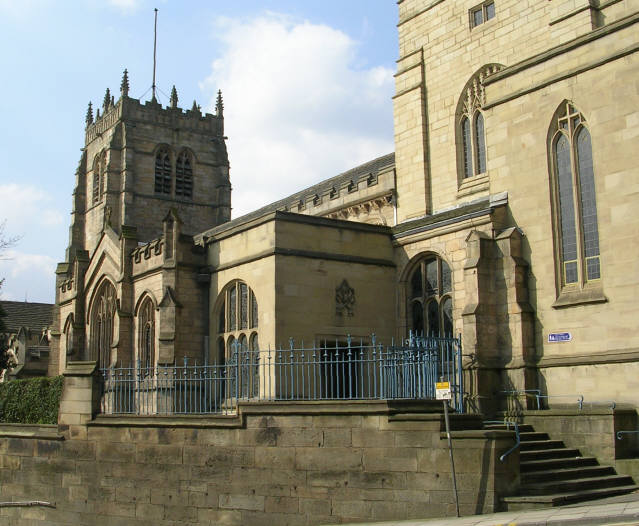
What was once Bradford Parish Church

Anthony remarried at the end of 1846, specifically on Boxing Day, 26 December 1846, at the same Church. He had moved to Manningham, but nothing much else changes barring a new witness on the marriage record – a William Metcalfe, perhaps a brother or cousin? His new wife was called Sarah Blackburn and also had a similar mysterious background.

The early years of their marriage were quite inconsistent, in the sense that they took quite a while to settle down and seemed to quite regularly move around. They remained in Bradford for a year or two, with their first born child, William, been born in the October quarter of 1847 but didn’t stay for long.

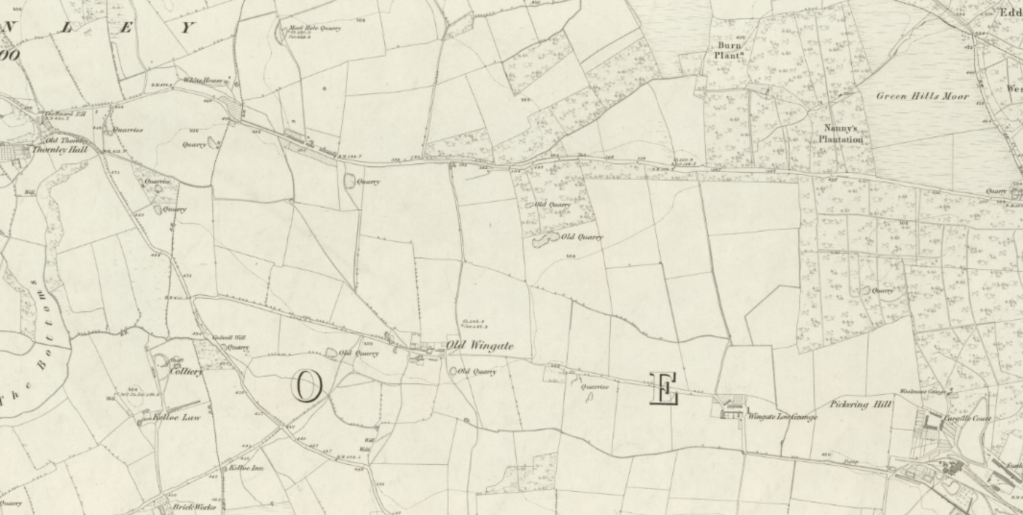
Perhaps in order to seek out more stable work or better conditions and pay, Anthony and his young family moved to the village of Wingate in Durham by the birth of their daughter Elizabeth in January 1849. The Colliery there had opened in 1839 by Lord Howden and Partners, and on the 1851 Census, Anthony and his family are recorded as living at the Colliery itself, alongside a lodger. However, this detour into living and working in Wingate didn’t last long, as by the birth of the couple’s next child, John, in 1853, the couple had likely moved back to Bradford and its surrounding areas.

The area surrounding Wingate during the 1850s

In the next two years, ahead of the birth of another son named Smith in 1855, the family settled in Birstall, and the period of inconsistency finally came to an end. His birth was followed by a brother Joseph in 1856 and two sisters – Annie and Harriet, my Great Great Great Grandmother – in 1858 and 1860, respectively. The family resided in Howden Clough in 1861 and remained in the same area in 1871. However, that year’s census does give us an address – specifically “Brasscastle”, which I take to mean an area of Howden Clough, which was near to the Brass Castle Colliery. This makes sense as many neighbours work down the pits on both censuses, and it fits in with Anthony’s past.

There are two more quite intriguing things to note about the family in 1871. Firstly, Elizabeth got married to Daniel Simms in the first quarter of the year, and he had moved into the Metcalfe home shortly afterwards. Clearly, this added an extra mouth to feed but also a little more income, so I assume he was welcomed into the household. It was very kind of Anthony to allow them to adjust to married life and begin to start building their own family. It is not only the human members of the Metcalfe household that were highlighted in this period, as it is noted in the Dewsbury Reporter that Anthony was charged for allowing his dog to “be at large” without a muzzle, I assume, and he was fined a total of 5 shillings. It was not enough to ruin the families’ finances, but still money they would have preferred to have!

Death notice of Sarah, Anthony’s wife

Death again struck Anthony’s life with the death of his wife Sarah on 5 April 1879 when she was just aged 48. She was buried at Birstall Parish Church four days later, on 8 April 1879. I will never know Anthony’s feelings towards his wife and her untimely death, but I do know that a death notice was published in the Batley Reporter and Guardian for her. This isn’t unprecedented and doesn’t necessarily mean much, but we must not forget Anthony was a working-class coal miner. It mightn’t have bankrupted him, but he clearly cared enough about his wife to invest some of his genuinely hard-earned money into remembering her. To me, at least, this shows a devotion to his wife and her memory, and I hope it also indicates a relationship of respect.

Two years or so after this, on the 1881 Census, Anthony is recorded as still residing at “Brasscastle” but in very, very different circumstances. He had gone from living in a household of seven to living on his own. He no longer had a wife to look after him nor extra income from his older kids or the antics of his younger children messing and playing around. Everyone had grown up or died, and although his family remained living near, Anthony was alone. According to the census, he was also out of work. I am unsure when Brass Castle Colliery shut as there is little online information, so perhaps he was simply between jobs? Also, Anthony became ill with bouts of diarrhoea in the mid-1880s, so perhaps illness also factored into this fact?

Can you spot Brass Castle?

1885 is also an interesting time for Anthony, for he is involved with the police. He has committed no crime as he was a mere witness, but his blood had – specifically his grandson William Simms. 10-year-old William visited his grandfather on 18 August and presented a bell that he claimed he and a 14-year-old Alfred Dale had found in a corn field. As it would turn out, after a visit to his house by the police, Anthony was gifted something stolen by the two lads from the Volunteer Inn. They had stolen a clock, a spell, a lamp and two table bells and hidden them near the Howden Clough Rifle Range and a field on Windmill Lane. The lads were apprehended and owing to their age and the fact it was their first offence, each were fined 10 shillings and costs, or 14 days. Obviously, I doubt Anthony would have been happy with this, but it shows us that he saw some of his grandchildren and that he had a relationship with them.

Reporting from the Dewsbury Chronicle

I did miss out on a key event that happened to Anthony in 1882, namely his remarriage again to a widow named Mary Grayshon. This remarriage represented a chance to live a life not lonely, and Anthony was in many ways quite lucky to get this second chance, but it wasn’t to last too long.

Anthony went to work on 11 February 1887 like any other day. It must have been an early start as he met a colleague, Solomon Wallace, of Low Lane, Birstall, at about 6:15 am. The pair worked at the Howden Clough Pit of the West Yorkshire Colliery Company – Solomon worked on the east side of the pit, and Anthony worked by himself in a nearby bank. They both got on with their respective work, and Solomon causally saw Anthony a few times before hearing the roof falling and a loud crash. He instantly called out for Anthony and heard the reply, “o’ come here”. Solomon rushed towards him, and owing to a slip that could not be seen, a large rock had fallen onto Anthony’s leg. The hurried had arrived to see what had happened soon after, and Solomon sent him for help. Eventually, after what probably seemed a painfully long wait, Anthony was set free.

The Batley Cottage Hospital opened in 1883

He was rushed to the Cottage Hospital as it appeared his leg was broken in two places, and he was admitted between 11 am and 12 pm. Mary Ann Boulton, the widowed Resident Nurse, described Anthony’s leg as having a compound fracture of the right leg but that no bone was protruding from it. He was badly bruised from his shoulder to his right arm, which quickly healed, but the legs sloughed (skin falling off) from the knee to the ankle for about three weeks.

As mentioned before, he had regular bouts of diarrhoea, and these appeared to come back once the sloughing had healed. These bouts quite dismally led to Anthony developing gangrene of the bowels, which led to his demise. Boulton described Anthony as ‘gradually’ sinking before his death, perhaps indicating how painful it was for him. Conceivably mercifully, in a way, he died, aged approximately 63, on 15 April 1887, at around 8:50 am. He was buried at Birstall Parish Church’s Churchyard on 18 April 1887.

There is an irony to the fact we know so much about his demise but so little about his birth, but what we do know paints a picture of a man who lived lots. Despite the limitations of his class and the tough, brutal conditions of the society he lived in, he managed to survive until the end. He also survived two marriages and raised seven children, saw different parts of his country and left enough records of his soul and actions for his Great Great Great Great Grandson around 135 years after his death to proudly claim him as his own.

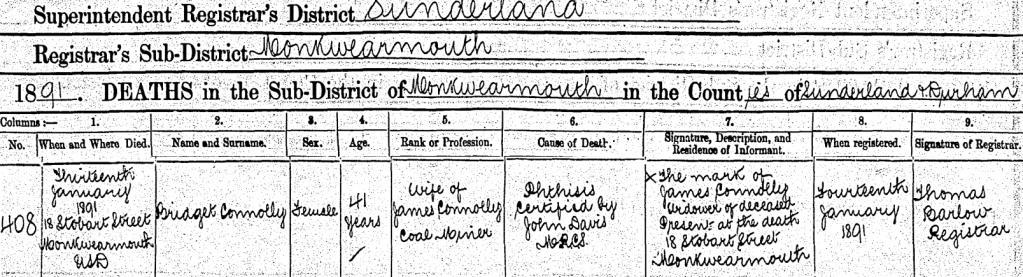
Bridget Cook: Bravery Lost to Time

Sadly, historically, women have been overlooked and sometimes intentionally dismissed and ignored, especially working-class women. In the field of genealogy, I suppose there is less of a chance of this discrimination, at least to an extent, as there is always a desire to trace back as much as physically possible, but when maiden names are unable to be found, and women are simply recorded as ‘Mrs. John Smith’, it can become near impossible to trace their stories. So they become ignored or misrepresented, and I find this to be such a shame.

With this point in mind, it would be easy to dismiss Bridget Cook, my Great Great Great Grandmother, as being John’s wife, George’s daughter, or Charles’ widow. However, this overlooks her story that, despite being lost to time temporarily due to some of the reasons mentioned above, truly exemplifies a woman driven by determination, grit and a quest for survival in a cruel and uncaring world.

The street Bridget would spend most of her life

Bridget was likely born in 1849, most likely in Monkwearmouth, Sunderland. She was the daughter of George Cook and his wife Judith McMahon, both Irish immigrants who originated from County Louth. They married almost certainly in the 1840s, before the birth of their first daughter in 1842, and had a few children in Ireland before moving across to Monkwearmouth by Bridget’s birth in 1849. Bridget’s place and approximate year of birth remain consistent throughout her life, which is quite surprising, but I have not been able to find any GRO registration relating to her birth. There is a multitude of reasons that could lay behind this and are irrelevant to her life story, but I thought it was worth mentioning still.

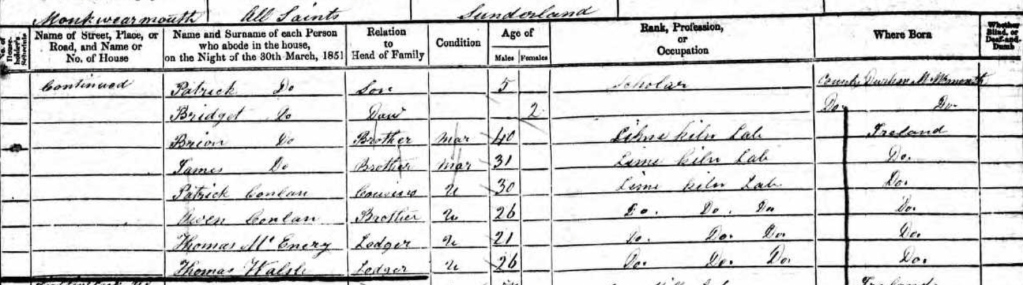
One half of the Cook Household on the 1851 Census

Growing up, Bridget had it tough, and nothing can illustrate this in a better way than the way her family was living in 1851, as there were eleven people residing in the Cook Household – including Bridget herself – on that year’s census. The family included Bridget’s parents and siblings, but she also lived with some lodgers – specifically George’s brother, some of her father’s cousins and two other unrelated men. Furthermore, there were another five people from another family residing in the same building, making 16 individuals.

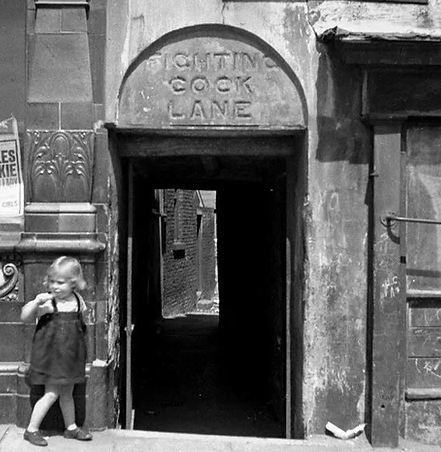
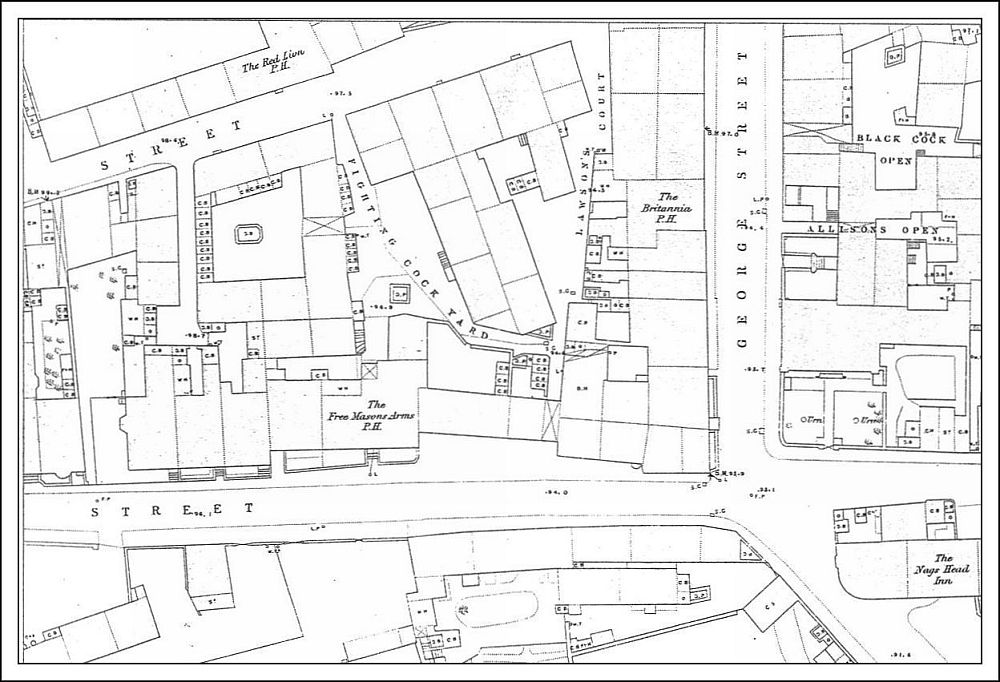
Another indication of just how tough Bridget’s childhood was where the family lived throughout the entirety of it – Fighting Cock Yard, near John Street. The same doesn’t sound inspiring, nor do the much later reports that crime was rife, including prostitution, clearly showing just how destitute and desperate its inhabitants were. Despite this, siblings followed – Mary Jane in 1856, George in 1858 and Julia in 1863. Julia was lucky to survive past her infancy, but sadly, both George and Mary Jane were not, dying when they were just over a year or a few months old.

St. Benet’s R.C. Church, Sunderland

By 1861, George’s earlier mentioned brother had finally moved out and got married. He lived with his children, mother, and wife on that year’s census but also an eighteen-year-old lodger, Charles McIlroy. He is key to Bridget’s story as they both got married in less than a decade. Specifically at St. Benet’s Roman Catholic Church in the second quarter of 1869. Her marriage to McIlroy ostensibly started reasonably well – she gave birth to a boy named Charles (perhaps after his father) exactly a year later. However, this was not to last.

Charles McIlroy was dead by the time of the 1871 Census, and I am clueless as to exactly when or how he died. Was it tragically before the birth of his son, leading to him becoming his son’s namesake, or did he get to see his little boy be born? I am unsure, as I said before, but I will always pray to myself that he did get to see him. Another significant loss struck in this period as Bridget’s mother, Judith, passed away in late Jan or early Feb 1870, aged only about 50, and was buried at the local Mere Knolls Cemetery on 3 February 1870. Aged only 21 or so, Bridget had seen the loss of two siblings, her mother and also her husband – this would rightly break so many people but not Bridget.

Fighting Cock Yard circa 1860

I think that Bridget was a woman of incredible courage and determination and was certainly not stupid, and her actions after the death of her husband and mother display this. She took on a leadership role, being recorded as the Head of the Household of 13 Fighting Cock Yard on the 1871 Census – residing with her son, some siblings, father and new stepmother. She was willing to work both domestically but also to make a living, gladly recording the fact she was working as a labourer in pottery. She didn’t let the many losses she was facing destroy her, she had every right to, but she and her family would also end up dead with her late husband and mother. Society and life were cruel, and if Bridget didn’t work, she would fall into the hardest of times, and she clearly wasn’t willing to accept that.

Her courage and ability to take charge of her own destiny at the pivotal moment allowed her to remarry and eventually pick herself up from her losses. She did this in late 1872 to a man named James Conley, who lived nearby on John Street. From this marriage, my Great Great Grandmother, Catherine Conley, was born in 1873, followed by George in 1875. There was an interruption to Catherine’s period of relative peace as she lost a son, namely James, who died aged about 19 months in 1878. Things looked up again as she gave birth to a healthy boy, Peter, in 1879, and then a girl, Mary Ann, in 1882.

By 1881, Bridget had finally left Fighting Cock Yard, residing at 38 Brook Street, with some other families alongside her husband, sister Julia and children. Sadly, her father had died some years earlier, in 1877, and Bridget had lost another key figure in her life. It is perhaps less tragic in nature as George Cook was advanced in his age, dying aged 60 or so, but still, despite leaving Fighting Cock Yard, she couldn’t avoid another bout of deaths.

Bridget’s eldest son’s death certificate

Before she encountered another loss, she had two more children – John in 1885 and Julia in 1887. This subsequent loss was in spite of all her labouring and bravery, her eldest son Charles McIlroy, who had effectively been adopted into the Conley family, passed away on 26 April 1890 at the Conley family home of 18 Stobart Street due to complications from tuberculosis. Poignantly, James Conley registers his stepson’s death, showing that he was still willing to claim him even in death.

It all ended suddenly for Bridget, not so long after the birth of another daughter, Martha, in early January 1891. Years of toil, bravery and a burning desire to survive for the sake of her family all faded away due to the cruelty of tuberculosis. Like her son a year earlier, the disease killed Bridget on 13 January 1891 at home at 18 Stobart Street. Luckily, her husband, James, was present at her death.

Bridget’s death certificate

Due to the fact her grandson, my Great Grandfather, was orphaned and difficulties surrounding finding her maiden name, Bridget’s story was at least temporarily lost to time. It was only recently uncovered in its true form, one of immense determination and bravery. This was in the face of a brutal society, appalling living and working conditions and countless unimaginable losses – Bridget Cook defied all odds and managed to keep her family and children alive for generations to come. Her story is genuinely inspiring to me, and I look to employ her spirit and memory as I progress through life.

For, if she had given up without much of a fight, would I be sat down writing her story 131 years after she passed away?

Mere Knolls Cemetery – Bridget’s final resting place

Harriet Keighley: The Widow

Born into a turbulent childhood shrouded in mystery, Harriet Keighley found herself lucky when she married Jeremiah Hall in 1830. But, struck by Jeremiah’s loss only fifteen years later, she started a widowhood that would last over twice the length of her marriage and have profound consequences for the generations of Halls ahead.

Harriet’s parents were Samuel Keighley and Grace Fearnley, who married at Birstall Parish Church in 1797, both residents of Heckmondwike. In terms of occupation, Samuel took after his father Jonas and worked as a clothier, a pretty broad term for individuals working in the cloth trade or even individuals who made or sold clothing.

Upper Independent Chapel in Heckmondwike via the Kirklees Image Archive (https://kirkleesimages.org.uk/)

The couple’s first recorded child, Nancy, was born in 1801 and was baptised at the Heckmondwike Old Independent Chapel shortly after her birth. The same applied to Mary, who followed in 1804. Both baptism records indicate the family now was living on Dewsbury Moor. Elizabeth was born in 1806 but was baptised at Dewsbury Parish Church, as was her sister Ellen in 1808.

Harriet did not buck the trend, and after her birth which was likely not too long before her baptism, she was baptised at Dewsbury Parish Church on 21 November 1810. Her only brothers followed – Antony in 1813 and Samuel in 1816, both baptised at Dewsbury Parish Church. Interestingly, by the time of Samuel’s baptism, the family had moved to Batley.

Dewsbury Minister

I do not mean to bore, regurgitating facts, places and dates, but it is clear that Samuel and Grace were flexible people, regularly switching Religious Denominations and moving around. This seems to be more apparent at the beginning of the couple’s marriage, so it perhaps affected Harriet’s childhood in a more mitigated way. Still, it is pretty clear that she lacked some stability in her childhood.

Now, after Samuel’s baptism in 1816, for whatever reason, we hit a deep and barren void as I have no recorded evidence of what happened to Harriet’s siblings or her parents past that point. It has been a while since I have touched them, so perhaps this is an excellent reason to have another search, but anything could have happened to them as far as we are concerned.

Batley Parish Church

Aged about 19 or so, on 8 September 1830, at Batley Parish Church, Harriet married Jeremiah Hall, a local Clothier. They married into a changing world where things were changing at a greater pace now than ever as the Industrial Revolution was in full swing, and Batley began to develop into a prosperous and industrial town.

The couple’s first child was a boy named Joseph, who was baptised at Batley in 1831, followed by a sister named Grace in 1832. Quite tragically, Grace passed away, aged only one year, in April 1833 and was buried in her local Parish Churchyard on the 22nd of that month.

Family life continued, and despite the fact the loss of their only daughter must have stung very profoundly, both Harriet and Jeremiah had their son Joesph’s mouth to feed. He was joined by a brother named Jeremiah, after his father, in 1836, and also a sister, Grace Ann, in 1838, named likely after her late sister Grace and paternal grandmother Ann. Another girl, Margaret, was born and baptised in 1839.

William Henry Hall’s baptism at Batley Parish Church

Like most other people, Harriet first appeared on a census in 1841, where she was living with her husband and children in “New Batley”, which appears to be close to what is now Upper Commercial Street, Batley. The year after the census return, on 13 February 1842, William Henry Hall, my Great Great Great Grandfather, Jeremiah and Harriet’s final child together, was born in Batley, most likely at home. William’s baptism took place the following year at Batley Parish Church, just like the rest of his siblings, on 15 January 1843.

Just two years after William’s baptism, when he was aged just 3, and Harriet herself was aged only about 34 years, Jeremiah succumbed to phthisis, an archaic term for tuberculosis, aged only 41, at home, on 14 May 1845. He was buried at Batley Parish Church, where both his father and daughter Grace were also buried, on 18 May 1845.

I do not, and most likely will never, know the family dynamics of the household of Jeremiah and Harriet, nor do I know if they were a happy family, but I would at least like to think so. Jeremiah’s death had severe consequences for the family, many of them profoundly negative, but he seems never to be forgotten despite those factors. For example, I know that many of their children honoured Jeremiah by naming many of his grandchildren after him. Another point of this loyalty to his memory is perhaps the fact that Harriet never remarried. Was this down to loyalty to her late husband or just circumstances? We will likely never know either way.

As said before, the death of Jeremiah did have profound consequences for his family, who now faced a more tough and brutal reality. I am in no way saying that the Hall family had it easy when Jeremiah was alive – they were a working-class family in 1840s Batley. However, now they had lost the support of the breadwinner, and Harriet was, despite the help of the Hall and Keighley families, alone. Nevertheless, she didn’t let this new, more brutal reality deter her and took little to no time adjusting to it.

Harriet and family on the 1851 Census

On the 1851 census, her occupation is recorded as a rag sorter, and two of her eldest children worked in the mill. Now, a rag-sorter has a vague definition – she could have been sorting rags in a mill or even just collecting and sorting old bits of clothing. Regardless, Harriet now had double the work – running a house and earning a living – and it is possible that each day seemed to be more brutal and more protracted as time went on. Nevertheless, the strength she likely showed during this period is unquestionably remarkable, and I personally am deeply proud of her.

In 1861 things may have begun to calm down for Harriet, at least to an extent, because all her children, barring her son Jeremiah, remained at home and all worked in a variety of woollen based occupations. She is still recorded as working herself, but perhaps some of the pressure began to lift, which was quite apt as she began to grow older. Of course, she wouldn’t ever get the retirement of the modern era, but even just having a simpler existence, with less pressure, would have likely been quite welcome.

A map circa 1910 of the area where Harriet and her family lived

By 1871, Harriet did get this break, at least to some extent, as most of her children had either got employed or married and moved out. Interestingly, my Great Great Great Grandfather, William Henry Hall, was the exception and remained living with his mother on New Street, alongside his wife and children. His wife Eliza is recorded as taking up the role of housekeeper, while William is a plucker, and Harriet takes up the more sophisticated role of a shopkeeper. Her son Jeremiah lived next door, and her brother-in-law Joseph Hall lived only a few doors away. Harriet now worked in a different role, and likely faced less pressure at home – a blessing of her arduous labour pursuing her family’s survival.

By 1877, Harriet had moved to Cross Bank in Batley, and it is likely that William and his family also remained living with her or at least nearby. I am unsure of the exact reason he may have stayed with her – perhaps financial reasons contributed or even a desire to look after her as she aged? Maybe he felt indebted to her for his survival in his youth? But, again, it could have just been circumstance and could have had next to no real deep meaning behind it – we just do not know.

Harriet’s death certificate

In 1870, Harriet had turned 60, and as the average life expectancy was around 70, if you managed to get past 40, she entered her final years. Unfortunately, she became ill with what was later recorded as chronic bronchitis around the early Autumn of 1876, and after about three months of illness, she began to deteriorate. She saw Christmas and the New Year but eventually, on 8 January 1877, her years of labour caught up with her, and she passed away in the presence of her youngest son, William Henry Hall.

She was buried not far from where she lived at Batley Cemetery on 10 January 1877. Her grave is unsurprisingly unmarked and is located in Section A of the cemetery, specifically plot 235. She is also interred with her daughter Grace Ann, who died around a year after her, and a grandson named Walter, who died years previously.

Section A, Plot 235

After her death, William Henry Hall’s alcoholism becomes more apparent, with a variety of arrests, fines and prison sentences. We do not know where it originated from, but I have always felt that his mother’s death contributed towards worsening it. Was she the influence that kept him in check? Perhaps the loss created the alcoholism? We can never be sure either way, but her survival led to William’s life and problems, which in turn led to my Great Great Grandfather Ernest James Hall’s issues, although the First World War was the main contributor to his. This again affected the next generation and so forth. I think this shows how significant Harriet’s death was, not just to her children but how it could still be perceived to be relevant today, about 145 years later.

Did Harriet’s courage aid her grandson, Ernest James Hall, when he served during the First World War?

As a human, Harriet was a survivor who survived so much strife, brutal labour, and loss but still managed to raise the next generation of her family alone. She singlehandedly had the gumption, drive and ability to survive and persevere. Her husband was ripped from her by a horrific illness, let’s not forget that, and she may have received some help along the way, but she was able to keep his memory alive by raising his children and allowing them to carry his name forward. To be honest, Jeremiah is still being talked about 177 years after his death, so she definitely succeeded in that regard.

Harriet will always be special to me, for her story is just so unique and special, and I take great pride in being able to call her my Great Great Great Great Grandmother.

The legacy of Harriet – From left to right, Ernest James Hall (1885-1949), Percy Hall (1908-1976), Richard Hall (1944-1982), Christopher Hall, George Mason Hall.

John Richardson: A Life of Scandal

When my Great Great Great Great Grandfather, John Richardson, was born in 1832, it would be unbeknownst to all what a scandalous life he was about to lead. One that is even still quite uncomfortable to discuss just under 150 years after it ended. Failed marriages, bigamy, illness and abandonment define what was still an incredibly interesting and unique journey to an untimely end, aged just 47.

John Richardson’s story, however, began around just under 70 miles from where it ended, in County Durham, specifically the village of Neasham, which is located nearby to Darlington. He was the eldest son of Robert Richardson, a shoemaker, and Ann Wennington, who had married a few years prior to his birth in 1829. He was baptised at the Parish Church nearby to Neasham, located in Hurworth, on 26 February 1832, the same place as where his parents married. Furthermore, the parish register notes his date of birth as 29 January 1832, which is the only record we have of his birth date, but it is important to note that this date can sometimes be unreliable.

Map showing Neasham in the 1890s

Clearly, as the couple’s eldest child, barring an early death, he would have some siblings to grow up with but also be a role model towards. These children came at wildly inconsistent rates down to what could be a multitude of reasons, but regardless, by 1855, when he was aged about twenty-three, his parent’s final child, a lad named Joseph, was born. In total, including John, they had eight children who survived infancy – 5 boys and 4 girls.

Despite the fact his family was growing, John didn’t remain in Neasham for long after he came of age. In fact, the last recorded time he was living with his family and in his place of birth was the 1851 census, where he is recorded as working as a joiner. Furthermore, it is noted that John is a journeyman, indicating that he may have also spent time away learning his trade as an apprentice, or at the very least illustrating his skills. Perhaps with his new skills and his trade, he set off into an ever-changing world with ambitions to build his own life and future.

Extract of their marriage certificate showing the hand of both John Richardson and Emma Exley

With this in mind, the fact within just over a year or so, he had moved to the up-and-coming West Yorkshire town of Dewsbury doesn’t seem too surprising. However, what is undoubtedly interesting is that in June 1852, within a year or so of his move, he married the 17-year-old Emma Exley. The couple settled into married life and welcomed their first child, John William, in 1854, followed by James in 1856.

In 1861, the family of four was residing on King Street, Batley Carr and John unsurprisingly worked as a joiner. Also, in what I feel to be somewhat of a poignant gesture towards John’s younger brother and father, their third lad born in 1864 was named Christopher Robert Richardson.

John’s brother, Christopher Robert Richardson, many years after the events of John’s life, aged about 90

However, despite all seeming well, the scandalous nature of John’s life was about to begin, for John left his wife and three boys in about 1864.

We will never know the exact motivation as to why John leaves his wife. From my perspective, the marriage seemed to be rushed and strange; Emma seemed too young and considering that John was also still a young lad that had just moved nearly 70 miles, how did the couple even meet? Was their period of courtship long enough? Was the marriage “rushed” with John regretting his decision? Emma’s family was more middle class, with her father being an employer, so perhaps John saw his marriage as a means to advance himself and was ignorant of any long-term consequences? Ignoring all of these more philosophical questions, which we realistically cannot answer easily, I believe that there is a trigger that caused him to leave his family – another woman.

Put in simple terms, my Great Great Great Grandfather, Samuel Walker Richardson, was born in December 1865, John’s first son to Lydia Walker, the above “other” woman. We do not know when they met exactly but using logic, they both must have known each other since the beginning of the year, and as it was around that year that John is later reported as leaving Emma, I think it is fair to come to the conclusion that this was the trigger. It is also worth noting by 1871 after the births of a few new kids to her – namely Tom, Harry and Jane – John is recorded as living with Lydia on Mill Lane, Hanging Heaton as her lodger.

The Baptisms of two of Lydia and John’s children – Jane and Tom – at St Thomas’ Church, Batley

John was in court around the same time period in 1871, specifically May, when he was summoned by the Dewsbury Poor Law Union at Dewsbury Borough Court for leaving his wife and children dependent upon the common fund of the Poor Law Union. The court notes that John typically paid weekly maintenance fees to Emma, but since he was recently taken ill, he could not do so. He was allowed to settle with the Receiving Officer outside of court, and the case was closed.

Arguably the most scandalous action of John’s life was when both he and Lydia moved to Wellington Street, Leeds, for a short period in late 1874, where they were married bigamously. They must have determined Leeds to be large enough to keep some anonymity as they were committing a crime but wasn’t too far removed from Batley and Dewsbury, where they would eventually live again. Banns were read between 25 October and 8 November, before their marriage on 21 November.

The marriage that shouldn’t have legally happened

Both John and Lydia had another son, in about 1872, named Fred, and then Mary Ann in 1875 and had moved back to Batley by the point of her birth. Despite now getting their relationship confirmed in front of god and effectively already existing as a married couple, John was once again summoned for neglecting to pay Emma’s maintenance and once again leaving her at the mercy of the Dewsbury Poor Law Union. He admitted in May 1876 before the Dewsbury Borough Court as being “away’, perhaps linking back to the time spent in Leeds. He was sentenced to three month’s hard labour unless he managed to settle with the Board of Guardians out of court, which he appeared to do. Interestingly, the newspaper report notes that he is “living with another woman” and that he has a sizeable number of kids with her. From this, it was likely well known that they were together, both John and Lydia, so the fact that they were able to get away with marrying bigamously is quite impressive.

It was touched upon in the May 1871 case that John had been taken ill, and ignoring if that was an excuse made for the court or a genuine fact, it foreshadowed what was to happen to John. Specifically, by August 1879, he becomes ill again – fatally ill. Tuberculosis is what kills him, aged 47, on 13 August 1879 at his home with Lydia on Ambler Street, Batley Carr.

Part of John Richardson’s death certificate – not the greatest copy in the world.

Funnily enough, Emma registers his death and is noted as being “in attendance”. This doesn’t illustrate anything significant, as she may have just felt it was right to fulfil her final duties as his wife and mother of his children, or they have reconciled even just a little towards the end. John was buried at Dewsbury Cemetery on 16 August 1879 in a grave that Emma bought and was later buried in herself. Again, the more romantic point might be a reconciliation between the two on his death bed. Yet, I honestly feel that Emma bought the plot over Lydia as, despite the bigamous marriage, Emma was John’s legal wife. Perhaps Emma didn’t even choose to be buried with John. She may have been buried there because it was the easiest for her family members.

There isn’t an easy way to conclude John’s tale as it is one that was cut short, and many pieces are missing from it, unlikely to have ever been recorded by any official records. His thoughts and feelings were especially crucial to his story, and as we don’t know them 150 years on, we should be mindful of that when discussing his actions and intentions. It is essential to discuss regardless as it beautifully exemplifies the fact that not everything is as simple as it appears. Despite what we may think of the past, people have always been people, easily all been able to make similar mistakes and decisions as we are in the modern world. John Richardson’s story isn’t one I gladly shout from the rooftops, but without him and the fact he left his wife, I wouldn’t be here today, so I feel it would be wrong of me to ignore it. After all, he led an incredibly interesting and unique journey through life irrespective of his flaws and scandalous nature.